
Intimate Hygiene: What Helps, What Harms and What to Stop Using
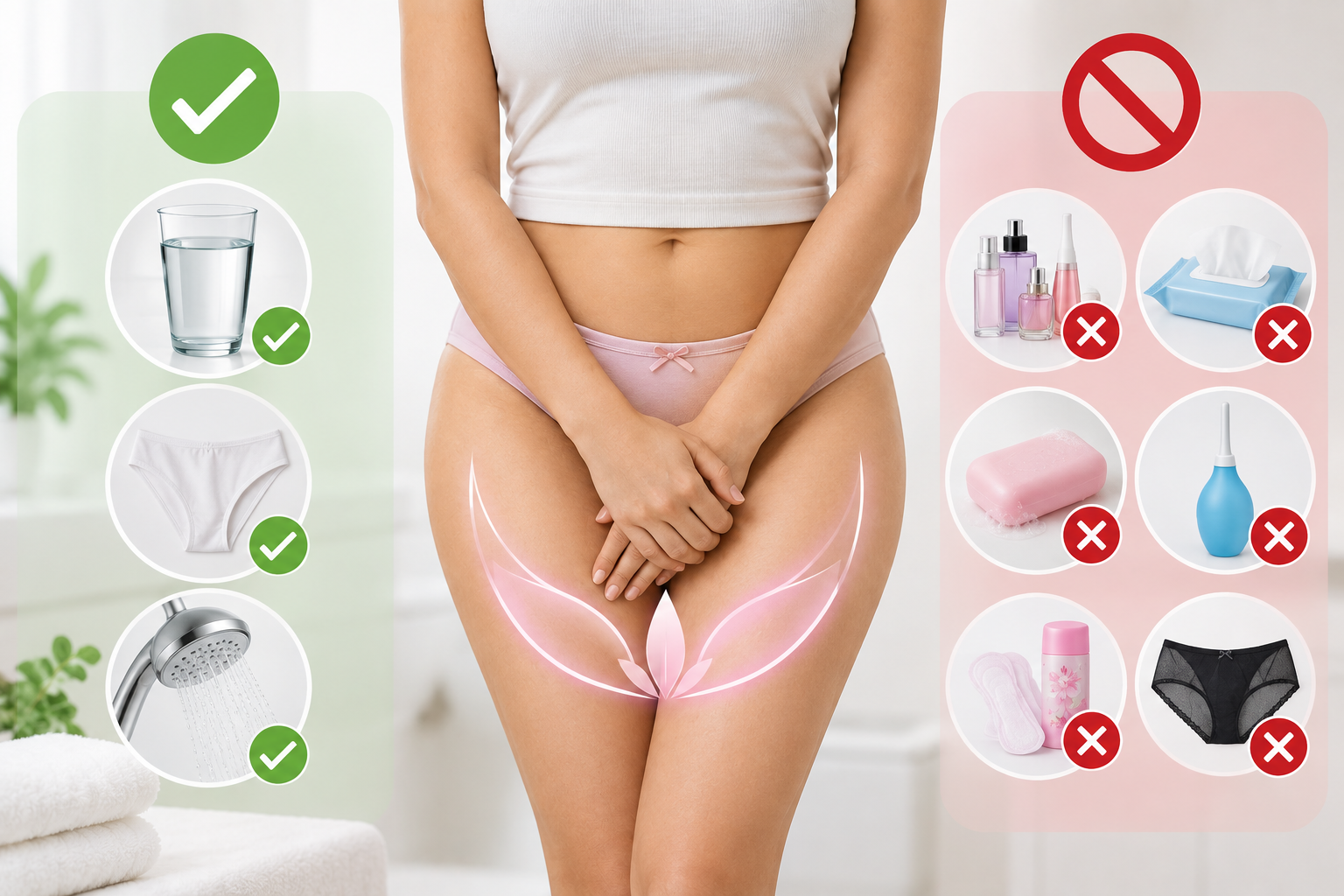
The vagina cleans itself, and only the external vulva needs routine washing with plain water or, if needed, a mild unfragranced cleanser. A sensible intimate hygiene do and dont routine avoids douching, fragranced washes, wipes and sprays because these products can disturb the normal environment and are a common cause of persistent irritation.
Intimate hygiene does not need to involve multiple specialised products. In fact, using more products can sometimes create more problems. Fragrance, harsh cleansers, repeated washing and internal cleaning can irritate sensitive vulvar skin or interfere with the normal vaginal environment.
Understanding what actually needs cleaning and what should be left alone can make daily intimate care much simpler.
Why Is the Vagina Self-Cleaning and the Vulva What You Wash?
The terms vagina and vulva are often used interchangeably, but they refer to different areas.
The vagina is the internal muscular canal. It naturally maintains its own environment through vaginal secretions and normal microorganisms. Routine internal washing is therefore unnecessary.
The vulva refers to the external genital area, including the labia. This is the area that can be gently washed as part of normal daily hygiene.
For most people, plain water is sufficient. If a cleanser is preferred, it should be mild and unfragranced and used externally rather than inside the vagina.
Avoid vigorous scrubbing. Vulvar skin is sensitive, and repeated friction can contribute to dryness, soreness and irritation.
One of the most important intimate hygiene do and dont principles is therefore simple: wash the outside gently and do not attempt to clean inside the vagina.
What Does Douching Do to the Normal Flora?
Douching means flushing or washing inside the vagina, usually with water or a commercially prepared solution.
It is not required for routine hygiene.
The vagina contains a natural community of microorganisms. Lactobacillus species commonly help maintain an acidic environment that supports normal vaginal health.
Introducing cleaning solutions into the vagina can alter this environment and disturb the balance of normal flora.
Douching may also temporarily mask odour or discharge without treating its underlying cause. If there is persistent unusual discharge, odour, itching or discomfort, repeatedly washing inside the vagina is not the solution. The cause needs to be identified.
A new or persistent change should be medically assessed rather than covered up with fragranced products or repeated internal cleaning.
Which Products Commonly Cause Irritation?
The vulvar area can react to products that are tolerated elsewhere on the body.
Common potential irritants include:
- Fragranced intimate washes
- Scented soaps and shower gels
- Vaginal deodorants or sprays
- Fragranced wipes
- Bubble baths
- Strong antiseptic solutions
- Perfumed sanitary products
- Harsh detergents left in clothing
- Products containing multiple fragrances or additives
A product being marketed specifically for intimate use does not necessarily mean that everyone needs it or that sensitive skin will tolerate it.
Repeated exposure to irritating products can contribute to burning, itching, redness, dryness or soreness.
If symptoms begin after introducing a new wash, wipe, spray or sanitary product, stopping the suspected irritant may be an important first step.
However, persistent symptoms should not automatically be blamed on hygiene products. Infection, skin conditions and hormonal changes can cause similar symptoms.
For example, persistent symptoms caused by a fungal condition may require proper diagnosis and treatment rather than additional washing. Read more about Fungal infection treatment.
Intimate Hygiene Do and Dont Checklist
A simple routine is usually preferable to using multiple products.
| Area | DO | DO NOT |
|---|---|---|
| Daily washing | Gently wash the external vulva with water or a mild unfragranced cleanser if needed | Do not wash inside the vagina |
| Cleansing | Use gentle products only when necessary | Avoid harsh soaps and antiseptics |
| Douching | Allow the vagina to maintain its natural environment | Do not douche routinely |
| Wipes | Use cautiously if genuinely necessary and choose unfragranced options | Avoid frequent use of fragranced wipes |
| Clothing | Choose breathable, comfortable clothing | Avoid prolonged use of damp or very tight clothing if it causes irritation |
| Hair removal | Use clean equipment and gentle technique | Avoid repeatedly shaving already irritated skin |
| Period care | Change menstrual products regularly according to product guidance and personal flow | Do not use fragranced products to mask odour |
| After exercise | Change out of wet or sweaty clothing | Do not remain in damp clothing unnecessarily |
| Persistent symptoms | Seek assessment when itching, pain, discharge or irritation persists | Do not keep adding washes or home remedies without knowing the cause |
How Do Clothing, Shaving and Sanitary Products Affect Irritation?
Intimate hygiene involves more than washing. Clothing, hair removal and menstrual products can all influence vulvar comfort.
Clothing
Tight or non-breathable clothing can increase friction, heat and moisture around the vulva, particularly during exercise or hot weather.
This does not mean that a particular type of clothing automatically causes infection. However, if certain clothing repeatedly causes rubbing or irritation, choosing a looser or more breathable alternative may help.
Changing out of wet swimwear or sweaty exercise clothing can also reduce prolonged moisture and friction.
Shaving and Hair Removal
Shaving removes hair at skin level but can also irritate the surrounding skin. Small cuts, razor irritation, folliculitis and ingrown hairs may develop.
Use clean shaving equipment, avoid excessive pressure and try not to repeatedly shave over already irritated skin.
Small red bumps following hair removal may sometimes represent follicular irritation rather than a vaginal problem. More information is available in Red bumps after shaving.
If hairs repeatedly grow back into the skin and cause painful bumps, see Ingrown hair treatment.
Sanitary Products
Pads, liners, tampons and other menstrual products can sometimes cause irritation through friction, moisture or sensitivity to particular materials or fragrances.
Products should be changed regularly based on flow and manufacturer guidance. If one product repeatedly causes irritation, switching to an unfragranced alternative may be worth considering.
What Changes Around Periods, Pregnancy and Menopause?
Intimate care may need small adjustments at different stages of life, but aggressive cleaning is not necessary.
During Periods
Menstrual blood and prolonged pad use can increase moisture around the vulva.
Regularly changing menstrual products and gently washing the external area is generally sufficient. There is no need to wash inside the vagina to remove menstrual blood.
Avoid using perfumes, deodorants or fragranced wipes simply to mask normal menstrual odour.
During Pregnancy
Hormonal changes during pregnancy can alter vaginal discharge. An increase in normal discharge can occur, but unusual odour, itching, pain, bleeding or a significant change in discharge should be discussed with an appropriate healthcare professional.
Douching or using stronger intimate products is not a substitute for assessment.
During Menopause
Lower oestrogen levels around menopause can make vulvar and vaginal tissues thinner, drier and more sensitive.
Someone experiencing dryness, burning or discomfort may therefore need assessment rather than more frequent washing.
If dryness is the main problem, information on Vaginal dryness treatment explains possible causes and management approaches.
Which Symptoms Mean the Problem Is Not Hygiene at All?
Itching, burning or unusual discharge does not necessarily mean that someone is not keeping the area clean enough.
In fact, washing more aggressively can sometimes make irritated skin worse.
Symptoms that may need medical assessment include:
- Persistent or severe itching
- Significant burning or soreness
- Unusual or persistent discharge
- Strong or newly changed odour
- Pain during urination
- Pain during intimacy
- Sores, ulcers, blisters or new lumps
- Unexplained bleeding
- Persistent redness or skin changes
- Symptoms that repeatedly return despite changing hygiene products
These symptoms can have several possible causes, including infection, skin disorders, hormonal changes or other conditions.
Trying multiple intimate washes or home remedies without identifying the cause may delay appropriate treatment.
A Simple Daily Intimate Hygiene Routine
For most people, intimate care can remain straightforward.
Gently wash the external vulva during your usual bath or shower. Plain water is often enough. If you prefer a cleanser, choose a mild, unfragranced option and use it externally.
Pat the area dry rather than rubbing aggressively.
Change underwear regularly and change out of wet or sweaty clothing when practical. During periods, change menstrual products regularly and pay attention to any product that repeatedly causes irritation.
Most importantly, avoid trying to make the vagina "extra clean." The internal vagina does not need routine washing, deodorising or perfuming.
The best intimate hygiene do and dont routine is generally the least complicated one that keeps the external area comfortable without disturbing or irritating it.
Conclusion
Good intimate hygiene is usually simple. The vagina is self-cleaning, while the external vulva can be gently washed with plain water or, if needed, a mild unfragranced cleanser.
A practical intimate hygiene do and dont approach means avoiding douching, fragranced washes, sprays, harsh soaps and products that repeatedly cause irritation. Clothing choices, shaving technique and period care can also affect vulvar comfort.
Persistent itching, burning, unusual discharge, pain or skin changes should not automatically be treated as a hygiene problem. When symptoms continue, identifying the underlying cause is more important than washing more frequently or adding new intimate-care products.
Have a Private Question?
Every concern deserves an honest answer. Book a confidential consultation with Dr. Ashutosh Shah at Elegance Clinic, Surat, for guidance made just for you.

About the Author
Dr. Ashutosh Shah is a cosmetic gynecologist and plastic surgeon with over 22 years of experience. At Elegance Clinic in Surat, he is known for safe, honest and completely confidential intimate and aesthetic care.
Is an Intimate Wash Necessary at All?
No. Plain water is generally sufficient for washing the external vulva. If a cleanser is preferred, choose a mild, unfragranced product and use it externally only.
Is Douching Ever Advised?
Douching is not recommended as part of routine intimate hygiene. Persistent odour, discharge or irritation should be assessed rather than managed with internal washing.
Can Wipes Cause Irritation?
Yes. Fragranced wipes and frequent wiping can irritate sensitive vulvar skin. If wipes appear to trigger burning, itching or redness, stop using them.
Does Shaving Increase Infection Risk?
Shaving can cause small cuts, irritation, folliculitis and ingrown hairs. Using clean equipment and avoiding shaving over irritated skin can reduce these problems.
How Should Hygiene Change During Periods?
Gently wash the external area and change menstrual products regularly. Internal vaginal cleaning, fragranced sprays and douching are unnecessary.
When Is Persistent Itching a Medical Problem Rather Than a Hygiene Issue?
If itching persists, repeatedly returns, becomes severe or occurs with unusual discharge, sores, pain or skin changes, medical assessment is appropriate.