
Why Do Some Chest Surgery Scars Fade Better Than Others?
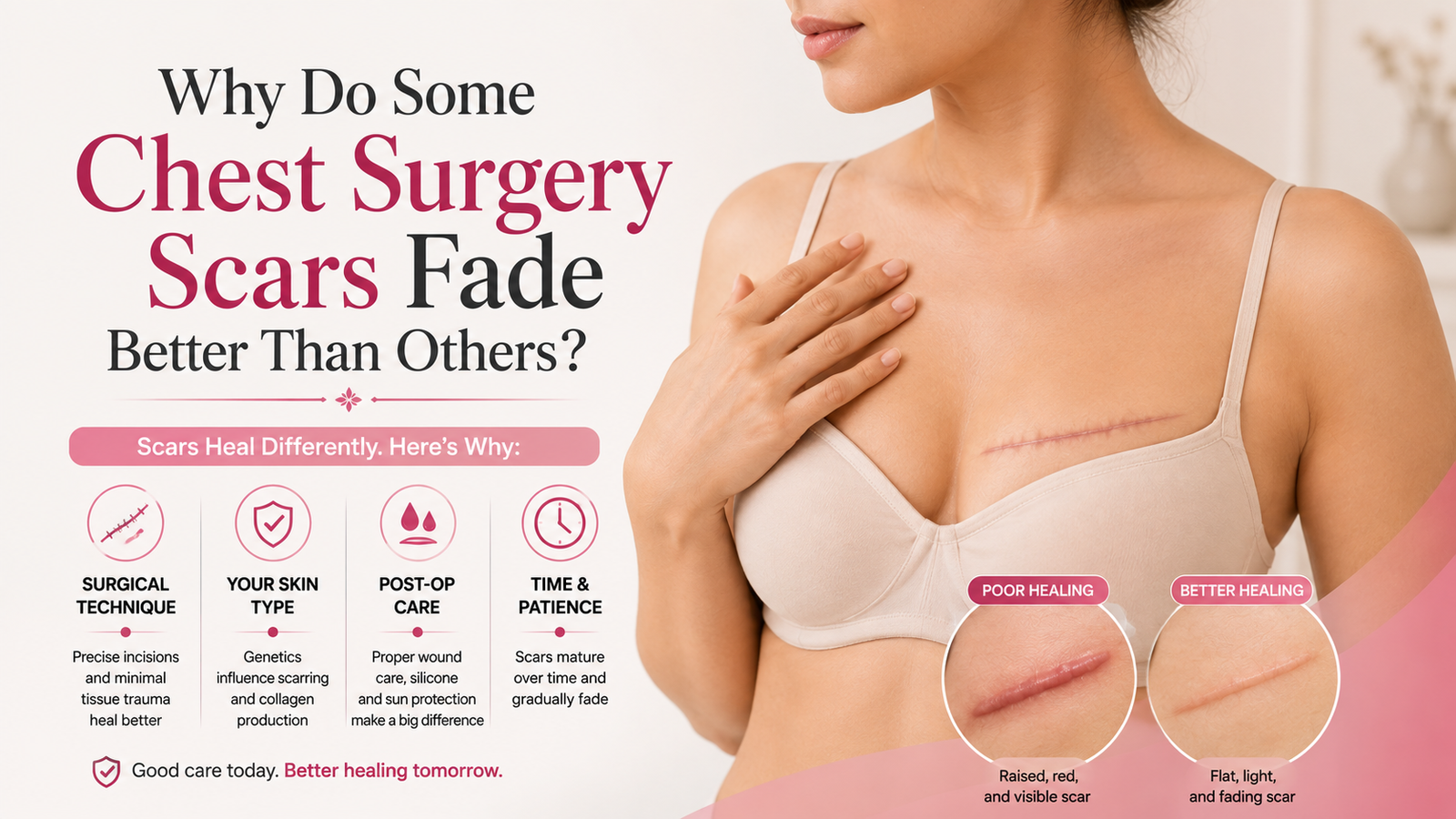
Chest surgery can be an important part of gender-affirming care, but the visible result does not end when the incision closes. Scar healing is a gradual biological process, and two people undergoing similar chest procedures can develop very different scars.
Chest surgery can be an important part of gender-affirming care, but the visible result does not end when the incision closes. Scar healing is a gradual biological process, and two people undergoing similar chest procedures can develop very different scars.
Some scars gradually become flatter, softer, and closer to the surrounding skin tone. Others may remain darker, wider, raised, itchy, or more noticeable for longer. This does not necessarily mean something went wrong with the surgery. Scar formation depends on several factors, including the surgical technique, incision tension, genetics, skin characteristics, aftercare, sun exposure, and how the scar matures over time.
For people considering or recovering from chest masculinization or other gender-affirming chest procedures, understanding scar management after chest surgery can help set realistic expectations and support better healing.
What Actually Determines How a Chest Surgery Scar Looks?
A scar is the body's way of repairing injured skin. The final appearance is not determined solely by the surgeon's incision.
In fact, the same surgical procedure can produce different scar patterns in different individuals.
1. Your individual healing response
Genetics play a major role in scar formation. Some people naturally produce more collagen during wound healing, which can result in scars that are thicker, firmer, or more raised.
Others may develop relatively thin and subtle scars.
This is one reason why comparing your scar directly with another person's chest surgery scar can be misleading.
2. The surgical technique and incision pattern
The type of chest surgery influences where scars are located and how extensive they may be.
For example, chest masculinization procedures can involve different approaches, including double-incision and periareolar techniques. Double-incision procedures generally leave longer horizontal scars, while keyhole or periareolar techniques can result in scars around the areola.
The incision pattern, amount of tissue removed, skin excess, and how the wound is closed can all influence the eventual scar.
3. Tension on the healing incision
Chest skin moves constantly with activities such as reaching, stretching, exercising, and lifting.
Excessive tension while an incision is still healing can contribute to a scar becoming wider or more noticeable. Following your surgeon's restrictions during the early recovery period is therefore an important part of scar care.
4. How long the scar has been healing
One of the biggest mistakes people make is judging their final result too early.
A new scar may initially appear:
- Pink or red
- Darker than surrounding skin
- Firm
- Slightly raised
- Uneven
- Itchy
- More visible than expected
These changes can occur as collagen is reorganized during scar maturation.
Scars can continue changing for many months, and some chest surgery scars may take around 12–18 months or longer to mature.
In other words, an early scar is not necessarily your final scar.
Why Do Some Chest Surgery Scars Become Darker?
Pigmentation is a common concern, particularly for people with naturally more pigmented skin.
Healing scars can be particularly sensitive to ultraviolet exposure. Sun exposure can cause scars to become darker and may make them more noticeable compared with the surrounding skin.
This is why sun protection should be considered part of scar management after chest surgery.
Depending on your surgeon's instructions and whether the incision has fully healed, protection may include:
- Covering the scar with clothing
- Avoiding prolonged direct sun exposure
- Using appropriate broad-spectrum sunscreen once the skin has healed sufficiently
- Reapplying sunscreen when appropriate
- Avoiding tanning of healing scar tissue
Fresh scars should not simply be treated like normal skin. Your surgical team should determine when topical products and sunscreen can safely be applied.
Does Silicone Help Chest Surgery Scars?
Silicone gel and silicone sheets are commonly used as part of postoperative scar care.
They work by creating an occlusive environment over the scar and may help improve characteristics such as scar thickness, texture, and redness over time. ASPS sources describe silicone gel or sheets as established options in postoperative scar management.
However, silicone should not be applied to an open or incompletely healed incision unless specifically instructed by your medical team.
The right time to start silicone therapy depends on wound healing and your surgeon's recommendations.
What About Scar Massage?
Scar massage may be recommended after the incision has adequately healed.
It can help soften and mobilize scar tissue in appropriate cases, but timing matters.
Massaging a fresh or incompletely healed incision can cause irritation or interfere with healing. Therefore, patients should wait until their surgical team confirms that massage is appropriate.
Once permitted, consistent scar care over several months may be more useful than aggressively treating the scar for a few days and then stopping.
Can Exercise Make Chest Surgery Scars Worse?
Returning to physical activity too quickly can place unnecessary tension on healing tissues.
Chest exercises, weightlifting, stretching, and upper-body movements can all place stress on the surgical area.
Your surgeon may therefore recommend temporary restrictions after chest surgery. For example, Johns Hopkins advises restrictions on certain arm movements and heavy lifting during the early recovery period to reduce the chance of scars stretching.
The important point is not to avoid movement forever.
It is to return to activity progressively and according to your surgeon's recovery plan.
When Is a Chest Surgery Scar Considered Abnormal?
Not every thick or red scar is a complication.
However, certain changes deserve professional assessment.
A hypertrophic scar
A hypertrophic scar becomes raised and firm but generally remains within the original boundaries of the incision.
A keloid scar
A keloid can grow beyond the original wound boundaries and may continue enlarging.
A widened scar
A scar may become stretched or wider, particularly when there has been tension on the healing incision.
A depressed or uneven scar
Some scars can develop changes in contour that make the chest surface appear uneven.
Persistent pigmentation
A scar may remain darker or lighter than the surrounding skin, particularly after inflammation or sun exposure.
The appropriate treatment depends on the type and maturity of the scar rather than simply its age or appearance.
Can Chest Surgery Scars Be Treated Later?
Yes. Not every scar requires treatment, but persistent or bothersome scars can sometimes be improved.
Depending on the scar, treatment may include:
- Silicone gel or sheets
- Scar massage
- Steroid injections for selected raised scars
- Laser-based treatments
- Microneedling
- Treatments targeting redness or pigmentation
- Surgical scar revision in selected cases
ASPS notes that different scar characteristics may require different approaches; for example, steroid injections may be used for some hypertrophic scars or keloids, while laser and resurfacing techniques may be considered for other scar concerns.
Importantly, more treatment is not always better. Scar interventions should be selected according to the scar's maturity, thickness, color, texture, and the patient's healing pattern.
Why Patience Matters More Than You Think
It can be frustrating to see a noticeable scar after a procedure that was intended to create a more affirming chest appearance.
But scar maturation is slow.
A scar that looks red and prominent during the first few months may gradually flatten and become less noticeable. Plastic surgery guidance emphasizes that scars can continue maturing for many months and that patients should not judge the final appearance too early.
This is especially important when searching for scar management after chest surgery because online photographs often show either very early scars or highly mature scars without explaining the timeline between them.
Your healing journey may not look identical to someone else's—and that is normal.
What Can You Do to Support Better Scar Healing?
A practical scar-care approach usually includes several stages.
During early healing
Follow your surgeon's instructions carefully.
Keep the surgical area protected, avoid unnecessary friction or tension, and use prescribed medications or dressings as directed.
Once the incision has healed
Your surgeon may recommend silicone products or other scar-care measures.
During scar maturation
Consistent scar care, appropriate massage when permitted, and sun protection can become important components of long-term management.
If the scar remains problematic
A professional assessment can determine whether additional treatment is appropriate.
This step-by-step approach is generally more useful than immediately trying multiple cosmetic products.
Does Skin Tone Affect Scar Appearance?
It can.
People with different skin tones may experience different patterns of post-inflammatory pigmentation. A scar may therefore be more noticeable because of its color, even when its thickness and texture are relatively normal.
This is another reason why scar treatment should be individualized rather than based solely on photographs of other patients.
Scar Management After Chest Surgery in Surat
For individuals looking for Scar Management After Chest Surgery in Surat, the focus should not simply be on making a scar disappear.
A proper assessment should consider:
- How old the scar is
- Whether it is flat or raised
- Its color and pigmentation
- Whether it is itchy or painful
- Whether it extends beyond the incision
- Whether it is widening
- Your skin characteristics
- Your previous history of abnormal scarring
- The type of chest surgery performed
- Whether the wound has completely healed
At Elegance Clinic, scar concerns can be assessed in the context of the individual's healing pattern and aesthetic goals. Dr. Ashutosh Shah can help determine whether continued observation, conservative scar care, or a scar-focused treatment approach may be appropriate.
When Should You See a Doctor About a Chest Surgery Scar?
Contact your surgical team or seek medical evaluation if you notice:
- Increasing redness or warmth
- Significant swelling
- Pus or unusual discharge
- Fever
- Increasing rather than improving pain
- Wound separation
- Rapidly enlarging raised scar tissue
- Significant bleeding
- A sudden change in the surgical area
These symptoms should not be assumed to be normal scar maturation.
Conclusion
Scar Management After Chest Surgery is a long-term process, not a quick cosmetic fix.
The final appearance of a chest surgery scar depends on several factors—including surgical technique, genetics, skin characteristics, wound tension, aftercare, sun exposure, and natural scar maturation. A scar that appears red, firm, or prominent early in recovery may gradually become flatter and less noticeable over time.
The most useful approach is to follow postoperative instructions, protect healing skin from excessive sun exposure, use silicone or massage only when appropriate, avoid premature strain, and seek professional assessment if a scar becomes unusually raised, painful, widened, or persistent.
If you are concerned about the appearance of your chest surgery scars or want to understand your options for Scar Management After Chest Surgery in Surat, consult a qualified specialist for an individualized assessment. Elegance Clinic can help you understand whether your scar is progressing normally and whether additional treatment may be appropriate.
Concerned about your chest surgery scars?
Don't judge your final result too early. Get your scar evaluated to understand whether it is healing normally or could benefit from targeted scar management.
Book a consultation with Elegance Clinic in Surat to discuss your chest surgery scar concerns and personalized treatment options.
Have a Private Question?
Every concern deserves an honest answer. Book a confidential consultation with Dr. Ashutosh Shah at Elegance Clinic, Surat, for guidance made just for you.

About the Author
Dr. Ashutosh Shah is a cosmetic gynecologist and plastic surgeon with over 22 years of experience. At Elegance Clinic in Surat, he is known for safe, honest and completely confidential intimate and aesthetic care.
How long does it take for chest surgery scars to fade?
Chest surgery scars can take many months to mature. Some may continue changing for 12–18 months or longer, so early appearance does not necessarily represent the final result.
How can I manage scars after chest surgery?
Scar management after chest surgery may include proper wound care, silicone products, sun protection, massage after healing, and professional scar treatments when appropriate.
Can chest surgery scars completely disappear?
Most surgical scars cannot be completely erased, but they can often become flatter, softer, and less noticeable as they mature. The degree of improvement varies between individuals.
Does silicone help top surgery scars?
Silicone gel and silicone sheets may help improve the appearance and texture of healing surgical scars. They should generally be used only after the incision has healed sufficiently and according to medical advice.
When can I massage my chest surgery scars?
Scar massage should usually begin only after the incision has adequately healed and your surgical team approves it. Starting too early may irritate healing tissue.