
What is Scar Management After Chest Surgery?
Scar Management After Chest Surgery is the deliberate care given to healing incisions once the wounds have closed, so the scar matures as well as it can. Silicone, massage, sun protection and patience form the core of it. Where a scar thickens or itches, active treatment is added early.
Good care begins before surgery rather than after it. Because tension, smoking and infection all worsen scars, planning covers the operation itself as much as the months that follow.
Where will the scars be after chest surgery?
Position depends entirely on the technique used, and it is worth knowing plainly. Double incision surgery leaves two long horizontal scars running across the chest, usually just below the pectoral border, plus scars around each repositioned nipple graft. Peri areolar techniques leave a circular scar around the areola, while keyhole surgery leaves a short scar at the lower areolar edge.
Free nipple grafting commonly reduces or removes nipple sensation, which is a separate matter from the scar itself but part of the same honest discussion. Liposuction adds only a few tiny marks. More on technique choice sits under chest contouring.
Do scars ever disappear completely?
No, a scar is permanent tissue and will always be present in some form. What changes is its quality, meaning colour, width, height and softness, and those can be improved considerably with consistent care. Anyone claiming a scar can be erased is not being straight with you.
Realistic aims work better than perfect ones. A flat, pale, soft line that blends with surrounding skin is an excellent outcome, and many people reach it.
What is the normal timeline of healing?
Scars follow a fairly predictable course over about eighteen months. The table below sets out what usually happens and when, though individuals differ.
| Stage | Timing | What you see | What is done |
|---|---|---|---|
| Early healing | Zero to six weeks | Pink, slightly raised, tender | Dressings, tape support, no stretching |
| Active remodelling | Six weeks to six months | Red or dark, firmer, sometimes itchy | Silicone, massage, sunscreen |
| Fading | Six to twelve months | Colour softens, height reduces | Continue silicone, treat raised areas |
| Mature scar | Twelve to eighteen months | Pale or slightly darker, flat, soft | Assess whether revision is worth considering |
When should I start silicone gel or sheets?
Start once the wound has fully closed with no scabs, discharge or open areas, which is commonly around three to four weeks. Silicone works by holding moisture in the scar and supporting the healing layer, and both gel and sheeting are effective. Consistency matters more than the format chosen.
- Sheets are usually worn for twelve hours or more each day.
- Gel suits areas that move a great deal or sweat heavily in Indian summers.
- Three months of daily use is the minimum worth attempting.
- Stopping after a fortnight achieves very little.
How does massage help, and when can I start it?
Massage softens the scar and helps it glide over the tissue beneath, reducing tightness across the chest. Begin gently at about four weeks, once the wound is closed, using firm circular pressure for five minutes twice daily. Discomfort is expected, whereas sharp pain means you are pressing too hard.
Adding a plain moisturiser makes the technique easier. Regularity beats intensity here, so short daily sessions outperform occasional vigorous ones.
Why does sun protection matter so much?
Ultraviolet light darkens new scars, and in Indian skin that darkening can last for years. Fresh scar tissue has little protection of its own, so any exposure marks it easily. Covering the chest, or using broad spectrum sunscreen daily once wounds are closed, prevents a problem that is difficult to reverse.
Keep this up for at least a year. Swimming, cricket and outdoor work all deserve a shirt or a generous layer of sunscreen over the scar line.
What is the difference between a keloid and a hypertrophic scar?
A hypertrophic scar stays within the boundary of the original wound, whereas a keloid grows beyond it into normal skin. Both are raised, firm and often itchy, and both are more common in Indian and other darker skin than in lighter skin. Chest skin is a frequent site for either.
Family history raises the chance considerably, so mention it before surgery rather than afterwards. Knowing in advance changes the plan, including earlier treatment and closer follow up.
How are raised scars treated?
Raised scars are treated actively rather than left to settle on their own. Steroid injection into the scar is the mainstay, repeated every four to six weeks for several sittings, and it flattens and softens most hypertrophic scars. Other measures are added according to response.
- Pressure therapy and silicone sheeting used together for stubborn areas.
- Injection combined with other agents where steroids alone are insufficient.
- Vascular or fractional lasers to reduce redness and improve texture.
- Surgical excision with immediate injection, reserved for selected keloids.
Injections can thin the surrounding skin and lighten it, which is discussed beforehand. Keloid recurrence after excision alone is common, so surgery is rarely used by itself.
What else affects how my scar turns out?
Tension across the wound is the single biggest factor within surgical control, which is why activity is restricted early. Smoking narrows small blood vessels and worsens healing measurably. Infection, wound separation and haematoma all leave wider, thicker scars behind.
Genetics and skin colour matter too, and neither can be changed. Nutrition, blood sugar control and gentle care of the healing line remain within your hands, so they are worth taking seriously.
When is scar revision surgery considered?
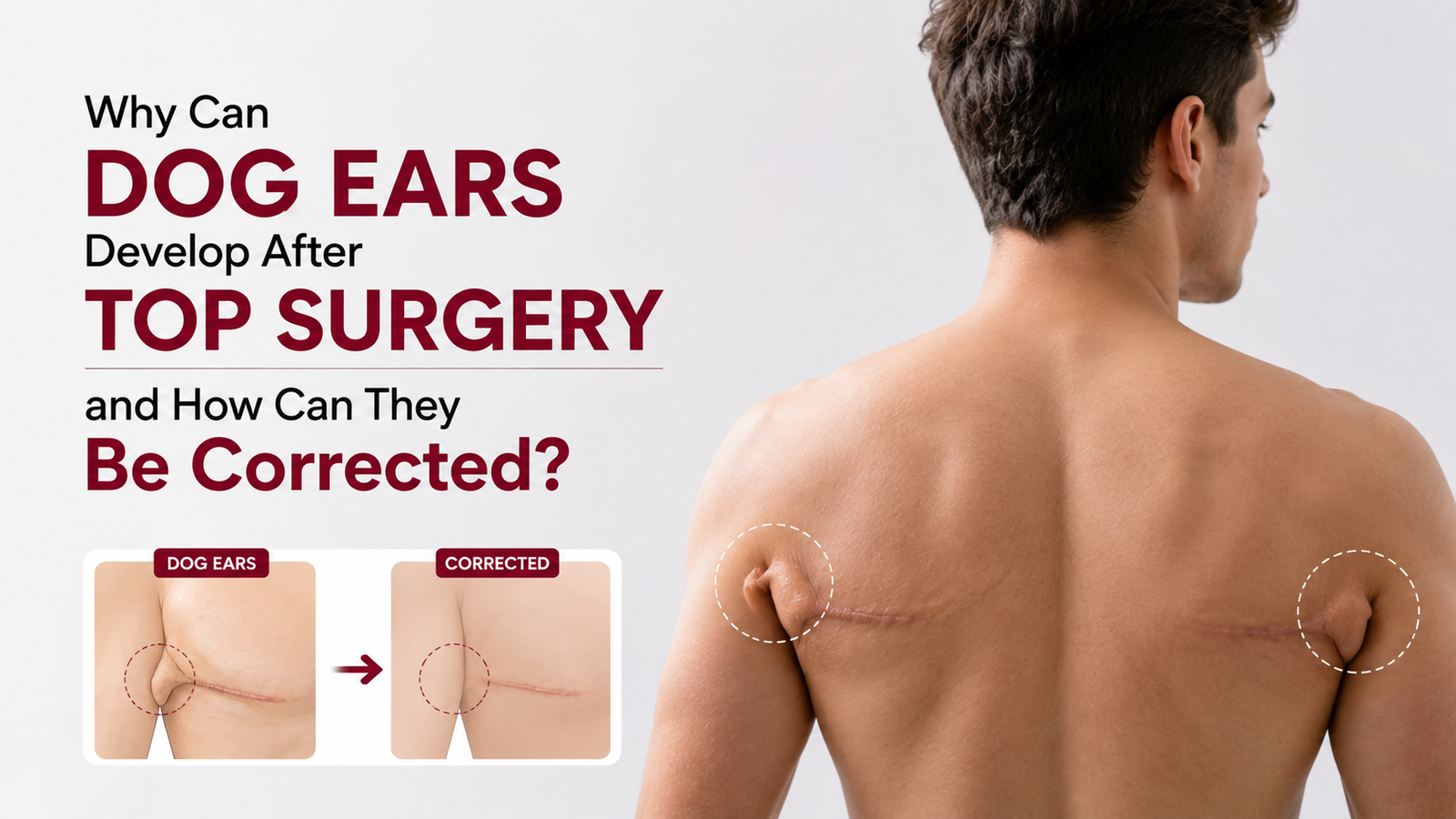
Revision waits until the scar has matured, usually at least a year after the original operation. Early revision on a red, active scar tends to produce another one just like it. Suitable cases include a widened line, a stepped edge, a dog ear at the end of a scar, or a poorly positioned nipple graft.
Needing revision is not a failure of the first operation, and it is planned openly. Wider supportive care is listed on the trans wellness page, while recovery, counselling and journey support are covered on our dedicated transgender health site.
What does scar treatment cost in India?
Cost in rupees depends on what is required, from a tube of silicone gel bought monthly to a course of injections or laser sessions. Simple care is inexpensive, whereas repeated procedures add up over several months. Revision surgery is priced separately as an operation.
Because needs vary so much between scars, a clear written estimate is given after examination. Costs are explained item by item, along with what each measure is realistically likely to achieve.
Why bring a chest scar to Elegance Clinic?
Dr. Ashutosh Shah treats Scar Management After Chest Surgery as part of the operation rather than an afterthought, with scars reviewed at set intervals and photographed each time. Raised scars are treated early, since waiting rarely improves them. Advice stays plain, including when no further treatment is worthwhile.
If a chest scar is thickening, itching or darkening, an early appointment in Surat is sensible. Ways to reach the clinic are listed on our contact page. Bring your operation notes and any photographs taken along the way.
Note: This page is for general information and is not a substitute for a medical consultation. Every procedure carries risk, results vary between individuals, and no outcome can be promised. Dr. Ashutosh Shah will advise honestly whether a procedure is appropriate for you.
Ready to Talk, Privately?
Book a confidential consultation with Dr. Ashutosh Shah. There is no pressure, only clear and honest guidance.