
Why Perigenital Skin May Lose Tightness and How Laser Treatment Helps
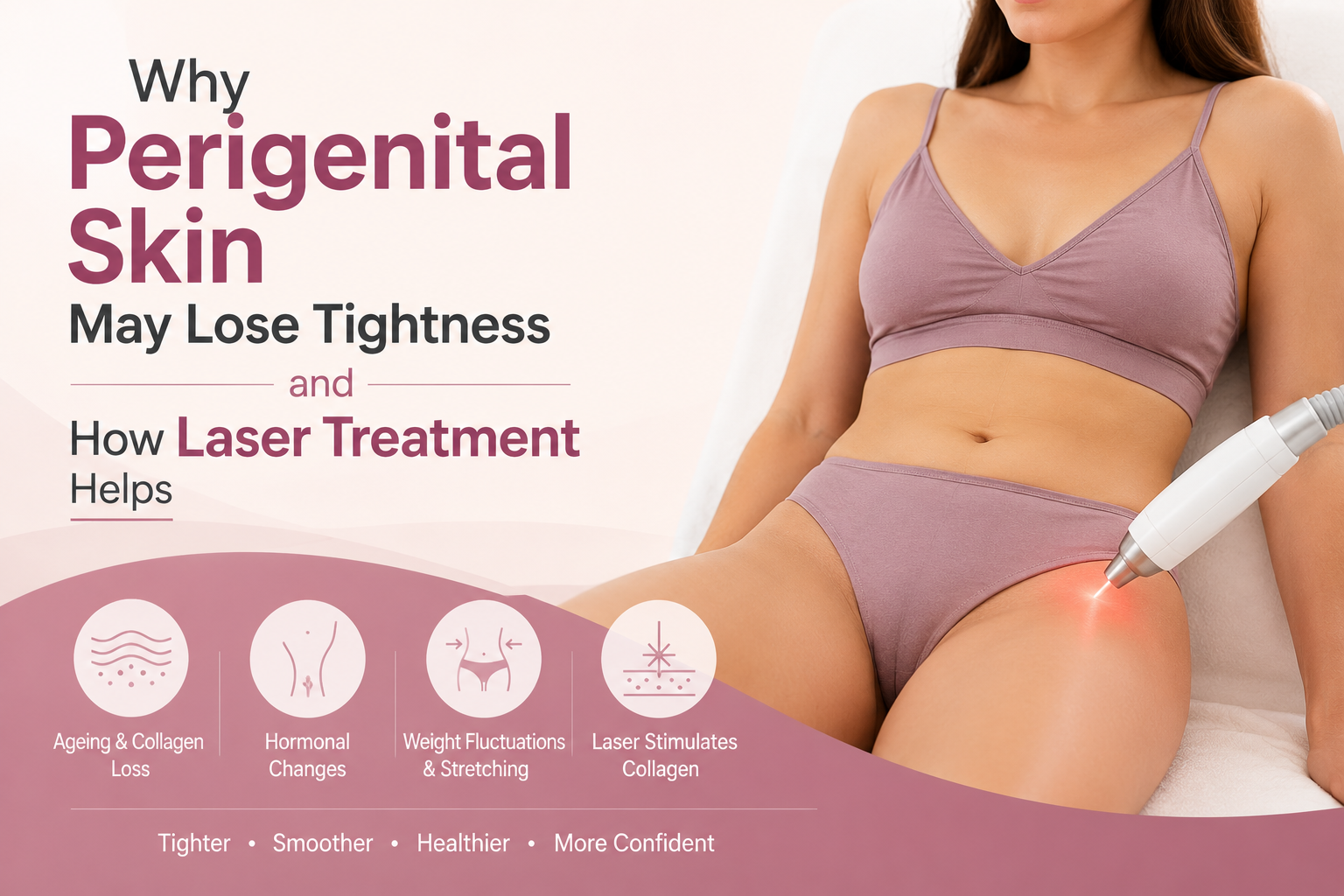
Changes in intimate-area skin are common, but they are not always discussed openly. With age, hormonal changes, pregnancy, childbirth, fluctuations in weight, and natural changes in skin elasticity, the skin around the perigenital region can gradually become less firm or lose some of its youthful texture.
Changes in intimate-area skin are common, but they are not always discussed openly. With age, hormonal changes, pregnancy, childbirth, fluctuations in weight, and natural changes in skin elasticity, the skin around the perigenital region can gradually become less firm or lose some of its youthful texture.
For people looking for a non-surgical approach, Perigenital Skin Tightening in Surat may be considered as part of an individualized intimate wellness plan. Laser-based skin treatments are designed to work with the skin's natural remodeling processes rather than simply removing excess skin.
However, it is important to understand that perigenital skin tightening is different from vaginal tightening. Treatments directed at external perigenital skin should not automatically be described as treatments for vaginal laxity or sexual dysfunction. Medical assessment is important before deciding whether an energy-based procedure is appropriate.
What Is Perigenital Skin Tightening?
Perigenital skin tightening refers to treatments intended to improve the firmness, texture, and appearance of skin around the external intimate or perigenital area.
Depending on the individual's anatomy and concerns, treatment may focus on:
- Reduced skin firmness
- Mild skin laxity
- Changes in skin texture
- Age-related loss of elasticity
- Changes following pregnancy or weight fluctuations
- Cosmetic concerns about the appearance of external intimate skin
Laser-based approaches may use controlled energy to stimulate tissue remodeling. Some laser technologies have been studied for their effects on collagen and extracellular-matrix remodeling, although clinical evidence differs depending on the specific device, treatment area, and indication.
Why Does Perigenital Skin Become Less Firm?
The skin does not remain unchanged throughout life. Collagen and elastin production naturally changes with age, while hormonal and physical factors can also influence skin quality.
1. Natural ageing
As the skin ages, collagen production gradually decreases. This can contribute to reduced elasticity and a softer or looser appearance in different areas of the body, including the intimate region.
2. Pregnancy and childbirth
Pregnancy can stretch tissues and change the appearance of the external genital area. Hormonal changes during and after pregnancy can also influence skin quality.
3. Weight fluctuations
Significant weight gain followed by weight loss can stretch the skin. Depending on skin elasticity, some individuals may notice residual looseness.
4. Hormonal changes
Changes in estrogen levels, particularly around perimenopause and menopause, can affect vulvovaginal tissues and overall intimate-area comfort and appearance.
5. Individual skin characteristics
Genetics, age, skin type, collagen quality, lifestyle, and previous tissue stretching all influence how much firmness a person naturally has.
Importantly, some variation in the shape, texture, pigmentation, and appearance of external genital skin is completely normal.
How Can Laser Treatment Help Perigenital Skin?
Laser skin treatments use controlled energy to interact with targeted tissue. Depending on the technology used, the objective may include stimulating a controlled tissue response and encouraging remodeling of collagen and other components of the extracellular matrix.
Research on some non-ablative laser technologies has demonstrated biological changes associated with collagen production and tissue remodeling. However, laboratory or histological findings should not be interpreted as a guarantee of a particular cosmetic result in every patient.
For suitable patients, the treatment may be considered to help improve the appearance and firmness of external perigenital skin.
Potential goals may include:
- Improving the appearance of mild skin laxity
- Supporting smoother-looking skin
- Improving skin texture
- Supporting collagen remodeling
- Addressing selected age-related changes
- Providing a non-surgical option for appropriate cosmetic concerns
The expected outcome depends on the patient's skin quality, degree of laxity, treatment technology, and individual response.
Who May Consider Perigenital Skin Tightening?
A consultation may be appropriate for adults who are concerned about changes in the appearance or firmness of their external intimate skin and want to understand whether a non-surgical treatment could be suitable.
Potential candidates may include people experiencing:
- Mild external skin laxity
- Age-related changes in skin firmness
- Skin changes after pregnancy
- Changes following substantial weight loss
- Concerns about external intimate skin appearance
- A preference for exploring non-surgical options before considering surgery
A consultation is especially important because not every concern described as "loose skin" is actually a skin-tightening problem. Some concerns may relate to the labia, pelvic-floor muscles, vaginal tissues, dermatological conditions, or other anatomical factors.
What Happens During a Consultation?
A proper consultation should begin with understanding what you actually want to change.
The clinician may discuss:
- Your main concern and desired outcome
- Changes you have noticed over time
- Previous pregnancy, childbirth, or weight changes
- Relevant medical or hormonal history
- Skin quality and degree of laxity
- Whether the concern involves external skin or deeper vaginal tissues
- Whether laser treatment is appropriate
- Alternative treatments if laser is not the best option
This distinction is particularly important because external perigenital skin treatment should not be confused with vaginal laser procedures marketed as "vaginal rejuvenation."
Is Laser Perigenital Skin Tightening the Same as Vaginal Tightening?
No. Perigenital skin tightening and vaginal tightening are not the same treatment.
Perigenital skin tightening generally refers to the external intimate-area skin, whereas vaginal tightening refers to procedures intended to alter the vaginal canal or address vaginal laxity.
The terminology matters because professional organizations have raised concerns about the evidence and safety of energy-based devices marketed for vaginal cosmetic procedures. The American College of Obstetricians and Gynecologists notes that the FDA has not approved laser or other energy-based treatments for vaginal cosmetic surgery and has warned about possible complications such as burns, scarring, pain with sex, and persistent pain.
Therefore, patients should ask exactly which tissue is being treated, which device is being used, what the intended indication is, and what evidence supports that particular treatment.
What Are the Benefits of a Non-Surgical Approach?
One reason patients explore laser-based skin treatments is the possibility of addressing selected cosmetic concerns without traditional surgery.
Depending on the individual's condition and the technology used, potential advantages may include:
- No surgical incision
- Targeted treatment
- Minimal disruption to surrounding tissue when appropriately performed
- Focus on skin remodeling
- Potential improvement in skin texture and firmness
- An option for patients who do not want surgical correction
These are potential treatment characteristics rather than guaranteed outcomes. Suitability and results vary between individuals.
How Many Sessions Are Needed?
There is no universal number of sessions for perigenital skin tightening.
The treatment plan depends on:
- Degree of skin laxity
- Skin quality
- Treatment technology
- Treatment area
- Individual response
- Desired cosmetic outcome
Rather than choosing a fixed number of sessions based only on online information, it is better to have the treatment area assessed by a qualified clinician.
Is Perigenital Laser Treatment Painful?
Comfort can vary depending on the laser technology, energy settings, treatment area, and individual sensitivity.
Patients may experience sensations such as warmth, mild tingling, or temporary discomfort during or after treatment. Your clinician should explain the expected sensations and aftercare before beginning the procedure.
Any significant, persistent, or unexpected pain should be reported promptly.
What Is Recovery Like?
Recovery depends on the specific technology and treatment protocol.
Your clinician may recommend temporary precautions involving:
- Intimate contact
- Exercise or activities that create friction
- Heat exposure
- Skin products applied to the treated area
Following the specific aftercare instructions provided by your treating clinician is important because intimate skin can be particularly sensitive.
Is Perigenital Skin Tightening Safe?
Safety depends on the treatment technology, treatment area, patient selection, settings, and clinician expertise.
Laser and energy-based procedures should not be treated as universally risk-free. This is especially important when discussing procedures involving vaginal tissue, where major medical organizations have highlighted limitations in evidence and potential adverse effects.
For external perigenital skin, a consultation should establish whether the proposed treatment is medically and cosmetically appropriate for the specific concern.
A responsible treatment plan should include realistic expectations rather than promising permanent tightening or a guaranteed cosmetic result.
What Results Can You Expect?
The objective of treatment is generally to improve the appearance or firmness of the treated skin rather than completely change its natural anatomy.
Results may vary according to:
- Age
- Baseline skin elasticity
- Amount of laxity
- Hormonal status
- Previous pregnancy or weight changes
- Laser technology
- Treatment settings
- Individual tissue response
Some patients may notice gradual changes as tissue remodeling occurs, while others may experience limited improvement.
The most realistic goal is individualized improvement rather than perfection.
When Might Another Treatment Be More Appropriate?
Laser treatment is not the answer to every intimate-area concern.
If there is substantial excess skin, significant anatomical alteration, pelvic-floor dysfunction, vaginal prolapse, persistent pain, unusual discharge, itching, bleeding, or another medical symptom, a different type of evaluation or treatment may be needed.
For some cosmetic concerns, surgical procedures may provide a more predictable correction. For others, no procedure may be medically necessary at all.
The right approach begins with identifying the actual problem rather than selecting a treatment first.
Why Choose Professional Evaluation in Surat?
If you are searching for Perigenital Skin Tightening in Surat, choosing a clinic that approaches intimate wellness with privacy, clinical assessment, and realistic expectations is important.
At Elegance Clinic, the focus should be on understanding the individual's anatomy and concerns before recommending an intimate-area treatment. Dr. Ashutosh Shah can assess whether the concern is primarily related to external skin laxity or whether another treatment or evaluation would be more appropriate.
A personalized consultation can help you understand the expected benefits, limitations, risks, recovery, and alternatives before making a decision.
Conclusion: Is Perigenital Skin Tightening Right for You?
Changes in intimate-area skin are a natural part of ageing, pregnancy, hormonal changes, and body changes. If reduced external skin firmness is affecting your confidence, Perigenital Skin Tightening in Surat may be one option worth discussing with a qualified clinician.
Laser treatment may support skin remodeling in appropriately selected cases, but it is important to understand what the procedure can realistically achieve. It should also be clearly distinguished from vaginal tightening procedures, particularly because evidence and regulatory considerations differ between treatment areas.
Looking for perigenital skin tightening in Surat? Book a private consultation at Elegance Clinic to discuss your concerns, understand your treatment options, and find out whether laser skin tightening is suitable for you.
Have a Private Question?
Every concern deserves an honest answer. Book a confidential consultation with Dr. Ashutosh Shah at Elegance Clinic, Surat, for guidance made just for you.

About the Author
Dr. Ashutosh Shah is a cosmetic gynecologist and plastic surgeon with over 22 years of experience. At Elegance Clinic in Surat, he is known for safe, honest and completely confidential intimate and aesthetic care.
Can laser tighten loose perigenital skin?
Laser treatment may help support collagen remodeling and improve the appearance of mild skin laxity in appropriately selected patients, but results vary and are not guaranteed.
Is perigenital skin tightening the same as vaginal tightening?
No. Perigenital skin tightening generally refers to external intimate skin, while vaginal tightening refers to procedures targeting vaginal tissues or the vaginal canal.
How many laser sessions are needed for perigenital skin tightening?
The number of sessions varies according to skin laxity, treatment technology, individual response, and treatment goals, so there is no fixed number for everyone.
Is laser skin tightening for intimate areas safe?
Safety depends on the device, treatment area, settings, patient selection, and clinician expertise. A consultation is necessary to determine whether the procedure is appropriate.
Can perigenital skin tightening improve skin texture?
It may improve the appearance and texture of treated skin in suitable patients, depending on the technology used and individual tissue response.