What is laser skin tightening for perigenital skin?
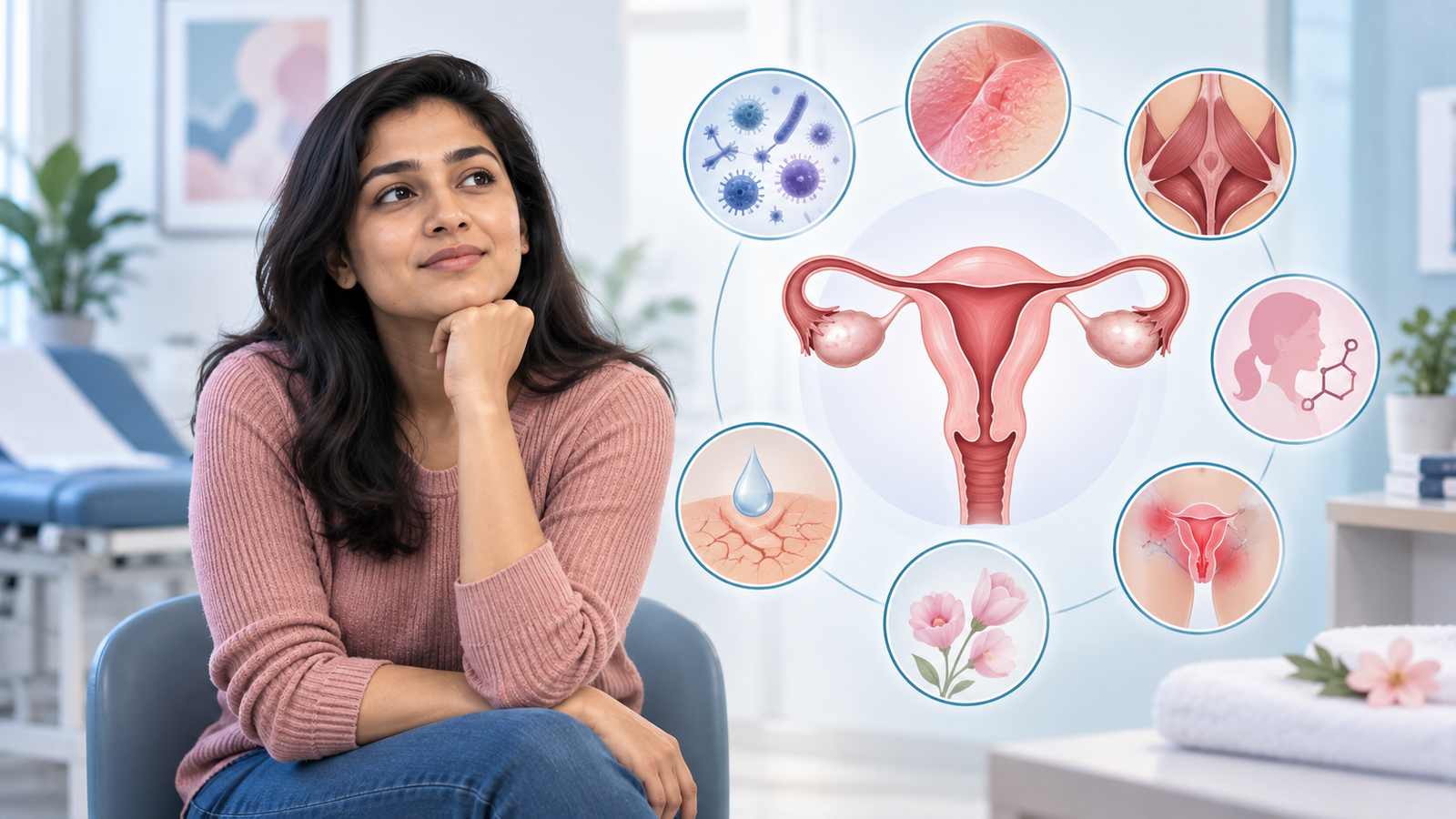
Laser skin tightening for perigenital skin uses light energy to heat the outer skin around the genital area so that it repairs in a firmer, smoother state. Water held inside the skin absorbs that light and converts it to heat, which sets off a controlled healing response across the following weeks. Nothing is cut out and no tissue is removed, therefore the aim is surface quality alone. Laser Skin Tightening for Perigenital Skin is an external treatment and does not involve the vaginal canal.
How does laser differ from radiofrequency on external skin?
Laser light is absorbed by specific targets inside the skin, chiefly water and melanin, whereas radiofrequency heats tissue through simple electrical resistance. That difference matters enormously in brown skin, so caution is the rule here. Because melanin soaks up laser light, a laser carries greater pigment risk than radiofrequency at a similar apparent strength. By contrast, light can be aimed at a chosen depth with real precision, and it usually produces more texture change per visit. Neither approach wins in every case, so the sensible choice depends on your skin type, your concern and how much downtime you can accept.
What do ablative and non ablative mean in plain words?
Ablative means the laser removes a very thin layer of the surface, while non ablative means it heats the layers beneath and leaves the surface intact. Think of one as gentle resurfacing and the other as warming from within. Most modern devices work fractionally, treating tiny columns of skin and sparing the skin in between so that healing is quicker. On thin, moist intimate skin, a gentler fractional non ablative setting is usually the safer starting point.
| Feature | Non ablative fractional | Ablative fractional | Radiofrequency |
|---|---|---|---|
| Surface removed | No | Yes, in tiny columns | No |
| Typical downtime | One to three days | Five to ten days | Hours |
| Change per session | Modest | Greater | Modest |
| Pigment risk in brown skin | Moderate | Higher | Lower |
| Usual course | Three to five visits | One to three visits | Three to six visits |
Why is pigment a particular concern in Indian skin?
Pigment change is the single most important risk of laser work on Indian skin, and it deserves to be stated without softening. Skin types four and five carry more melanin, and melanin competes with water to absorb laser light. Consequently a setting that suits pale skin can burn brown skin, and even a minor burn here tends to heal with a darker patch known as post inflammatory hyperpigmentation. Marks of that kind may take many months to fade, and occasionally they do not fade fully. Sometimes the opposite occurs and a pale patch is left behind, which is harder still to correct. Test patching, conservative settings, good cooling and disciplined aftercare are therefore essential rather than optional.
It also helps to know that the skin of the groin, bikini line and genital area is naturally deeper in colour than the skin of the abdomen or thigh in most people. Friction, sweat, hormones and genetics all drive this, so the shade is normal physiology and not a sign of poor hygiene or disease. Where the colour has changed recently or keeps worsening, though, an assessment should come first, because fungal infection, acanthosis nigricans linked to insulin resistance, and reactions to hair removal are common and are treated medically rather than with a laser.
Which concerns respond and which do not?
Skin texture responds best, while anything involving bulk or true excess does not respond at all. Concerns worth discussing include the following.
- Crepey or finely wrinkled skin over the labia majora and the surrounding area
- Rough or uneven surface texture after hair removal or friction
- Mild slackness that improves when you lie down
- Patchy tone that has been assessed and found to be harmless
By contrast, hanging skin, a bulky mound and significant asymmetry are structural problems. Light cannot shorten skin that is genuinely too long, so a surgical opinion is the honest route in those situations.
Who is a good candidate?
A good candidate is an adult woman with mild surface concerns, a clear understanding of the pigment risk and no active problem in the area. Realistic expectation matters most, because the change is subtle and builds slowly. Women who have never used a laser before should start conservatively, and a test patch in a small hidden spot is usually advised in melanin rich skin.
Who should avoid it?
Avoid a laser while there is any active infection, rash or unexplained symptom in the area. Specific reasons to postpone or refuse include the following.
- Pregnancy or breastfeeding, where treatment is simply deferred
- Active fungal infection, herpes, warts or unexplained ulceration
- Recent use of oral isotretinoin, which affects healing
- A tendency to keloid or thick scarring
- Recent waxing, threading or shaving of the exact area to be treated
- Undiagnosed darkening, itching or white patches that need a gynaecological opinion
How is a session carried out?
Sessions are done in the clinic on a day care basis, so you arrive and leave the same day. Numbing cream is applied for roughly thirty to forty minutes, the area is cleaned and dried, and protective eyewear is worn by everyone in the room. During treatment the handpiece is passed over the skin in overlapping passes while cool air or a chilled tip settles the surface. Most women report heat and a prickling sensation rather than sharp pain. Treatment itself usually takes fifteen to thirty minutes once numbing has taken effect.
How much downtime is involved?
Downtime depends entirely on whether the setting was ablative or non ablative, so the two cannot be compared. Non ablative work leaves redness and a sunburnt feeling for a day or two, and most women return to work immediately. Ablative work leaves the skin raw, weeping and crusted for several days, therefore loose clothing, gentle washing and time off intimacy are needed for about a week. Swimming, saunas and vigorous exercise wait until the surface has healed. Careful drying after every wash is important, because this area stays moist and warm.
What results are realistic?
Realistic results are a gradual softening of texture and a slightly firmer feel, though appearing only over two to three months. Improvement is partial and it varies between individuals, so no outcome can be promised. Three to five gentler sessions are typical, spaced roughly four weeks apart, and a top up once a year is common afterwards. Skin continues to age regardless, therefore maintenance is normal and is not a sign that the first course failed.
What are the risks?
Risks include burns, blistering, infection, delayed healing, scarring and, importantly, both darker and lighter pigment change. Herpes can be reactivated by heat in women who carry the virus, so preventive medication is sometimes given. Infection is a genuine consideration because the area is warm, moist and covered, which is why aftercare instructions are strict. Rarely, a fractional laser triggers a flare of an underlying skin condition that had not been recognised. Above all, an unsuitable setting on melanin rich skin is the commonest cause of a poor result, and that risk falls sharply with test patching and an experienced operator.
What does it cost in India?
Fees are set in rupees and vary with the laser platform, the size of the area and the number of visits planned. Ablative work usually costs more per session yet may need fewer sessions, while gentler settings cost less each time and are repeated more often. Consultation, test patching, review visits and aftercare products are itemised so that the total is clear from the start. A clear written estimate follows examination, and no figure is quoted before your skin has been seen.
Why choose Elegance Clinic?
Elegance Clinic in Surat treats intimate skin cautiously and explains the pigment question openly rather than glossing over it. Dr. Ashutosh Shah assesses the area first, looks for a medical cause where the concern is colour, and offers surgery only where surgery is genuinely the better answer. Related non surgical options are grouped on our perigenital skin tightening page, and the wider intimate skin and grooming section covers pigmentation and grooming concerns. Discretion is taken seriously, and our approach is set out on the privacy and confidentiality page.
If you would like an honest opinion on Laser Skin Tightening for Perigenital Skin, a private consultation with Dr. Ashutosh Shah in Surat can be arranged at a time that suits you. Bring any creams you have been using, since several over the counter products cause the very problem they claim to treat. The team can be reached through our contact page.
Note: This page is for general information and is not a substitute for a medical consultation. Darkening of intimate skin is usually normal, and where it is not, the cause should be assessed before any cosmetic treatment. Results vary between individuals and no outcome can be promised.
Ready to Talk, Privately?
Book a confidential consultation with Dr. Ashutosh Shah. There is no pressure, only clear and honest guidance.