
G-Spot Augmentation: What the Injection Involves, What Evidence Exists and Who Should Not Have It
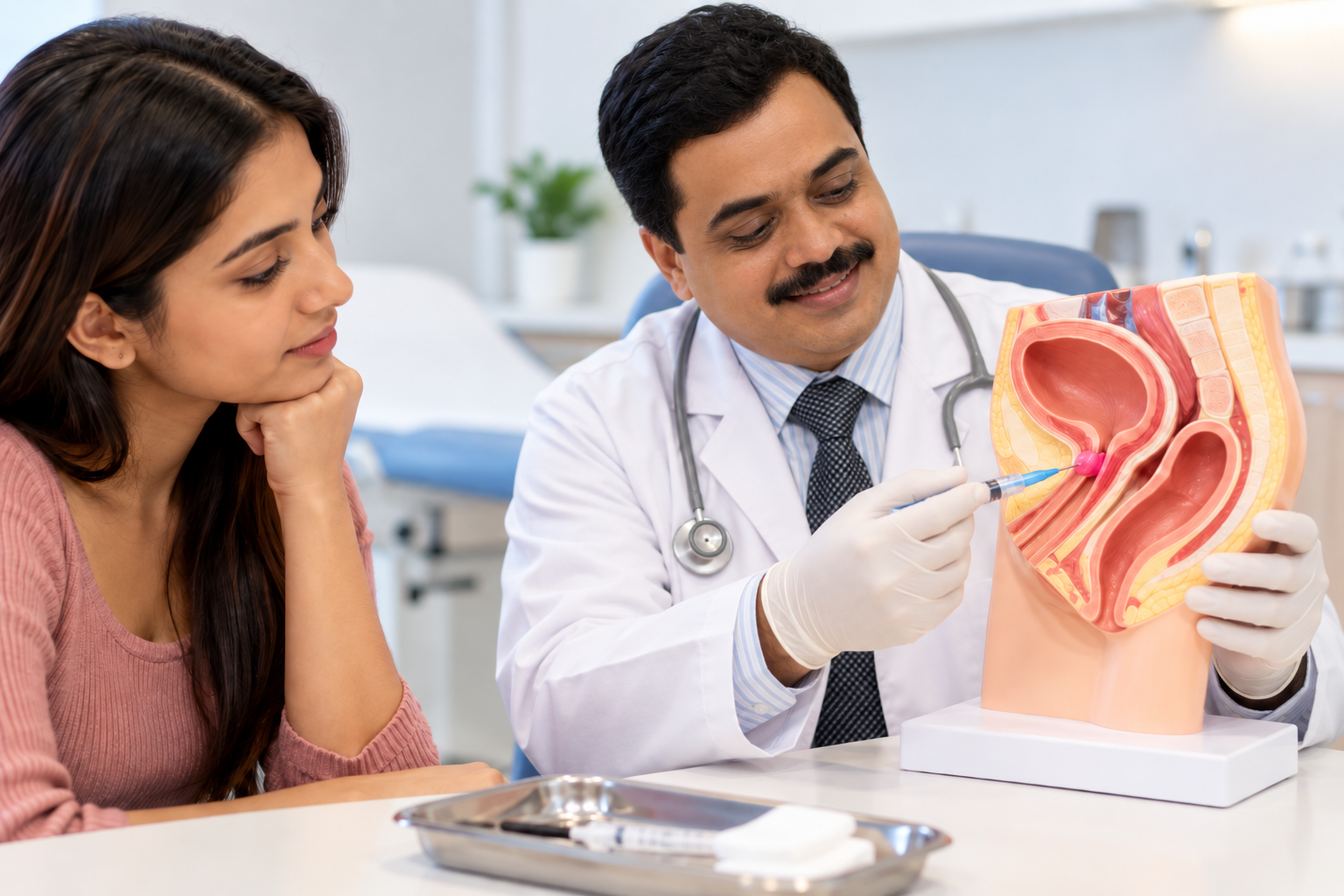
G-spot augmentation is an injection of hyaluronic acid filler or fat into the front wall of the vagina, intended to increase arousal. It takes minutes under local anaesthetic, but ACOG states there is no reliable evidence it works. Women with pain, dryness, low desire or relationship concerns usually need assessment for those causes first.
G-spot augmentation is a procedure in which an injectable material, commonly described as a hyaluronic-acid filler, is placed in the anterior vaginal wall with the aim of increasing sensitivity or sexual satisfaction. However, high-quality evidence proving that g spot augmentation reliably improves sexual function is lacking. Pain, dryness, low desire and pelvic-floor concerns should therefore be properly assessed before considering an injection.
Interest in intimate wellness procedures has increased, and patients may encounter terms such as g spot filler injection, G-spot amplification and G-spot enhancement online. These terms can make the procedure sound established, but it is important to separate promotional claims from what medical evidence currently demonstrates.
The American College of Obstetricians and Gynecologists (ACOG) includes G-spot amplification among female genital cosmetic procedures and states that there is a lack of high-quality evidence supporting the effectiveness of genital cosmetic procedures. Specifically for G-spot amplification, ACOG describes peer-reviewed outcome information as scant.
What Is G-Spot Augmentation and What Does the Procedure Involve?
G spot augmentation or G-spot amplification refers to an injection intended to increase tissue volume in an area of the anterior, or front, vaginal wall.
It is important to understand that the proposed G-spot should not be presented as a precisely defined anatomical structure that is identical in every woman. Sexual sensation is complex and involves anatomy, nerves, hormones, physical health, psychological factors, relationships and individual sexual response.
A typical g spot augmentation procedure may involve a consultation followed by examination to assess the patient's concerns and determine whether another condition needs attention.
If an injection is being considered, the clinician should explain what material is proposed, where it will be placed, what benefit is expected, what evidence supports that expectation and what complications may occur.
Local anaesthesia may be used depending on the technique. The injectable material is then placed in the intended area of the anterior vaginal wall.
The procedure itself may be relatively brief, but a short treatment time should not be confused with proven effectiveness or absence of risk.
Before proceeding, patients should know the exact product being proposed and discuss whether its use for this purpose is established, how long any effect is expected to persist and how complications would be managed.
What Does the Evidence Say About G-Spot Augmentation?
This is one of the most important questions to ask before undergoing the procedure.
ACOG's Committee Opinion No. 795 specifically includes G-spot amplification in its discussion of female genital cosmetic procedures. It states that the safety and effectiveness of elective procedures intended to alter sexual appearance or function have not been established and that patients should be informed about the lack of high-quality evidence supporting effectiveness.
ACOG also notes that information concerning the outcomes, risks and benefits of G-spot amplification in peer-reviewed literature is scant, with available published information largely consisting of expert opinion, case reports or small case series.
This distinction matters.
Patient satisfaction after a procedure does not by itself prove that the treatment reliably improves orgasm, libido, arousal or overall sexual function. ACOG specifically cautions that satisfaction reports should not automatically be interpreted as evidence of clinical effectiveness.
FIGO's ethics guidance on cosmetic genital surgery also states that clear evidence establishing effectiveness and safety is lacking and recommends that obstetrician-gynaecologists should not offer or recommend cosmetic genital surgery on that basis.
Therefore, g spot augmentation should not be advertised or explained as a scientifically proven way to produce stronger orgasms or guaranteed improvements in sexual satisfaction.
Does G-Spot Augmentation Improve Sexual Satisfaction?
There is currently insufficient high-quality evidence to promise this outcome.
Sexual satisfaction does not depend on one anatomical point alone. Desire, arousal and orgasm can be affected by hormonal changes, medications, pelvic-floor function, vaginal dryness, pain, stress, relationship factors and other physical or psychological issues.
ACOG states that current evidence does not support claims that female genital cosmetic surgery improves libido or sexual satisfaction.
For that reason, identifying the concern a patient actually wants to solve is more useful than beginning with the assumption that an injection is the appropriate treatment.
What Are the Possible G-Spot Augmentation Side Effects and Risks?
Patients considering a g spot filler injection should receive a clear explanation of uncertainty as well as potential complications.
Possible concerns surrounding an injection may include temporary tenderness, swelling, bleeding, infection, discomfort and dissatisfaction with the outcome.
More broadly, ACOG lists potential complications associated with female genital cosmetic procedures including:
-
Pain
-
Bleeding
-
Infection
-
Scarring or adhesions
-
Altered sensation
-
Dyspareunia, or painful intercourse
-
Need for another procedure or operation
These risks are described for female genital cosmetic procedures generally and should not be interpreted as precisely measured complication rates specifically for G-spot filler injections.
Another important consideration is expectations. A technically uncomplicated injection can still result in dissatisfaction if the sexual concern that prompted treatment remains unchanged.
That is why discussion of g spot augmentation side effects should include not only immediate physical complications but also uncertainty about whether the intended sexual benefit will occur.
Who Should Not Have G-Spot Augmentation?
G-spot augmentation should not replace investigation of an unexplained intimate-health or sexual-function problem.
A person experiencing persistent pain during intercourse, unexplained vaginal bleeding, infection symptoms or another unresolved genital complaint needs appropriate clinical assessment before considering a cosmetic or enhancement procedure.
Likewise, someone seeking the injection primarily because of low desire, difficulty reaching orgasm, vaginal dryness or perceived looseness after childbirth may need assessment for a different underlying issue first.
For example, pain during intercourse can have multiple causes. Treating an assumed "G-spot problem" without identifying the reason for the pain may delay more appropriate management.
Expectations and motivation also matter. A patient should be making a voluntary, informed decision rather than undergoing a procedure because of pressure from a partner or unrealistic promises encountered in advertising.
ACOG recommends careful exploration of the patient's motivation and expectations and appropriate assessment when sexual-function or psychological concerns are suspected.
Which Concerns Usually Need a Different Assessment First?
The reason someone is considering g spot augmentation should guide the consultation.
A patient saying, "I want better sexual satisfaction," may actually be describing pain, dryness, reduced desire, difficulty becoming aroused, pelvic-floor changes after childbirth or difficulty reaching orgasm.
Those are not interchangeable problems.
Match the Concern Before Choosing a Procedure
| Concern | Likely Cause to Check | Assessment Needed | Better-Matched Option May Include | Where G-Spot Injection Fits |
|---|---|---|---|---|
| Low arousal | Hormonal, medication, psychological, relationship or sexual-function factors | Medical and sexual history; targeted examination or tests when indicated | Treatment of the identified cause, counselling or sexual-health management | Evidence is insufficient to establish it as a reliable treatment for arousal |
| Pain during intimacy | Dryness, infection, pelvic-floor dysfunction or another vulvovaginal condition | Symptom history and clinical examination | Treatment directed at the diagnosed cause | Should not replace investigation of pain |
| Dryness | Hormonal changes, menopause, medicines or vulvovaginal conditions | History and examination | Lubricants, moisturisers or appropriate medical treatment | Does not address many common causes of dryness |
| Looseness after delivery | Pelvic-floor changes, prolapse or childbirth-related tissue changes | Pelvic-floor and gynaecological assessment | Pelvic-floor therapy or condition-specific treatment | Not a substitute for pelvic-floor assessment |
| Low desire | Hormonal, medication, psychological, relationship or health factors | Medical and sexual-health assessment | Cause-specific management or counselling | Evidence does not establish it as a reliable treatment for low desire |
ACOG recommends careful evaluation for sexual dysfunction and relationship issues when sexual satisfaction is the underlying concern, with nonsurgical approaches such as counselling considered where appropriate.
Considering G Spot Augmentation Gujarat? What Should You Ask at Consultation?
Anyone considering g spot augmentation gujarat should use the consultation to understand both what the procedure proposes to do and what it cannot promise.
The clinician should first ask what concern has led you to consider treatment. For example, wanting more sensation is different from experiencing painful intercourse, vaginal dryness, low desire or pelvic-floor symptoms following childbirth.
A proper consultation should discuss your medical history, symptoms, expectations and relevant examination findings before deciding whether any procedure is appropriate.
You can also ask:
-
What exactly will be injected?
-
Where will the material be placed?
-
Is this use of the product established?
-
What evidence shows that it improves my particular concern?
-
What are the possible complications?
-
How long might the effect last?
-
What happens if I am dissatisfied?
-
Can the material be reversed or removed?
-
Are there better-established alternatives for my symptoms?
Understanding what happens at a consultation can also help patients prepare questions before discussing an intimate procedure.
The reason for requesting G-spot augmentation should be documented during consultation so the patient's concern, expectations, available alternatives and limitations of current evidence can be discussed before informed consent.
For patients concerned about discretion when discussing intimate-health issues, and our privacy and confidentiality policy can be reviewed before booking or sharing personal information.
Patients specifically researching the procedure can also read the clinic's information about G-spot augmentation and then discuss whether the procedure is appropriate for the concern they actually want addressed.
Conclusion
G-spot augmentation is promoted as a relatively simple injectable intimate procedure, but the scientific evidence behind claims of improved sexual function remains limited. ACOG specifically notes the scarcity of peer-reviewed evidence for G-spot amplification and advises patients to be informed about uncertain effectiveness and potential complications.
The decision should therefore begin with identifying the problem that needs treatment—not simply selecting a procedure. Pain, dryness, reduced desire, pelvic-floor changes and difficulty with arousal or orgasm can have different causes and may require very different approaches.
A careful assessment, realistic expectations, transparent discussion of the evidence and risks, and genuinely informed consent are essential before considering g spot augmentation.
Have a Private Question?
Every concern deserves an honest answer. Book a confidential consultation with Dr. Ashutosh Shah at Elegance Clinic, Surat, for guidance made just for you.

About the Author
Dr. Ashutosh Shah is a cosmetic gynecologist and plastic surgeon with over 22 years of experience. At Elegance Clinic in Surat, he is known for safe, honest and completely confidential intimate and aesthetic care.
How long does a G-spot filler last?
There is no well-established duration that applies to every G-spot filler because products, injection techniques and individual responses vary. If hyaluronic acid filler is proposed, ask which specific product will be used, how long the clinician expects the effect to last, and what evidence supports that estimate.
Is G-spot augmentation painful?
Local anaesthetic may be used to reduce discomfort during G-spot augmentation, although some tenderness, swelling or discomfort can occur afterward. Pain is also a recognised potential complication of female genital cosmetic procedures generally. Persistent, severe or worsening pain after an intimate procedure should be assessed by a qualified clinician.
Can it be done along with vaginal tightening?
G-spot augmentation and vaginal tightening should not automatically be combined simply for convenience. Each procedure has a different proposed purpose, so the underlying concern should first be assessed separately. Patients should discuss the evidence, potential risks, alternatives and expected benefits of each procedure before deciding whether either treatment is appropriate.
Does G-spot augmentation affect childbirth?
There is insufficient high-quality evidence to determine how G-spot augmentation affects future childbirth in every patient. Anyone planning pregnancy should tell the treating clinician before having the procedure and discuss the injected material, its expected persistence, the injection location and any uncertainty regarding future pregnancy or vaginal delivery.
Can the filler be dissolved if I do not like it?
It depends on the material used. Some hyaluronic acid fillers can potentially be broken down using hyaluronidase, but patients should not assume that every injection is completely or easily reversible. Before treatment, ask which product will be injected, whether reversal is possible and how an unwanted result or complication would be managed.
Will my partner notice the injection?
Whether a partner notices any difference after G-spot augmentation cannot be predicted or guaranteed. The procedure is intended to change tissue volume in a targeted internal area rather than create an obvious external change. Evidence also does not establish that it reliably improves sensation, orgasm or a partner's sexual experience.