
Intimate Area Darkening: Why It Happens and What Treatment Can Realistically Do
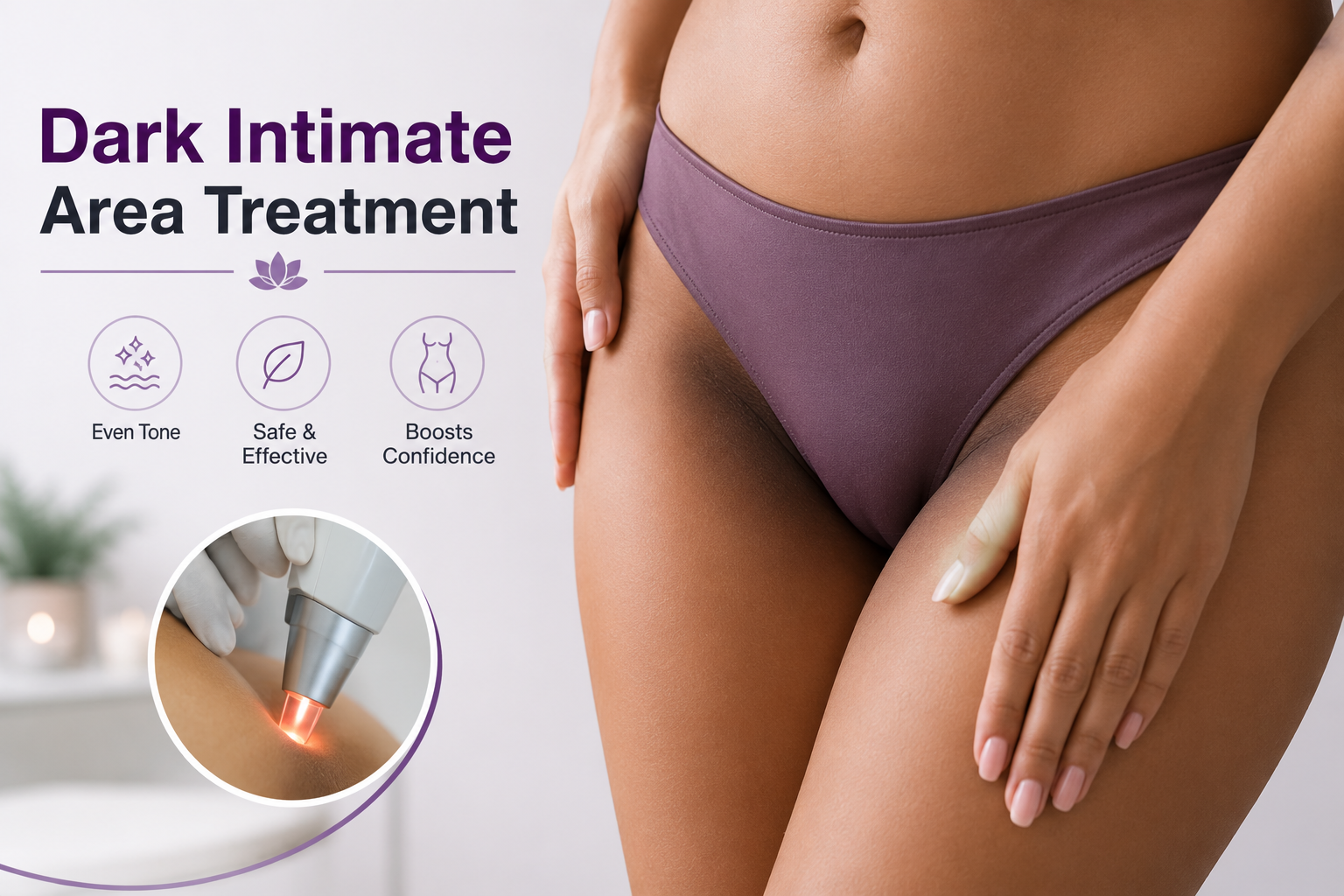
Intimate skin is naturally darker than surrounding skin, and additional darkening usually comes from friction, hair removal, hormonal change or a skin condition; treatment targets the cause first, and results are a gradual lightening rather than a colour change.
Intimate skin is naturally darker than surrounding skin, and additional darkening usually comes from friction, hair removal, hormonal change or a skin condition; treatment targets the cause first, and results are a gradual lightening rather than a colour change.
Why Is Intimate Skin Naturally Darker Than Surrounding Skin?
Darker intimate skin is not automatically abnormal.
Natural skin colour varies across different areas of the body, and intimate skin can normally appear darker than nearby skin. This natural difference does not necessarily mean that something is wrong or that treatment is required.
The more useful question is whether the area has become noticeably darker over time and, if so, what may be contributing to that change.
Possible causes identified in the treatment plan include:
-
friction
-
repeated hair removal
-
hormonal changes
-
an underlying skin condition
For this reason, intimate area darkening treatment should not begin with the assumption that every darker area needs to be lightened.
The first step is understanding whether the pigmentation represents normal skin colour or an additional change with an identifiable cause.
You can also read more about intimate area darkening and how pigmentation changes are assessed.
What Are the Common Causes of Intimate Pigmentation?
The causes of intimate pigmentation are not the same for everyone. Understanding the likely cause helps determine whether treatment is appropriate and which approach may be considered.
Natural Pigmentation
Intimate skin may naturally be darker than surrounding areas.
This does not automatically need treatment.
A realistic treatment discussion should distinguish normal natural pigmentation from additional darkening that developed later.
Friction
Repeated rubbing can contribute to pigmentation.
This can be particularly relevant when considering friction and darkening of the inner thighs.
If friction continues, treating pigmentation without addressing the repeated irritation may produce limited or temporary improvement.
Hair Removal
Repeated hair-removal practices can irritate the skin.
When irritation repeatedly affects the same area, pigmentation changes may follow.
The grooming method therefore needs to be considered as part of the assessment rather than treating the colour change in isolation.
For related information, see Shaving and friction irritation.
Hormonal Changes
Hormonal changes are another possible contributor identified in the treatment plan.
If pigmentation has changed alongside hormonal changes, this context should be considered before selecting a cosmetic treatment.
Skin Conditions
Sometimes pigmentation may be associated with an underlying skin condition.
In this situation, cosmetic pigmentation treatment should not be the first step. The skin change needs assessment so that the underlying problem can be identified before treatment is selected.
Which Causes of Additional Darkening Actually Respond to Treatment?
Not every type of darker intimate skin should be approached in the same way.
The purpose of intimate area darkening treatment is not to turn naturally darker intimate skin into the same colour as surrounding skin.
Instead, treatment focuses on additional pigmentation where an appropriate cause and treatment target can be identified.
For example, if repeated friction is contributing to darkening, reducing the friction is an important part of management.
If repeated grooming irritation is contributing, changing the grooming routine may need to be part of the plan.
When hormonal change is involved, treatment decisions should consider that context.
When a skin condition may be responsible, assessment comes before cosmetic treatment.
Cause-and-Treatment Guide
| Cause of Darkening | How It Presents | Does It Respond to Treatment? | First Step | Maintenance |
|---|---|---|---|---|
| Natural pigmentation | Intimate skin naturally darker than surrounding skin | Should not be approached as an abnormal colour that must be changed | Assessment and realistic expectations | Avoid unnecessary irritation |
| Friction | Additional darkening in repeatedly rubbed areas, including inner thighs | May improve when the contributing cause is addressed | Reduce repeated friction | Continued friction control |
| Hair removal irritation | Pigmentation associated with repeated grooming irritation | Depends on controlling repeated irritation | Review grooming practices | Avoid recurrent irritation |
| Hormonal change | Pigmentation developing or changing with hormonal factors | Depends on the underlying cause | Assessment before selecting treatment | Cause-dependent |
| Skin condition | Pigmentation associated with other skin changes | Depends on the diagnosis | Clinical assessment first | Condition-specific |
The supplied treatment plan does not provide fixed improvement percentages or guarantee that any of these causes will completely resolve.
How Do Topical, Peel and Laser Options Differ?
Once the cause has been assessed, different pigmentation treatments may be considered.
The 30 September plan specifically requires the article to discuss topical treatments, peels and laser treatment.
However, it does not provide specific product names, peel concentrations, laser settings or standard treatment schedules. These should therefore be selected clinically rather than presented as universal protocols.
Topical Treatment
Topical treatment may form part of an intimate area darkening treatment plan when it is appropriate for the type and cause of pigmentation.
It should not be presented as a guaranteed way to change natural intimate skin colour.
The underlying trigger also matters. Continuing friction or irritation while using topical treatment may work against the treatment goal.
Peel Treatment
Peels represent another approach to pigmentation treatment.
The appropriate option depends on assessment of the skin and the reason for the pigmentation.
The supplied plan does not specify peel ingredients, strengths or a fixed number of sessions, so those details should be individualised rather than assumed.
Laser Treatment
Laser is another option that may be considered for selected pigmentation concerns.
A laser versus topical treatment for pigmentation comparison should therefore focus on suitability rather than presenting laser as automatically stronger or better.
The treatment plan does not provide a specific laser device, energy setting, number of sessions or percentage improvement. These details should not be promised universally.
More information about available approaches can be found in the Pigmentation protocols section.
Which Intimate Area Darkening Treatment Is Right for You?
There is no single treatment that should automatically be used for every pigmentation concern.
The decision should begin with several questions:
Is this natural pigmentation?
Naturally darker intimate skin does not necessarily require treatment.
Has the pigmentation increased?
A change over time may make it useful to look for contributing factors.
Is there ongoing friction?
If repeated rubbing continues, the pigmentation may continue as well.
Is hair removal repeatedly irritating the skin?
The grooming method may need to be addressed as part of the treatment plan.
Are there other skin changes?
Pigmentation associated with other skin changes needs assessment before cosmetic treatment.
Once the likely cause is understood, topical treatment, a peel, laser or another appropriate pigmentation protocol can be discussed.
What Results Are Realistic and Over What Period?
Realistic expectations are particularly important with intimate area darkening treatment.
Treatment should not be promoted as a way to achieve a particular shade.
It should also not promise permanent whitening or complete removal of natural pigmentation.
The treatment goal is better described as gradual improvement in additional pigmentation where that pigmentation is appropriate to treat.
The 30 September brief deliberately does not specify:
-
a guaranteed number of shades of improvement
-
a guaranteed percentage reduction
-
a fixed number of treatment sessions
-
permanent results
Those claims should therefore not be added to the article.
The response can vary according to why the pigmentation developed and whether the contributing factor is still present.
How Many Sessions Are Needed?
The supplied content plan asks how many sessions are needed before a change becomes visible, but it does not specify a standard session count.
Therefore, there should not be a universal promise such as “three sessions” or “six sessions.”
The number of sessions can depend on the cause of pigmentation and the treatment approach selected after assessment.
This is also why treatment expectations should be discussed before starting rather than promising a fixed result from a predetermined number of sessions.
Why Does Maintenance Matter and What Does It Involve?
Maintenance after pigmentation treatment matters because the factors contributing to pigmentation may continue after the initial treatment has finished.
For example, if friction contributed to the pigmentation and the same rubbing continues, the skin remains exposed to the same trigger.
Similarly, repeated irritation from grooming may continue to affect the area if the routine does not change.
Maintenance therefore involves addressing the factors that can contribute to recurring pigmentation rather than relying only on repeated procedures.
Patients can read more about Pigmentation maintenance.
Can Intimate Pigmentation Come Back?
Pigmentation can recur or become more noticeable again if the underlying trigger continues.
This is why an intimate area darkening treatment plan should include both treatment and maintenance.
Continued friction, repeated irritation from hair removal or another ongoing cause may affect how the pigmentation behaves over time.
Treatment should therefore not be presented as permanently preventing every future pigmentation change.
When Is Pigmentation a Sign of a Skin Condition Needing Assessment?
Not every pigmentation change should immediately be treated cosmetically.
The treatment brief specifically requires a distinction between pigmentation concerns and a possible underlying skin condition.
If the darker area is associated with other skin changes, assessment should come first.
The supplied plan does not provide a list of specific skin diseases or diagnostic criteria, so a diagnosis should not be assumed from pigmentation alone.
The important principle is straightforward:
Identify the cause before selecting treatment.
This avoids treating a skin change cosmetically when the underlying issue may need a different approach.
Is Laser Safe for Intimate Area Darkening?
Laser is included in the treatment options specified by the content plan, but the plan does not provide a universal safety claim, specific device or treatment setting.
Suitability therefore needs to be assessed individually.
The appropriate treatment depends on the skin, pigmentation pattern and likely cause rather than simply choosing laser because the area appears darker.
Which Habits Can Make Intimate Darkening Worse?
The source plan specifically identifies friction and hair removal as potential contributors to additional pigmentation.
Repeated rubbing and repeated grooming irritation may therefore continue to influence pigmentation.
If these factors are contributing, addressing them becomes part of both initial treatment and long-term maintenance.
Simply repeating pigmentation treatment without changing the ongoing trigger may not address the complete problem.
Conclusion
Intimate area darkening treatment should begin with the cause rather than immediately choosing a cream, peel or laser. Natural intimate skin is commonly darker than surrounding skin, while additional pigmentation may be associated with friction, hair removal, hormonal change or a skin condition.
The appropriate approach is to identify what is contributing to the pigmentation, choose treatment accordingly and maintain realistic expectations. The goal is gradual improvement where appropriate—not changing natural skin colour, promising a specific shade, or guaranteeing permanent results.
Have a Private Question?
Every concern deserves an honest answer. Book a confidential consultation with Dr. Ashutosh Shah at Elegance Clinic, Surat, for guidance made just for you.

About the Author
Dr. Ashutosh Shah is a cosmetic gynecologist and plastic surgeon with over 22 years of experience. At Elegance Clinic in Surat, he is known for safe, honest and completely confidential intimate and aesthetic care.
Is darker intimate skin abnormal?
No. Intimate skin is naturally darker than surrounding skin in many people. Treatment should focus on additional pigmentation and its cause rather than treating normal skin colour as a problem.
How many sessions before any change is visible?
There is no fixed number of sessions in the treatment plan. The timeline depends on the cause of pigmentation and whether topical treatment, peels, or laser are used.
Do topical creams work on their own?
Topical treatments may help selected pigmentation concerns, but underlying causes such as friction or repeated hair-removal irritation should also be addressed.
Can pigmentation come back after treatment?
Yes. Pigmentation may return or become noticeable again, particularly if contributing factors such as friction or repeated irritation continue. Maintenance is therefore important.
Is laser safe on this area?
Laser may be an option for selected pigmentation concerns, but suitability should be assessed individually. The plan does not specify a universal laser protocol for everyone.
Which habits make darkening worse?
Repeated friction and irritation from hair removal are identified as factors that can contribute to additional intimate-area pigmentation.