
Vaginismus: Why Penetration Hurts and How It Is Treated Step by Step
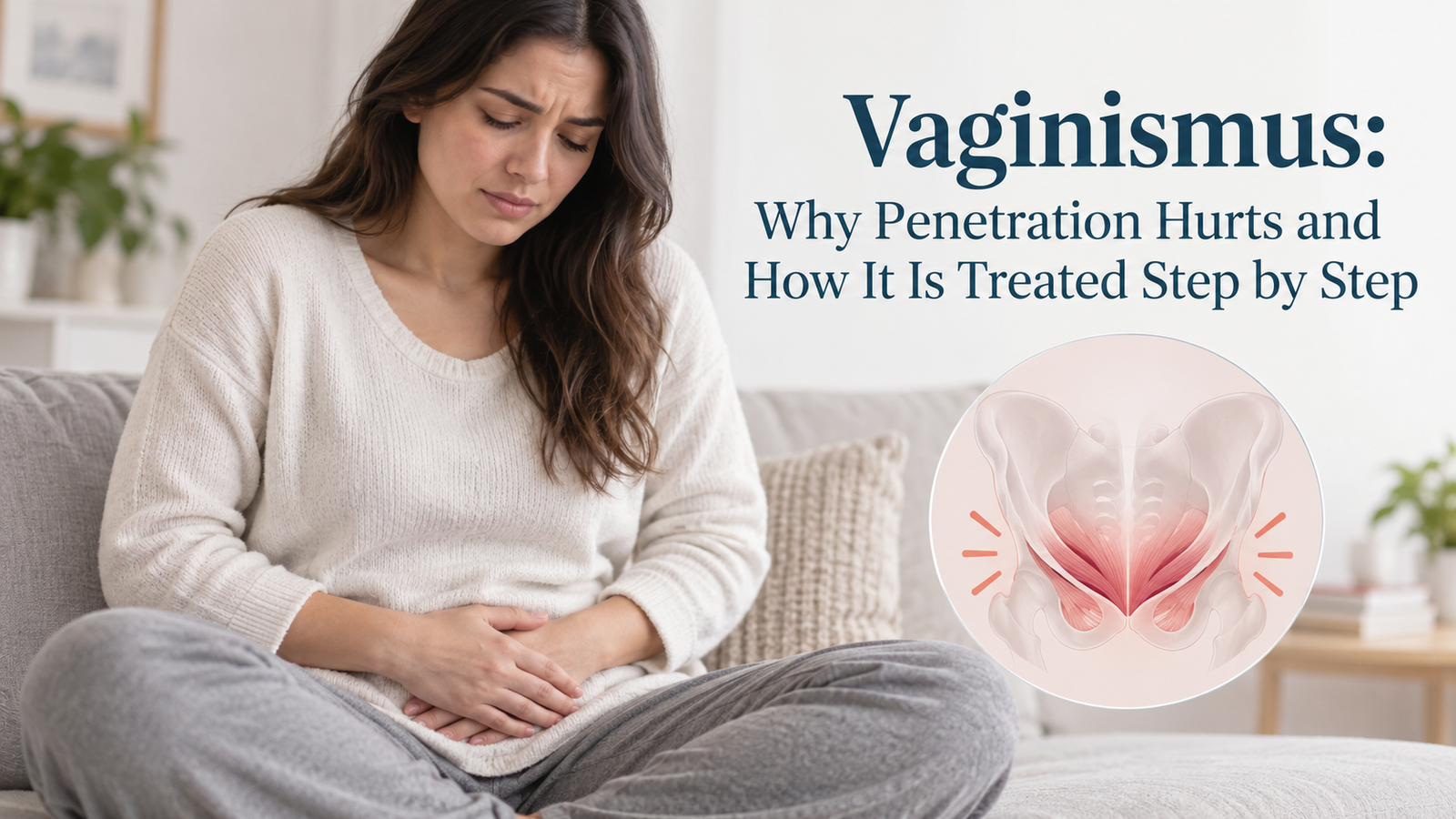
Vaginismus is an involuntary tightening of the pelvic floor muscles at the point of attempted penetration. Vaginismus treatment uses a gradual, individualised programme that may combine pelvic floor relaxation, guided dilator work and treatment of contributing pain or anxiety triggers. The process should progress without forcing painful penetration or examinations.
Vaginismus is an involuntary tightening of the pelvic floor muscles at the point of attempted penetration. Vaginismus treatment uses a gradual, individualised programme that may combine pelvic floor relaxation, guided dilator work and treatment of contributing pain or anxiety triggers. The process should progress without forcing painful penetration or examinations.
Pain or difficulty with penetration can become a cycle: the body anticipates discomfort, the pelvic floor tightens automatically, penetration becomes more difficult or painful, and the experience reinforces fear or muscle guarding.
Vaginismus is not simply a matter of “relaxing more.” The muscle response is involuntary. Effective vaginismus treatment therefore focuses on understanding the pain, reducing protective muscle tension and gradually rebuilding comfort and control.
Treatment should be adapted to the individual rather than forcing everyone through the same programme.
What happens physically during an involuntary pelvic floor spasm?
The pelvic floor is a group of muscles supporting the pelvic organs and surrounding the openings of the pelvis.
During attempted vaginal penetration, these muscles normally need to relax sufficiently to allow comfortable entry.
With vaginismus, the muscles around the vaginal opening may tighten involuntarily when penetration is anticipated or attempted.
This may happen with:
- Sexual intercourse
- A tampon
- A finger
- A vaginal dilator
- A gynaecological examination
Some people experience discomfort but can tolerate limited penetration. For others, penetration may be extremely painful or not possible.
Why does the body tighten automatically?
The pelvic floor can develop a protective response when the nervous system expects pain or threat.
Possible contributing factors differ between individuals and can include previous painful penetration, pelvic floor dysfunction, fear associated with anticipated pain, or another physical condition that initially caused discomfort.
This is why painful intercourse causes should be assessed rather than assuming every person with penetration pain has vaginismus.
Other causes of pain may need separate treatment.
Read more about Discomfort during intimacy.
How is the diagnosis made without a painful examination?
A painful internal examination should not be treated as a requirement for diagnosing the problem.
Assessment can begin with a detailed conversation.
The clinician may ask:
- When the difficulty began
- Whether penetration has ever been comfortable
- Which types of penetration are difficult
- Where pain is felt
- Whether pain occurs before, during or after attempted penetration
- Whether tampon use is possible
- Whether previous examinations have been painful
- Whether there are symptoms of dryness, infection or skin disease
- Whether previous painful experiences influence current symptoms
The aim is to distinguish vaginismus from other causes of pain and understand the individual pattern.
Can an examination still be performed?
When examination is clinically useful, it should progress only with consent and according to the patient's comfort.
It may begin with external observation rather than an internal examination.
If the person is not comfortable continuing, the examination can be stopped and reconsidered later. Treatment should not depend on forcing penetration simply to confirm the diagnosis.
This approach can help prevent another painful experience from reinforcing the existing protective response.
What does a graded treatment programme look like?
A vaginismus treatment programme progresses gradually. The objective is not to reach intercourse as quickly as possible; it is to develop voluntary control, reduce pain and make each stage comfortable before progressing.
Stage 1: Understanding the condition
The first stage involves explaining how the pelvic floor responds and identifying possible pain triggers.
Goal: Understand the pain–tension cycle.
Home practice: Awareness of breathing and pelvic floor tension.
Clinic review: Discuss symptoms, triggers and progress.
Move forward when: The person understands the condition and can begin practising relaxation without pressure.
Stage 2: Pelvic floor relaxation
Treatment then focuses on learning how to identify and release unnecessary pelvic floor tension.
Slow breathing and relaxation exercises may be used as part of this process.
The objective is not simply to make the muscles stronger. In a tight or overactive pelvic floor, learning to relax and coordinate the muscles can be more important.
Stage 3: Comfortable external contact
Before penetration is attempted, the person may gradually become comfortable with touch around the area without triggering significant guarding or distress.
The pace is individual.
Stage 4: Guided dilator work
When appropriate, dilator therapy for painful sex can introduce penetration gradually using progressively sized devices.
The smallest comfortable size is generally used first.
The aim is not to tolerate severe pain. It is to teach the pelvic floor that controlled penetration can occur without the same automatic protective response.
Stage 5: Gradual progression
Progression to a larger dilator should occur only when the current stage is manageable without significant pain or involuntary tightening.
Moving quickly through sizes is not the goal.
Stage 6: Transition to the person's goals
For some people, the goal is comfortable intercourse. For others, it may be tampon use, fertility procedures or being able to undergo a necessary medical examination.
Treatment should therefore be based on the person's own goals.
Step-by-Step Vaginismus Treatment Programme
| Stage | Goal | Home Practice | Clinic Review | Move to Next Stage When |
|---|---|---|---|---|
| 1. Assessment and education | Understand pain and muscle guarding | Symptom awareness and gentle breathing | Identify triggers and exclude other causes | The condition and treatment plan are understood |
| 2. Pelvic floor relaxation | Reduce involuntary tension | Pelvic floor relaxation exercises | Assess muscle coordination | Relaxation can be performed without significant discomfort |
| 3. Comfortable external contact | Reduce protective response to touch | Gradual, non-painful familiarisation | Review pain and guarding | Contact is manageable without significant tightening |
| 4. Initial dilator work | Introduce controlled penetration | Smallest comfortable dilator as instructed | Review technique and symptoms | Current size is comfortable and controlled |
| 5. Gradual progression | Increase tolerance without forcing | Progress gradually when comfortable | Reassess muscle response | Current stage no longer triggers significant pain |
| 6. Functional goal | Work toward intercourse, examination or another personal goal | Apply relaxation and control skills | Review progress and remaining barriers | Goal can be approached comfortably |
| 7. Review | Maintain improvement | Continue useful exercises as advised | Check for recurrence or underlying pain | Symptoms remain controlled |
Progress does not have to be perfectly linear. Some people remain at one stage longer or temporarily return to an earlier stage.
Where does pelvic floor physiotherapy fit and how long does it take?
Pelvic floor physiotherapy can be an important component of vaginismus treatment, particularly when excessive muscle tension, poor relaxation or muscle coordination contributes to symptoms.
A trained pelvic floor physiotherapist may help a patient learn to:
- Recognise pelvic floor tension
- Coordinate breathing with muscle relaxation
- Reduce involuntary guarding
- Improve awareness and control
- Progress through appropriate home exercises
- Use dilators correctly when indicated
See the Pelvic floor programme.
How long does treatment take?
There is no reliable fixed number of days or sessions for everyone.
Treatment duration depends on factors such as:
- Severity of muscle guarding
- Whether another painful condition is present
- Previous experiences with penetration
- Comfort with home practice
- Pelvic floor findings
- Individual treatment goals
Progress should be measured by increasing comfort and control rather than by meeting an arbitrary deadline.
When are medical or procedural options added?
Not every case of penetration pain should be treated with dilators and pelvic floor exercises alone.
If another condition contributes to pain, it needs appropriate assessment and management.
Examples can include dryness, infection, inflammatory skin conditions, scar-related pain or other pelvic and vulvar conditions.
This distinction matters because untreated physical pain can continue triggering protective pelvic floor tightening.
Is medication required?
Medication is not automatically required for vaginismus itself.
Treatment depends on what is contributing to symptoms. If another diagnosed condition is causing pain, treatment for that condition may form part of the programme.
Procedural treatment should similarly be considered only when there is a specific clinical indication rather than as a routine first-line solution for everyone with vaginismus.
At Elegance Clinic, Dr. Ashutosh Shah can assess contributing physical factors and help determine whether pelvic floor therapy, graded rehabilitation or additional medical management is appropriate.
For related care, see Sexual wellness treatment and information about Perineal and scar-related pain.
How are partners included without pressure?
A partner can support treatment, but participation should never create pressure to progress faster.
The person receiving treatment should remain in control of the pace.
Helpful partner involvement can include understanding that the muscle tightening is involuntary, avoiding repeated attempts at painful penetration and supporting gradual treatment goals.
Remove penetration as the immediate target
Repeatedly attempting intercourse despite pain can reinforce the association between penetration and threat.
During treatment, the couple may temporarily focus on forms of intimacy that do not trigger pain or pressure.
Communicate before progressing
The person undergoing treatment should decide when they are comfortable progressing to another stage.
A partner should not use completion of a particular dilator size or physiotherapy stage as evidence that intercourse “should now work.”
Stop when pain increases
Treatment is not about learning to endure severe pain.
If a stage repeatedly causes significant discomfort or muscle guarding, the treatment plan should be reviewed rather than forced.
A supportive partner can help make the process less pressured, but the patient's comfort, consent and goals remain central.
Conclusion
Vaginismus treatment should be gradual, consent-based and focused on reducing the involuntary pelvic floor response rather than forcing penetration.
Assessment can begin without a painful internal examination. Treatment may then progress through pelvic floor relaxation, comfortable touch, guided dilator work and gradual movement toward the individual's personal goal.
If another condition is causing pain, that problem also needs attention. Progress varies between individuals, so success should be measured by improved comfort, control and reduced fear or muscle guarding—not by how quickly someone reaches intercourse.
Have a Private Question?
Every concern deserves an honest answer. Book a confidential consultation with Dr. Ashutosh Shah at Elegance Clinic, Surat, for guidance made just for you.

About the Author
Dr. Ashutosh Shah is a cosmetic gynecologist and plastic surgeon with over 22 years of experience. At Elegance Clinic in Surat, he is known for safe, honest and completely confidential intimate and aesthetic care.
Is vaginismus a physical or psychological condition?
Vaginismus involves a real involuntary pelvic floor muscle response. Physical pain, anticipation of pain and emotional factors can interact differently in each person, so assessment should consider both physical contributors and the circumstances that trigger muscle guarding.
How long does treatment usually take?
There is no fixed treatment duration. Some people progress relatively quickly, while others need longer because of severe muscle guarding, another pain condition or previous painful experiences. Progress should be based on comfort and control rather than a deadline.
Can an examination be done gently if penetration is painful?
Yes. Assessment can begin with discussion and, when appropriate, external examination. Any further examination should proceed only with consent and can stop at any time. A painful internal examination does not need to be forced simply to assess vaginismus.
Is dilator therapy done at home or in clinic?
Dilator therapy commonly includes guided home practice after appropriate instruction. A clinician or pelvic floor physiotherapist can explain technique, help select a suitable starting size and review progress rather than asking the patient to advance through sizes independently.
Does vaginismus affect the ability to conceive?
Vaginismus does not necessarily cause infertility, but severe difficulty with vaginal penetration can make intercourse and some fertility-related procedures difficult. The effect depends on the individual's symptoms and whether any separate fertility condition is present.
Can vaginismus return after successful treatment?
Symptoms can recur, particularly if pain, fear or pelvic floor guarding returns. Skills learned during treatment such as relaxation, gradual exposure and early management of pain may help, but recurrent symptoms should be reassessed rather than simply forced through.