
Why Your Bladder May Leak Even When You Don’t Feel the Urge
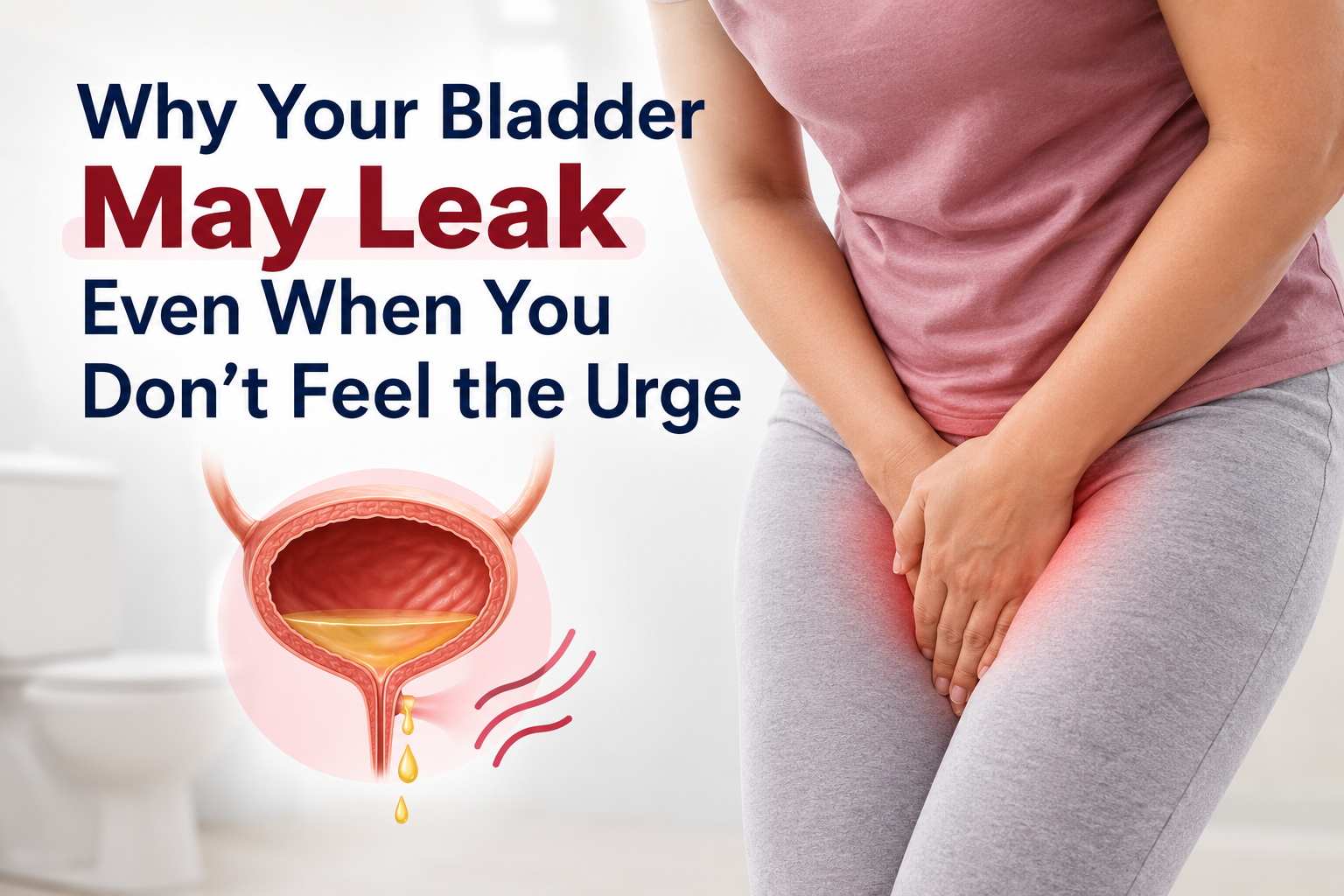
Urine leakage does not always happen because your bladder is “full” or because you suddenly need to urinate. In many women, leakage can occur when coughing, sneezing, laughing, exercising, lifting something heavy, or changing position puts extra pressure on the bladder.
Urine leakage does not always happen because your bladder is “full” or because you suddenly need to urinate. In many women, leakage can occur when coughing, sneezing, laughing, exercising, lifting something heavy, or changing position puts extra pressure on the bladder.
This pattern is commonly associated with stress urinary incontinence. Understanding why it happens can help women recognize the problem early and explore appropriate Stress Incontinence Treatment in Surat.
At Elegance Clinic, Dr. Ashutosh Shah can evaluate the underlying cause of urinary leakage and discuss treatment options based on the individual's symptoms, pelvic-floor function, and overall health.
What Does It Mean When You Leak Without Feeling an Urge?
Imagine sneezing and suddenly noticing a few drops of urine.
You did not feel that you urgently needed to use the bathroom. You were not necessarily holding a completely full bladder. Yet leakage occurred.
This is one of the characteristic patterns of stress urinary incontinence.
The word “stress” here does not refer to emotional stress. Instead, it refers to physical pressure placed on the bladder.
When you cough, sneeze, laugh, run, jump, or lift something heavy, pressure inside your abdomen temporarily increases. Normally, the pelvic floor muscles, urethra, and surrounding support structures help keep urine from escaping.
If this support mechanism does not respond effectively, urine can leak.
Stress Incontinence vs. Urge Incontinence: What's the Difference?
Understanding this distinction is important because different types of urinary incontinence can require different approaches.
| Type | Typical Pattern |
|---|---|
| Stress incontinence | Leakage with coughing, sneezing, laughing, exercise, lifting or physical activity |
| Urge incontinence | A sudden, difficult-to-control need to urinate followed by leakage |
| Mixed incontinence | Features of both stress and urge incontinence |
| Overflow incontinence | Leakage associated with incomplete bladder emptying or urinary retention |
A simple way to remember it
Leakage with pressure or movement → think stress incontinence.
Leakage following a sudden strong urge → think urge incontinence.
However, symptoms can overlap, which is why a professional assessment can be useful.
Why Can Your Bladder Leak Without Warning?
1. Pelvic-floor weakness
The pelvic floor provides important support for the bladder and urethra.
If these muscles become weak, poorly coordinated, or unable to generate enough pressure during activities that increase abdominal pressure, urine leakage can occur.
Pelvic-floor changes may happen after pregnancy and childbirth, with aging, or due to other individual factors.
2. Pregnancy and childbirth
Pregnancy places increased pressure on the pelvic floor.
Vaginal childbirth can also affect the muscles and connective tissues that support the bladder and urethra.
Some women experience leakage temporarily after childbirth, while others develop symptoms that persist or appear later.
3. Repeated coughing or straining
Frequent coughing repeatedly increases pressure on the pelvic floor and bladder.
Chronic constipation and repeated straining may also contribute to pelvic-floor stress.
4. High-impact exercise
Running, jumping, skipping, and certain high-impact workouts can increase pressure on the bladder.
This does not mean exercise is bad for your pelvic floor. Instead, persistent leakage during exercise may indicate that your pelvic-floor muscles and urinary support system need assessment.
5. Changes associated with aging
Pelvic tissues and muscle function can change with age.
Hormonal changes around menopause may also affect the tissues of the urinary and genital tract.
However, urinary leakage should not automatically be dismissed as an unavoidable part of getting older.
What Does Stress Incontinence Feel Like?
Stress incontinence may be surprisingly subtle at first.
You may notice:
- A few drops when sneezing
- Leakage while laughing
- Wetness during exercise
- Leakage when lifting something heavy
- Urine loss while getting up or changing position
- Needing a pad during workouts
- Small leaks that gradually become more frequent
Some women may initially think: “It is only a few drops, so it isn't a real problem.”
But even small amounts of recurring leakage deserve attention if they affect comfort, confidence, exercise, or daily activities.
Why Early Symptoms Shouldn't Be Ignored
A common misconception is that urinary leakage is something women simply have to accept after pregnancy, childbirth, or menopause.
That is not necessarily true.
The right treatment depends on why the leakage is happening, how frequently it occurs, its severity, and whether other urinary symptoms are present.
Early evaluation can help identify the type of incontinence and determine whether conservative treatment may be appropriate.
How Is Stress Incontinence Evaluated?
A healthcare professional may begin with a detailed discussion about:
- When leakage occurs
- How frequently it happens
- Whether there is an urgent need to urinate
- Previous pregnancies and childbirth
- Menstrual or menopausal status
- Current medications
- Fluid and caffeine intake
- Bowel habits
- Previous pelvic or urinary procedures
- Other urinary symptoms
Depending on the situation, examination and selected investigations may also be recommended.
The goal is not simply to confirm that urine leakage exists. It is to determine what type of urinary incontinence you have and what may be contributing to it.
Stress Incontinence Treatment in Surat: What Are the Options?
There is no single treatment that is suitable for every woman.
Pelvic-floor muscle training
Pelvic-floor muscle training is commonly used for stress urinary incontinence and may be recommended as an initial treatment for many women.
The important point is correct technique and consistency.
Simply tightening random muscles is not the same as performing properly guided pelvic-floor exercises.
Lifestyle modifications
Depending on the individual, treatment may also involve addressing factors such as:
- Excess body weight
- Constipation
- Chronic coughing
- Smoking
- Excessive caffeine intake
- High-impact activities that trigger symptoms
Bladder and fluid habits
Some women may benefit from reviewing their fluid intake and bathroom habits.
However, drastically restricting fluids is generally not a good solution because adequate hydration remains important.
Medical or procedural treatment
When conservative measures are insufficient, a specialist may discuss other treatment approaches depending on the individual's diagnosis, severity, anatomy, and treatment goals.
The most appropriate option should be determined after an individualized evaluation rather than choosing a procedure based only on the amount of leakage.
Can Stress Incontinence Be Prevented?
Not every case can be prevented, but several habits may support pelvic and urinary health.
Helpful measures can include:
- Maintaining a healthy weight
- Managing chronic cough
- Preventing constipation and excessive straining
- Performing pelvic-floor exercises correctly
- Seeking help for persistent postpartum leakage
- Addressing recurring urinary symptoms rather than ignoring them
- Using proper exercise techniques
If leakage repeatedly occurs during exercise or daily activities, consider discussing it with a qualified healthcare professional.
When Should You Seek Professional Help?
Consider an evaluation if:
- Urine leakage happens regularly.
- You need pads because of leakage.
- You avoid exercise because you are afraid of leaking.
- You leak when coughing, sneezing, laughing, or lifting.
- Symptoms developed after pregnancy or childbirth and have persisted.
- Leakage is affecting your confidence or quality of life.
- You experience both leakage with activity and sudden urinary urgency.
Seek prompt medical assessment if urinary leakage is accompanied by symptoms such as blood in the urine, significant pain, fever, difficulty passing urine, or sudden neurological symptoms.
Why Choosing the Right Treatment Matters
Urinary leakage is not always caused by the same problem.
A woman leaking urine while running may have a different underlying issue from someone who experiences a sudden uncontrollable urge to urinate.
That is why Stress Incontinence Treatment in Surat should begin with understanding the symptoms rather than immediately choosing a treatment.
At Elegance Clinic, Dr. Ashutosh Shah can assess your symptoms and help determine whether your leakage pattern is consistent with stress incontinence or another type of urinary problem.
Conclusion: Don't Ignore the Small Leaks
A few drops of urine during a sneeze, workout, laugh, or heavy lift may seem insignificant, but they can be an early sign of stress urinary incontinence.
The important distinction is that stress incontinence can occur without a sudden urge to urinate. Recognizing this pattern can help you seek appropriate advice before leakage begins interfering more seriously with your everyday life.
If you are experiencing recurring urine leakage, Elegance Clinic can help you understand the possible cause and explore appropriate Stress Incontinence Treatment in Surat based on your individual needs.
Take the Next Step
Don't let bladder leakage decide what you can wear, where you can go, or how you exercise. Contact Elegance Clinic to discuss your symptoms and find out which treatment approach may be appropriate for you.
Have a Private Question?
Every concern deserves an honest answer. Book a confidential consultation with Dr. Ashutosh Shah at Elegance Clinic, Surat, for guidance made just for you.

About the Author
Dr. Ashutosh Shah is a cosmetic gynecologist and plastic surgeon with over 22 years of experience. At Elegance Clinic in Surat, he is known for safe, honest and completely confidential intimate and aesthetic care.
What is stress incontinence?
Stress incontinence is urine leakage that occurs when physical pressure on the bladder increases, such as during coughing, sneezing, laughing, exercising, or lifting.
Can you have stress incontinence without feeling an urge to urinate?
Yes. Stress incontinence commonly causes urine leakage without a sudden urge to urinate because physical pressure can overcome the normal urinary closure mechanism.
Why do I leak urine when I sneeze?
Sneezing suddenly increases pressure inside the abdomen, and if the pelvic-floor and urethral support system cannot adequately counter that pressure, urine may leak.
Is urine leakage after childbirth normal?
Urine leakage can occur after pregnancy or childbirth, but persistent or bothersome leakage should be evaluated rather than automatically accepted as normal.
Can mild stress incontinence get better?
Yes, some women with mild stress incontinence improve with appropriate conservative measures, particularly properly guided pelvic-floor muscle training.
When should I get treatment for urine leakage?
Consider seeking professional advice when leakage is persistent, recurrent, affects exercise or daily activities, requires pads, or negatively affects your confidence or quality of life.