
Why Nipple Position Can Matter More Than Breast Size
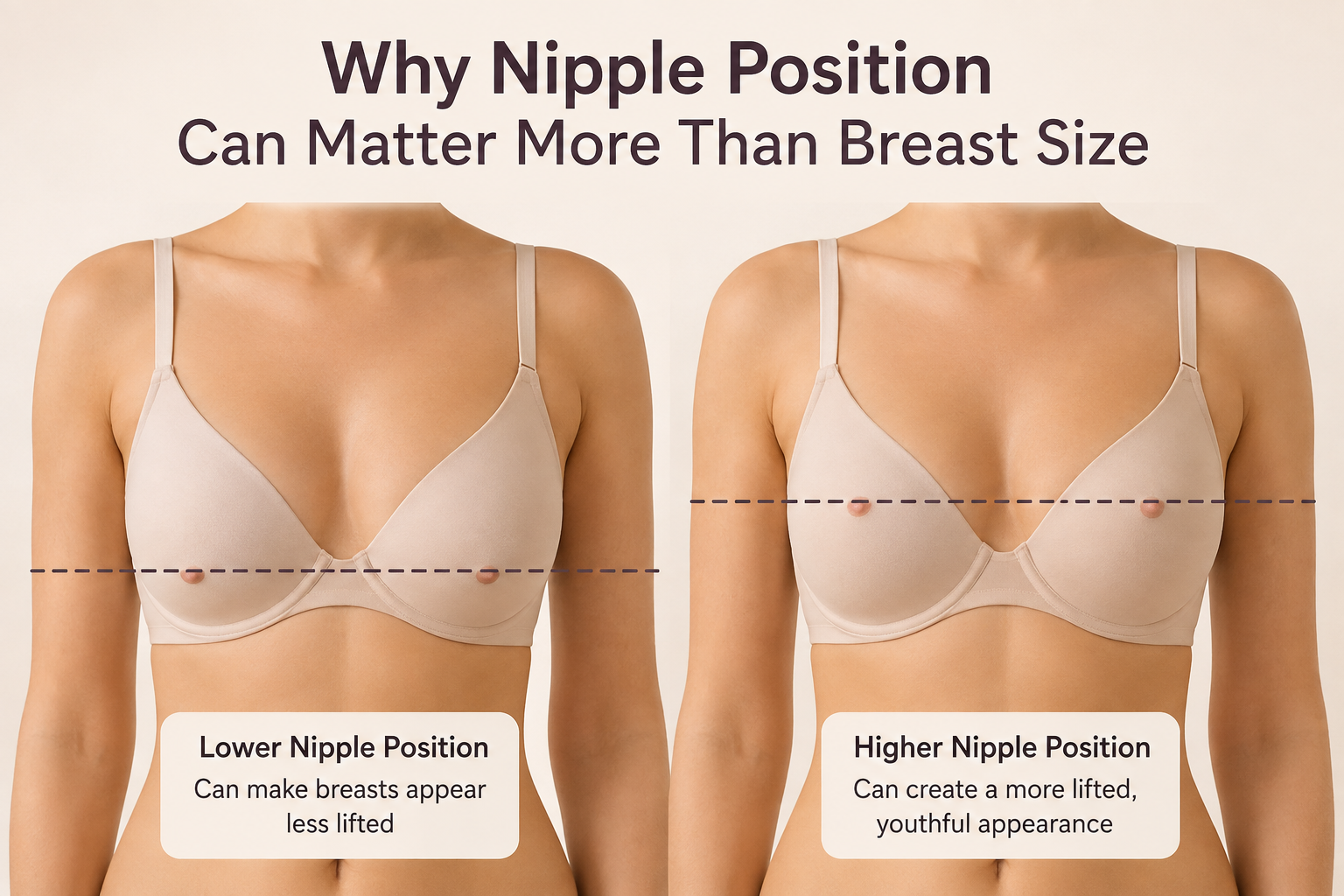
When people think about a feminine chest, breast size is often the first thing that comes to mind. But breast volume is only one part of the overall appearance. The position, size, shape, and proportion of the nipple–areola complex can also influence how the chest is perceived.
When people think about a feminine chest, breast size is often the first thing that comes to mind. But breast volume is only one part of the overall appearance. The position, size, shape, and proportion of the nipple–areola complex can also influence how the chest is perceived.
For some transgender women and gender-diverse individuals considering chest feminization, this is an important but frequently overlooked detail. A breast implant can add volume, but it does not automatically create the nipple and areola proportions or positioning someone may want. Research on chest feminization notes that the nipple–areola complex (NAC) and its relationship to the breast mound are important aesthetic considerations.
This is where Nipple Areola Feminization in Surat may become relevant for people who want to explore more individualized gender-affirming chest surgery.
Why Breast Size Alone Does Not Define a Feminine Chest
Imagine two people with similar breast volume. Their chests can still look noticeably different because of differences in:
- Nipple position
- Areola diameter
- Nipple projection
- Areola shape
- Distance between the nipples
- Breast width and projection
- Overall chest proportions
- Skin and soft-tissue characteristics
The nipple areola complex sits visually at the centre of the breast, so its relationship with the surrounding breast tissue can influence overall balance.
In other words, larger breasts do not necessarily mean a more feminine-looking chest.
The goal of gender-affirming surgery should therefore be based on the individual's anatomy and aesthetic goals rather than simply increasing breast volume.
The Overlooked Role of Nipple Position
Nipple position is not simply about whether the nipples are "high" or "low."
A surgeon may consider their position in relation to the breast mound, chest wall, breast width and the individual's existing anatomy.
Studies of gender-affirming chest surgery demonstrate that nipple areola positioning requires careful anatomical planning, because the ideal position varies with body proportions and chest anatomy.
For someone seeking chest feminization, an assessment may therefore consider questions such as:
Are the nipples appropriately positioned on the breast mound?
Is the distance between them proportionate to the chest?
Does the areola size complement the breast size?
Would changing nipple or areola dimensions improve overall balance?
These considerations can be more meaningful than focusing on cup size alone.
Why Areola Size Can Change the Overall Impression
The areola is the pigmented skin surrounding the nipple. Its diameter and shape contribute to the visual proportions of the breast.
If the areolas appear disproportionately large or small compared with the breast mound, increasing breast volume alone may not address that difference.
Areola-focused procedures can sometimes be considered alongside other breast procedures when clinically appropriate. Cosmetic nipple and areola surgery may involve changes in size, shape or position depending on the individual's anatomy and goals.
This is one reason nipple areola feminization surgery should be approached as an individualized procedure rather than a standardized cosmetic adjustment.
What Is Nipple Areola Feminization?
Nipple areola feminization refers to surgical techniques intended to create a more feminine appearance of the nipple areola complex.
Depending on the person's anatomy and desired outcome, surgical planning may involve consideration of:
- Nipple size
- Areola size
- Areola shape
- Nipple projection
- Nipple position
- Symmetry
- Relationship between the NAC and breast mound
Not everyone needs every type of correction.
The appropriate approach depends on the starting anatomy, previous breast surgery, skin characteristics, breast development, and desired gender-affirming outcome.
Can Nipple Feminization Be Done Without Increasing Breast Size?
Potentially, yes.
Nipple areola procedures and breast-volume procedures address different aspects of chest appearance.
Someone may already have adequate breast volume but feel that the nipple or areola proportions do not match their desired appearance. In such cases, an evaluation can determine whether an isolated nipple areola procedure or a combination approach is appropriate.
Conversely, someone with limited breast volume may benefit from discussing broader chest feminization options.
The important point is that breast size and nipple areola appearance are separate considerations.
Who May Consider Nipple Areola Feminization?
People may explore this type of gender-affirming procedure if they:
- Want a more feminine nipple areola appearance
- Feel their areolas appear disproportionately large or small
- Are concerned about nipple positioning
- Have undergone breast augmentation but remain dissatisfied with nipple proportions
- Want greater symmetry between the two sides
- Are considering broader gender-affirming chest surgery
- Want to discuss options based on their individual chest anatomy
A consultation is important because a procedure that works well for one person may not be suitable for another.
Nipple Position Is About Proportion, Not a Universal Measurement
One common misconception is that there is a single "perfect" nipple position.
There isn't.
Surgical literature emphasizes that nipple–areola positioning is influenced by anatomical landmarks, chest dimensions and individual body proportions. Even research examining nipple placement in gender-affirming surgery notes ongoing discussion about the ideal position across different anatomies.
That means surgical planning should not rely on copying another person's measurements.
Instead, the surgeon evaluates the person's:
Chest → Breast mound → Nipple → Areola → Overall body proportions
This creates a more individualized framework for treatment planning.
What Happens During a Consultation?
A consultation for Nipple Areola Feminization in Surat generally begins with understanding what the patient wants to change.
The assessment may include:
- Understanding your goals
What aspect of the nipple or areola feels inconsistent with your desired appearance? - Examining chest anatomy
The surgeon assesses breast volume, skin quality, nipple position and overall proportions. - Discussing possible techniques
Different surgical approaches may be appropriate depending on the specific concern. - Reviewing expectations
The surgeon explains realistic outcomes, limitations, scars and possible risks. - Creating an individualized plan
Treatment is planned around your anatomy rather than using a one-size-fits-all approach.
At Elegance Clinic, Dr. Ashutosh Shah can discuss whether nipple–areola feminization is appropriate as an independent procedure or as part of a broader gender-affirming surgical plan.
What About Symmetry?
Perfect symmetry is not a realistic expectation because natural human anatomy is rarely perfectly symmetrical.
However, surgical planning can aim to improve differences in:
- Nipple height
- Nipple spacing
- Areola diameter
- Areola shape
- Nipple projection
The objective is generally better overall balance, not mathematical perfection.
Can Nipple Position Change After Surgery?
Yes, the appearance of the nipple and breast can change during healing.
Swelling, scar maturation and changes in the surrounding tissues may affect the early appearance. The final result should therefore be assessed after an appropriate healing period rather than immediately after surgery.
Your surgeon should provide individualized instructions about wound care, activity restrictions and follow-up.
What Are the Possible Risks?
As with any surgical procedure, nipple–areola surgery can involve risks.
Depending on the technique, these may include:
- Bleeding
- Infection
- Scarring
- Asymmetry
- Changes in nipple sensation
- Delayed wound healing
- Changes in nipple projection
- Revision surgery
- Unpredictable aesthetic results
The exact risks depend on the procedure performed and the individual's anatomy. A qualified surgeon should explain these risks during consultation.
Nipple Areola Feminization vs Breast Augmentation
These procedures should not be considered interchangeable.
| Breast Augmentation | Nipple–Areola Feminization |
|---|---|
| Primarily increases breast volume | Focuses on the nipple–areola complex |
| Uses implants or other volume-enhancing methods | May modify nipple/areola size, shape or position |
| Changes breast projection | Changes a specific anatomical detail |
| Does not automatically correct every nipple concern | Can specifically address selected nipple–areola concerns |
Some individuals may benefit from combining procedures, while others may not need additional breast volume.
The Bigger Picture: Feminine Chest Proportions
A natural-looking result is not necessarily about making every feature larger.
Sometimes, proportion creates the impression of femininity more effectively than size alone.
The breast mound, nipple, areola, chest width and overall body proportions work together visually. That is why an individualized assessment is particularly important for gender-affirming chest surgery.
Major medical centres describe chest feminization as surgery that can involve augmentation and reshaping of the nipples and chest to create a more feminine appearance.
Conclusion: Sometimes the Smallest Detail Makes the Biggest Difference
A feminine chest is not defined by breast size alone. Nipple position, areola proportions, symmetry and the relationship between the nipple–areola complex and breast mound can all contribute to the overall appearance.
For people considering Nipple Areola Feminization in Surat, the most important step is an individualized consultation rather than choosing a procedure based solely on breast size or someone else's result.
Considering gender-affirming nipple or areola surgery in Surat? Consult Elegance Clinic to discuss your anatomy, goals and suitable treatment options with Dr. Ashutosh Shah. A personalized assessment can help determine whether nipple–areola feminization, breast augmentation, or a combination approach is appropriate for you.
Have a Private Question?
Every concern deserves an honest answer. Book a confidential consultation with Dr. Ashutosh Shah at Elegance Clinic, Surat, for guidance made just for you.

About the Author
Dr. Ashutosh Shah is a cosmetic gynecologist and plastic surgeon with over 22 years of experience. At Elegance Clinic in Surat, he is known for safe, honest and completely confidential intimate and aesthetic care.
What is Nipple Areola Feminization in Surat?
Nipple Areola Feminization in Surat refers to gender-affirming surgical procedures designed to create a more feminine appearance of the nipple–areola complex, potentially addressing its size, shape, projection or position.
Can nipple feminization be done without breast augmentation?
Yes, in selected cases. Nipple–areola surgery addresses a different aspect of chest appearance from breast augmentation, so some people may be candidates for nipple-focused surgery without additional breast volume.
Can the areola be made smaller?
Areola reduction may be possible for appropriate candidates. The technique depends on the existing areola size, skin quality, nipple position and the desired result.
Is nipple areola feminization a gender-affirming procedure?
Yes. Nipple and areola reshaping can be incorporated into an individualized gender-affirming chest surgery plan when appropriate.
Is there a perfect feminine nipple position?
No. Nipple position should be evaluated in relation to the individual's chest anatomy, breast dimensions and overall proportions rather than a single universal measurement.
Can nipple feminization improve chest symmetry?
It may improve visible asymmetry in selected cases. However, perfect symmetry cannot be guaranteed because natural anatomical differences are common.