
Lichen Sclerosus: Recognising It Early and Managing It Long Term
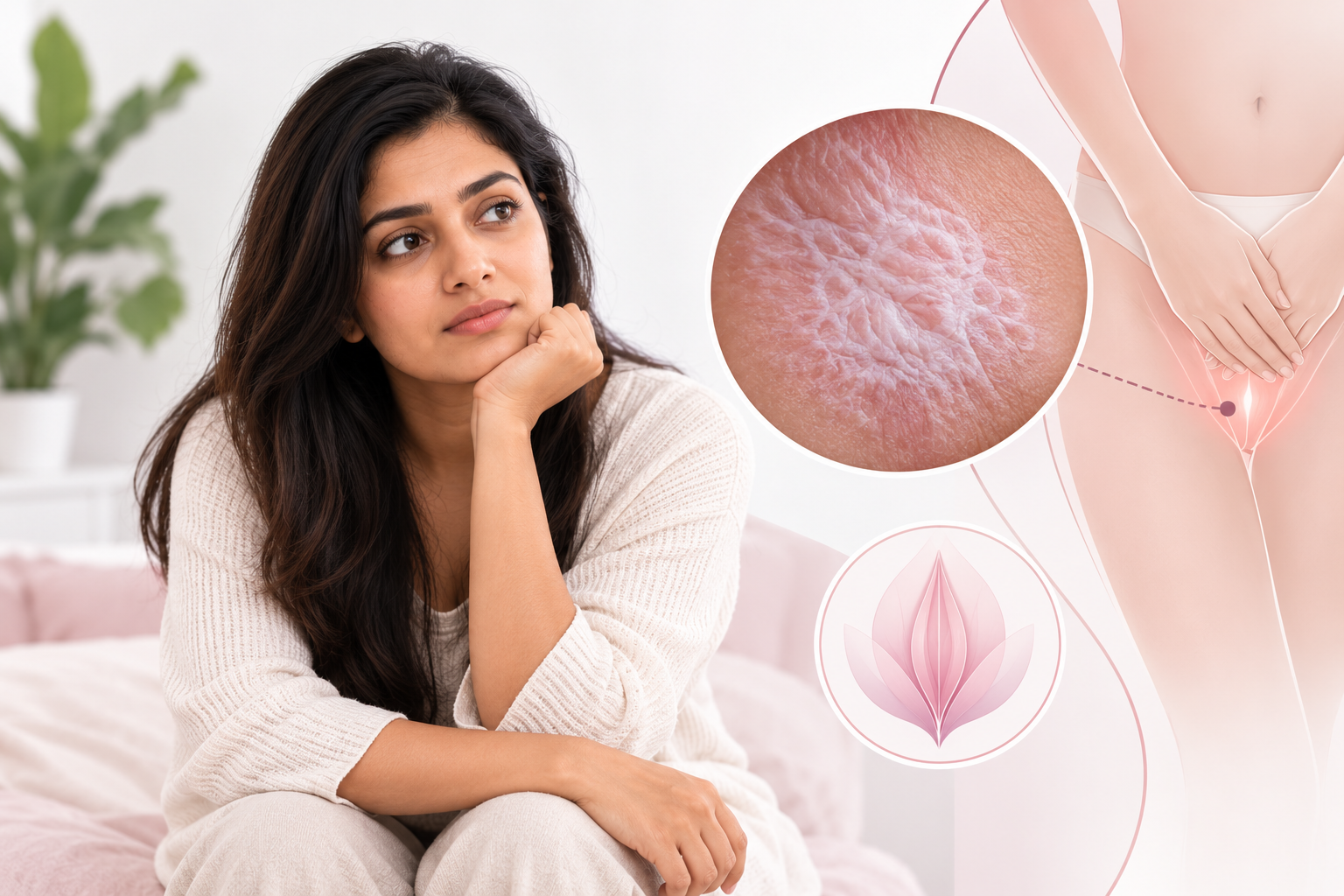
Lichen sclerosus is a long-term inflammatory skin condition that can affect the vulva, causing persistent itching, pale or white patches, fragile skin and, when uncontrolled, changes in vulvar anatomy. Lichen sclerosus treatment commonly involves a prescribed potent topical corticosteroid used according to a defined regimen, together with ongoing examination and long-term follow-up.
Lichen sclerosus is a long-term inflammatory skin condition that can affect the vulva, causing persistent itching, pale or white patches, fragile skin and, when uncontrolled, changes in vulvar anatomy. Lichen sclerosus treatment commonly involves a prescribed potent topical corticosteroid used according to a defined regimen, together with ongoing examination and long-term follow-up.
Early assessment is important because symptoms can resemble other vulvar conditions, while appropriate treatment can help control inflammation, relieve symptoms and reduce the risk of progressive scarring.
Which Symptoms and Skin Changes Should Prompt an Examination?
Persistent vulvar itching is one of the common reasons someone with lichen sclerosus seeks medical advice.
However, itching is not the only possible symptom. Some people notice changes in the appearance or texture of the vulvar skin before they realise there may be an underlying skin condition.
White or Pale Patches
White patches on the vulva should be examined when they persist, spread or occur with itching, soreness or changes in skin texture.
Lichen sclerosus can cause the affected skin to appear pale or white. The skin may also look smoother, thinner or more fragile than surrounding tissue.
Not every white patch is lichen sclerosus, so examination is important rather than trying to diagnose the condition from appearance alone.
Vulvar Itching That Keeps Returning
Occasional irritation can occur for many reasons. However, vulvar itching that keeps returning, particularly when it continues despite treatment for presumed fungal infection, deserves further evaluation.
Persistent itching may interfere with sleep and daily activities. Scratching can also further irritate already sensitive skin.
Fragile, Thin or Easily Injured Skin
Skin thinning around the vulva may make the area more vulnerable to small cracks, bleeding or soreness.
Some people notice that the skin tears more easily during wiping, exercise or sexual activity.
Changes in Vulvar Anatomy
Long-standing inflammation and scarring can sometimes alter normal vulvar anatomy.
Changes can include narrowing around the vaginal opening or alterations involving vulvar structures. These changes are a reason for specialist assessment rather than continued self-treatment.
Pain or Discomfort During Intimacy
Fragile skin, fissures, inflammation or narrowing can make sexual intercourse uncomfortable or painful.
Pain during intimacy should not simply be accepted as something that has to be tolerated. The underlying cause should be assessed.
You can read more about discomfort during intimacy and the conditions that may contribute to it.
Symptom-to-Action Guide
| Symptom or Sign | What It May Indicate | Examination or Test | Treatment Step | Follow-Up |
|---|---|---|---|---|
| Persistent vulvar itching | Ongoing inflammation or another vulvar condition | Vulvar examination | Treatment based on diagnosis | Review response |
| White or pale patches | Possible lichen sclerosus or another skin disorder | Careful clinical examination | Condition-specific treatment | Ongoing review if LS confirmed |
| Thin or fragile skin | Active skin disease | Examination for fissures and inflammation | Control underlying inflammation | Long-term monitoring |
| Small cracks or bleeding | Fragile or inflamed skin | Examine affected area | Treat underlying disease and minimise irritation | Review healing |
| Pain during intercourse | Inflammation, fissuring, scarring or narrowing | Vulvar and vaginal assessment as appropriate | Treat active disease and address structural problems | Individual follow-up |
| New persistent lump, ulcer or unusual area | Requires exclusion of other pathology | Clinical examination; biopsy may be considered | Depends on diagnosis | Prompt review |
| Progressive anatomical change | Scarring from chronic disease | Specialist examination | Medical treatment; surgical review in selected cases | Long-term follow-up |
This table is a general guide and should not be used for self-diagnosis.
How Is the Diagnosis Confirmed and When Is a Biopsy Needed?
Lichen sclerosus can often be suspected from the symptoms and characteristic appearance of the affected skin.
A clinician will usually ask about itching, soreness, changes in skin appearance, previous treatments and whether there is discomfort during sexual activity.
The vulvar skin is then examined carefully.
Is a Biopsy Always Necessary?
No. A biopsy is not automatically required in every person with suspected lichen sclerosus.
When the clinical appearance is typical, an experienced clinician may be able to make the diagnosis based on examination.
However, a biopsy may be recommended when:
- The diagnosis is uncertain
- The appearance is unusual
- Treatment is not producing the expected response
- There is a persistent ulcer, thickened area, lump or other concerning change
- Another vulvar condition needs to be excluded
A biopsy involves taking a small sample of affected skin for examination under a microscope.
Its purpose is not simply to confirm every straightforward case. It is particularly valuable when the diagnosis or a changing area needs clarification.
Can Lichen Sclerosus Be Mistaken for an Infection?
Yes. Itching and irritation can lead some people to assume that they repeatedly have a fungal infection.
If symptoms repeatedly return despite appropriate treatment, or if there are persistent white patches or changes in vulvar skin texture, further examination is important.
Repeatedly treating an undiagnosed skin condition as an infection can delay appropriate management.
You can also learn more about vulvar skin changes and why examination matters when the appearance or texture of the area changes.
What Does First-Line Topical Treatment Involve and How Is It Tapered?
A potent or very potent topical corticosteroid is commonly used as first-line lichen sclerosus treatment.
The purpose of treatment is to control inflammation, relieve itching and soreness, allow damaged skin to heal and help prevent further scarring.
Treatment Usually Follows a Defined Regimen
The steroid should be used according to the schedule prescribed by the treating doctor.
Treatment commonly begins with a more frequent application phase. As the condition improves, application may be reduced gradually according to the prescribed regimen and clinical response.
This process is sometimes described as tapering.
Patients should not create their own tapering schedule or abruptly change treatment simply because the itching has improved.
Correct Application Matters
Patients should be shown where the medication needs to be applied and approximately how much to use.
Applying medication incorrectly, inconsistently or stopping too soon may reduce its effectiveness.
Do Steroid Creams Make the Skin Even Thinner?
This is a common concern because lichen sclerosus itself can make vulvar skin appear thin and fragile.
When an appropriate topical corticosteroid is prescribed and used correctly for lichen sclerosus, its purpose is to control the inflammation damaging the skin.
Fear of steroid treatment should not lead someone to use substantially less than prescribed or stop treatment without discussing it with their doctor.
At the same time, potent topical medication should be used under medical guidance rather than applied indefinitely without review.
What Happens After Symptoms Improve?
Improvement in itching does not necessarily mean the condition has permanently disappeared.
Your doctor may recommend a maintenance approach depending on disease activity and recurrence.
The aim is long-term disease control using an individualized regimen.
Why Does Long-Term Follow-Up Matter Even When Symptoms Settle?
Long-term follow-up for vulvar skin conditions such as lichen sclerosus remains important even when itching and soreness improve.
There are several reasons.
Symptoms and Disease Activity Are Not Always Identical
Someone may feel much better after treatment while subtle skin changes remain.
Follow-up allows the clinician to assess the skin itself rather than relying entirely on symptoms.
Scarring Needs Monitoring
Repeated or inadequately controlled inflammation can lead to progressive scarring and anatomical changes.
Regular examination helps identify these changes.
Treatment May Need Adjustment
Some people remain stable with a maintenance regimen, while others experience flare-ups.
Follow-up provides an opportunity to review how treatment is being used and whether it needs adjustment.
Persistent New Changes Need Assessment
Lichen sclerosus is associated with an increased risk of vulvar squamous cell carcinoma, although most people with lichen sclerosus do not develop cancer.
A persistent ulcer, new lump, thickened area, unexplained bleeding or a new area that looks different from the surrounding skin should therefore be medically assessed rather than simply assumed to be another flare.
This is one of the main reasons long-term observation matters.
It is also important that intimate health concerns are handled respectfully. Read more about confidential care and privacy when seeking assessment for sensitive concerns.
When Does Architectural Change Need Surgical Review?
The first-line management of lichen sclerosus is generally medical rather than surgical.
However, chronic inflammation and scarring can sometimes produce structural or architectural changes that interfere with normal function.
Narrowing of the Vaginal Opening
Scarring around the entrance of the vagina may contribute to discomfort or difficulty during intercourse.
Before considering a procedure, active inflammation should be appropriately assessed and treated.
When significant narrowing persists and causes functional problems despite appropriate medical management, specialist surgical assessment may be considered.
Scarring Affecting Vulvar Structures
Changes in normal anatomy can occur with long-standing disease.
The need for intervention depends on the type of structural change, symptoms and functional impact.
Persistent Pain During Intercourse
Pain may result from active inflammation, small skin fissures, pelvic floor factors, narrowing or a combination of issues.
Treatment should therefore address the actual cause rather than assuming surgery is required.
Surgery Does Not Replace Disease Control
Even when a procedure is appropriate for a structural problem, it does not mean the underlying inflammatory condition has been permanently cured.
Ongoing medical management and follow-up may still be required.
If you are researching procedures involving the intimate area, it is useful to understand whether cosmetic gynaecology is safe and why appropriate patient selection and medical assessment matter.
Which Daily-Care Steps Reduce Flare-Ups?
Medical treatment is the mainstay of managing lichen sclerosus, but everyday vulvar care can help minimise additional irritation.
The goal is to protect sensitive skin rather than repeatedly expose it to products that may cause irritation.
Keep Cleansing Gentle
Avoid aggressive scrubbing.
Use gentle washing practices recommended by your clinician and avoid repeatedly applying perfumed products to sensitive vulvar skin.
Avoid Known Irritants
Fragranced intimate washes, deodorants and other irritating products may aggravate symptoms in some people.
If a product consistently causes burning, itching or redness, stop using it and discuss alternatives with your doctor.
Reduce Friction
Tight clothing or activities that create repeated friction can sometimes worsen discomfort when the skin is inflamed.
Choose comfortable clothing when symptoms are active.
Follow the Prescribed Treatment Plan
Do not wait until symptoms become severe before following a maintenance plan that your clinician has specifically prescribed.
Likewise, do not increase potent steroid use without medical advice.
Know Your Usual Skin Appearance
Becoming familiar with your own normal appearance can make it easier to recognise a persistent new change.
Seek assessment if you notice a new lump, ulcer, persistent sore, thickened area, bleeding or another unexplained change.
Attend Follow-Up Even When You Feel Well
Feeling better is an important treatment goal, but long-term care also focuses on maintaining skin health and identifying recurrence or complications early.
Conclusion
Lichen sclerosus treatment is about long-term disease control, not simply stopping the itching.
Persistent vulvar itching, white patches, fragile skin, recurrent fissures or changes in vulvar anatomy should prompt examination. Diagnosis can often be made clinically, while biopsy is useful in selected cases where the diagnosis is uncertain or a suspicious area needs investigation.
Appropriately prescribed topical corticosteroid treatment is the mainstay of management. Once symptoms improve, ongoing follow-up remains important to monitor disease activity, scarring and new skin changes.
If lichen sclerosus is affecting comfort, intimacy or normal vulvar anatomy, individual assessment can help determine whether medical treatment alone is appropriate or whether additional specialist management is needed.
Have a Private Question?
Every concern deserves an honest answer. Book a confidential consultation with Dr. Ashutosh Shah at Elegance Clinic, Surat, for guidance made just for you.

About the Author
Dr. Ashutosh Shah is a cosmetic gynecologist and plastic surgeon with over 22 years of experience. At Elegance Clinic in Surat, he is known for safe, honest and completely confidential intimate and aesthetic care.
Is lichen sclerosus a permanent condition?
Lichen sclerosus is generally a long-term condition. Treatment can control symptoms and inflammation, but ongoing monitoring may still be required even when the skin feels better.
Can it be mistaken for a fungal infection?
Yes. Persistent itching may initially be mistaken for a fungal infection. Recurrent symptoms, white patches or changes in skin texture should be medically examined.
Is a biopsy always required?
No. A biopsy is not necessary in every typical case. It may be recommended when the diagnosis is uncertain or when a persistent or suspicious skin change needs further evaluation.
Do steroid creams thin the skin further?
Correctly prescribed topical corticosteroids are a standard treatment for vulvar lichen sclerosus. They control the inflammation responsible for skin damage and should be used according to the prescribed regimen.
Can it affect intercourse and how is that managed?
Yes. Inflammation, fissures or scarring can make intercourse painful. Treatment focuses on controlling active disease and addressing any persistent narrowing, scarring or other causes of discomfort.
How often should follow-up examinations happen?
Follow-up frequency depends on disease activity, treatment response and individual risk. Your clinician should provide a long-term review schedule and advise earlier assessment for any new persistent skin change.