
Is My Labia Normal? Anatomy, Variation and When Nothing Needs Treating
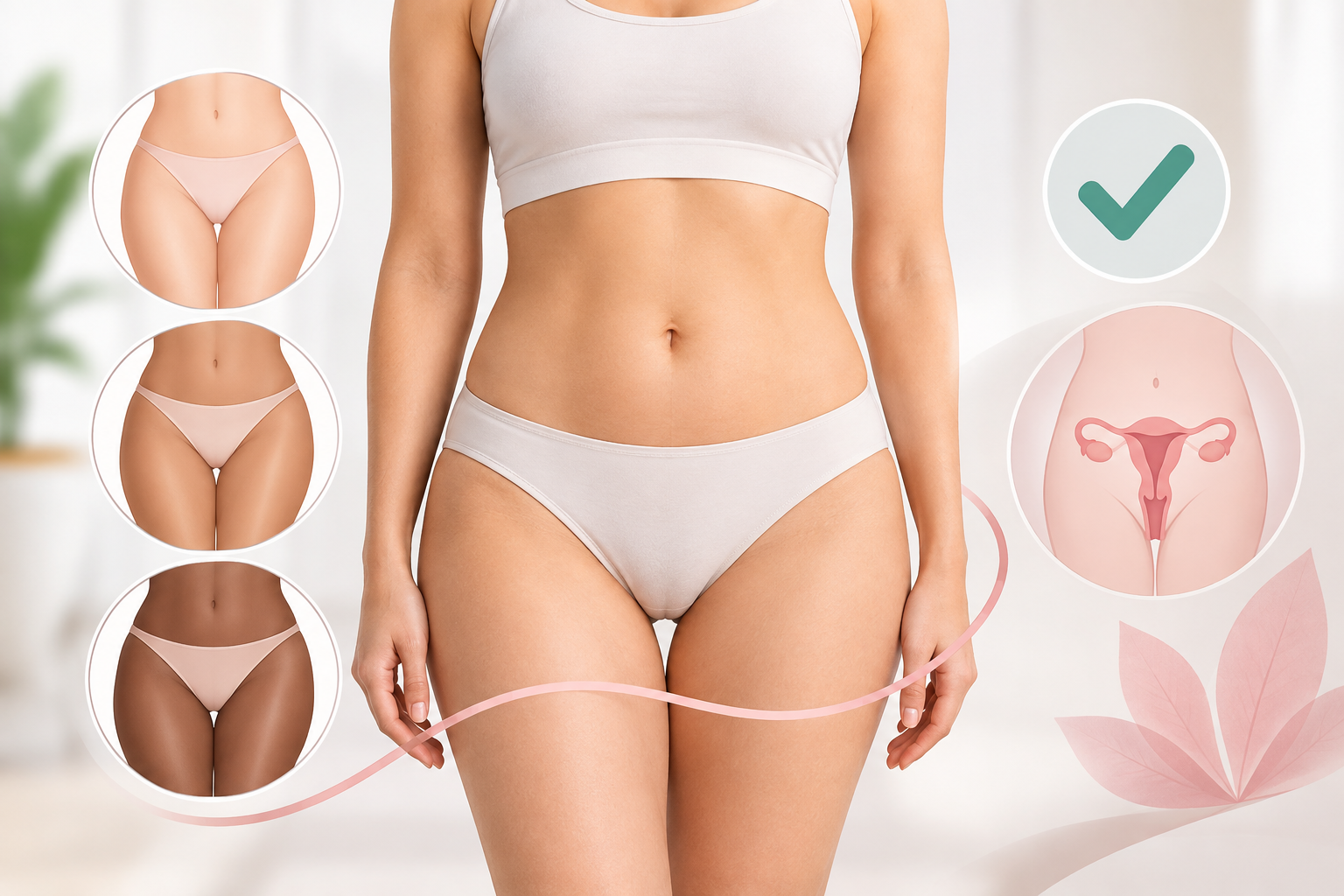
There is no single normal labial size or shape: length, colour and asymmetry between the two sides vary widely and are not in themselves a medical problem, so assessment focuses on functional symptoms rather than appearance.
If you have ever wondered, “Is My Labia Normal?”, it is important to know that there is no single normal labial size or shape. Length, colour, thickness and asymmetry between the two sides vary widely and are not in themselves a medical problem. Assessment should focus primarily on symptoms and function rather than appearance.
Questions about labial appearance are common, especially when the inner labia are visible, one side is longer than the other, or the appearance changes after puberty, childbirth or menopause. In many cases, these differences simply represent normal anatomical variation.
How Much Natural Variation Exists in Labial Size, Shape and Asymmetry?
The vulva includes several structures, including the labia majora, or outer lips, and the labia minora, or inner lips. These structures naturally differ considerably between individuals.
The labia minora may be short or long, symmetrical or noticeably different from one side to the other. They may sit within the outer labia or extend beyond them. Their edges may also be smooth, folded or irregular.
Colour naturally varies as well. Depending on pigmentation, hormones, age and other factors, the labia may appear pink, brown, reddish or darker than the surrounding skin.
Importantly, there is no single measurement that determines whether labia are normal.
One side being longer or shaped differently from the other is also common. Human anatomy is rarely perfectly symmetrical, and the vulva is no exception.
If you are concerned specifically about differences between the two sides, information about Enlarged or uneven labia can help explain the difference between natural anatomical variation and symptoms that may require assessment.
Which Appearance Concerns Are Variation Rather Than a Problem?
Many concerns develop because someone's anatomy looks different from what they expected rather than because it is causing a medical problem.
Common examples include:
- One inner labium being longer than the other
- Labia minora extending beyond the labia majora
- Naturally darker pigmentation
- Wrinkled or folded edges
- Differences in thickness between the two sides
- Changes during or after puberty
- Changes after pregnancy or childbirth
- Changes associated with ageing
These features do not automatically indicate disease or mean that treatment is necessary.
Visible inner labia, for example, are not by themselves a medical problem. Similarly, asymmetry does not mean that the tissue has developed incorrectly.
A consultation should therefore not begin with the assumption that the anatomy needs to be changed simply because it differs from a particular aesthetic expectation.
Appearance Concern vs Functional Symptom Checklist
| Concern or Symptom | What It Usually Indicates | Is Assessment Needed? | What Assessment Involves |
|---|---|---|---|
| One labium longer than the other | Common anatomical asymmetry | Usually not without symptoms | Discussion and examination if needed |
| Inner labia visible beyond outer labia | Normal anatomical variation | Usually not for appearance alone | Assessment if symptoms are present |
| Darker labial pigmentation | Often normal variation | Usually not | Examination for sudden or unusual changes |
| Changes after childbirth | Tissue and hormonal changes | Depends on symptoms | History and physical examination |
| Repeated rubbing or chafing | Possible functional irritation | Yes, if persistent | Assessment of location and triggers |
| Pain during exercise | Possible functional problem | Assessment may be appropriate | Examination and symptom review |
| Recurrent soreness or skin injury | Irritation or another condition | Yes | Examination to identify the cause |
| New lump, ulcer or skin change | Requires medical assessment | Yes | Clinical examination and further tests if indicated |
Which Symptoms Are Genuinely Functional?
Appearance concerns and functional symptoms are different.
A person may have prominent, longer or asymmetrical labia without experiencing any physical difficulty. In this situation, treatment is not medically required simply because the anatomy looks a particular way.
Functional symptoms may include:
- Persistent rubbing or chafing
- Recurrent soreness during exercise
- Discomfort with certain clothing
- Repeated local irritation
- Pain associated with sexual activity
- Recurrent injury to the tissue
- Persistent discomfort linked to a particular anatomical feature
The important question is whether the symptoms can actually be linked to the labial tissue.
Not every episode of vulvar discomfort is caused by labial size. Skin conditions, infections, dryness, pelvic floor problems and other conditions may produce similar symptoms.
An appropriate examination can therefore help identify the actual cause before any treatment is considered.
How Do Age, Childbirth and Hormonal Change Alter Appearance?
The vulva naturally changes throughout life. Puberty, pregnancy, childbirth, hormonal changes and ageing can all affect the appearance of the labia.
Puberty
Hormonal changes during puberty influence the development, pigmentation and size of external genital tissues.
The labia may become more prominent during this period, and one side may develop differently from the other. These differences do not necessarily indicate abnormal development.
Pregnancy and Childbirth
Pregnancy causes substantial hormonal and physical changes. Increased blood flow and changes in the tissues may temporarily alter the appearance of the vulva.
Vaginal delivery can also affect the surrounding tissues. Swelling generally settles after childbirth, but some differences in tissue shape, laxity or appearance may remain.
A change following childbirth does not automatically mean treatment is required. The decision depends on symptoms and examination findings.
Menopause
Falling oestrogen levels around and after menopause can affect vulvar and vaginal tissues. The tissues may become thinner, drier or less elastic.
The labia majora may also lose some volume with age.
Those concerned specifically about changes involving the outer labia can read more about Labia majora reduction. However, whether any treatment is appropriate should be determined through individual assessment.
Why Are Images Online a Poor Comparison Standard?
Someone asking “Is My Labia Normal?” may search online for photographs to compare their anatomy with others. Unfortunately, these images are often a poor standard for determining what is normal.
Online photographs do not represent the complete range of natural anatomy. Images may be selected, edited, posed or presented for a specific purpose. Cosmetic websites and social media may also disproportionately show particular appearances.
Photography itself can be misleading. Lighting, camera angle, position and tissue placement can significantly alter how anatomy appears.
Comparing yourself with a limited number of photographs can therefore create the impression that there is a narrow standard of normality when natural variation is actually broad.
Instead of comparing appearance, more useful questions include:
- Are there persistent symptoms?
- Is there a new or unexplained change?
- Is the tissue interfering with normal activities?
- Is there pain, recurrent irritation or skin injury?
- Is there evidence of another medical condition?
These questions provide more useful clinical information than comparison with photographs online.
What Does a Consultation Cover When No Treatment Is Needed?
If you are asking “Is My Labia Normal?” because of persistent discomfort, rubbing, irritation or a recent change, a consultation can help distinguish normal variation from a condition that needs medical attention.
Importantly, having a consultation does not mean that treatment will be recommended.
The consultation usually begins with understanding why you are concerned. The clinician may ask whether the concern relates only to appearance or whether symptoms such as pain, rubbing, recurrent irritation or discomfort during activities are present.
Relevant medical, menstrual, pregnancy and childbirth history may also be discussed.
When appropriate and with consent, an examination can assess whether there is:
- Normal anatomical variation
- Irritation or inflammation
- A skin condition
- Scarring
- A cyst or another lesion
- Hormone-related tissue changes
- Another explanation for the symptoms
The purpose is to identify what is causing the concern rather than beginning with a predetermined treatment.
Information about Who is a candidate further explains why suitability for a procedure should be determined through individual assessment rather than appearance alone.
When No Procedure Is Recommended
Sometimes the most appropriate outcome of a consultation is reassurance.
If there are no functional symptoms, no concerning examination findings and the anatomy represents normal variation, a procedure may not be necessary.
If another condition is responsible for discomfort, treatment should address that condition. For example, irritation caused by a skin disorder should be appropriately diagnosed and treated rather than assuming that changing normal labial anatomy will solve the problem.
When May Treatment Be Considered?
There can be situations in which persistent functional symptoms justify discussing treatment options.
The decision should be based on symptoms, examination findings, expectations and individual circumstances rather than a particular measurement or appearance.
Before considering a procedure, it is important to establish whether the symptoms are genuinely related to the tissue being considered for treatment.
If labiaplasty is discussed, the consultation should also cover realistic expectations, possible complications, healing and postoperative restrictions.
For people who have been appropriately assessed and choose to proceed, the Labiaplasty recovery guide explains what recovery may involve.
Treatment should not be presented as necessary simply because the labia are visible, asymmetrical or different from photographs seen online.
When Should You Seek Medical Advice?
Medical assessment is appropriate when there is a symptom or change that needs an explanation.
Consider seeking medical advice for persistent pain, repeated skin injury, significant irritation, a new lump, an ulcer, unexplained bleeding or a new or unusual skin change.
A sudden or unexplained change should be medically assessed rather than assumed to be cosmetic.
The first goal of assessment is to identify whether an underlying condition exists. Cosmetic treatment should not replace appropriate investigation of new or unexplained symptoms.
Conclusion
If you are wondering “Is My Labia Normal?”, remember that there is no single normal size, colour, shape or degree of symmetry. Natural differences between individuals are common, and the appearance of the labia can also change with puberty, pregnancy, childbirth, hormonal changes and ageing.
Visible inner labia or differences between the two sides do not automatically require treatment. The more important consideration is whether there are genuine functional symptoms.
Persistent pain, rubbing, recurrent irritation, unexplained skin changes or other symptoms deserve appropriate medical assessment so their actual cause can be identified.
When examination shows healthy anatomy, normal variation and no functional problem, reassurance and no treatment can be an entirely appropriate outcome.
Have a Private Question?
Every concern deserves an honest answer. Book a confidential consultation with Dr. Ashutosh Shah at Elegance Clinic, Surat, for guidance made just for you.

About the Author
Dr. Ashutosh Shah is a cosmetic gynecologist and plastic surgeon with over 22 years of experience. At Elegance Clinic in Surat, he is known for safe, honest and completely confidential intimate and aesthetic care.
Is Asymmetry Between the Two Sides Normal?
Yes. Mild differences in labial size, shape, or length are common and usually do not require treatment.
Does a Longer Inner Labia Cause Medical Problems?
Usually not. Treatment is considered only when it causes persistent pain, rubbing, irritation, or other functional problems.
Do the Labia Change After Childbirth or Menopause?
Yes. Childbirth, ageing, and hormonal changes can affect labial shape, elasticity, thickness, and appearance.
Is There a Standard Measurement of Normal?
No. There is no single standard measurement because labial size, shape, colour, and symmetry naturally vary.
Should a Teenager Be Assessed for Labial Appearance?
Appearance alone usually does not require treatment. Persistent pain, injury, lesions, or other symptoms should be medically assessed.
What Happens if the Consultation Concludes No Treatment Is Needed?
The clinician can explain the findings and provide reassurance. If the anatomy is healthy and symptom-free, no treatment may be necessary.