
Genital Whitening Treatment: How Many Sessions, What It Costs and How Long Results Last
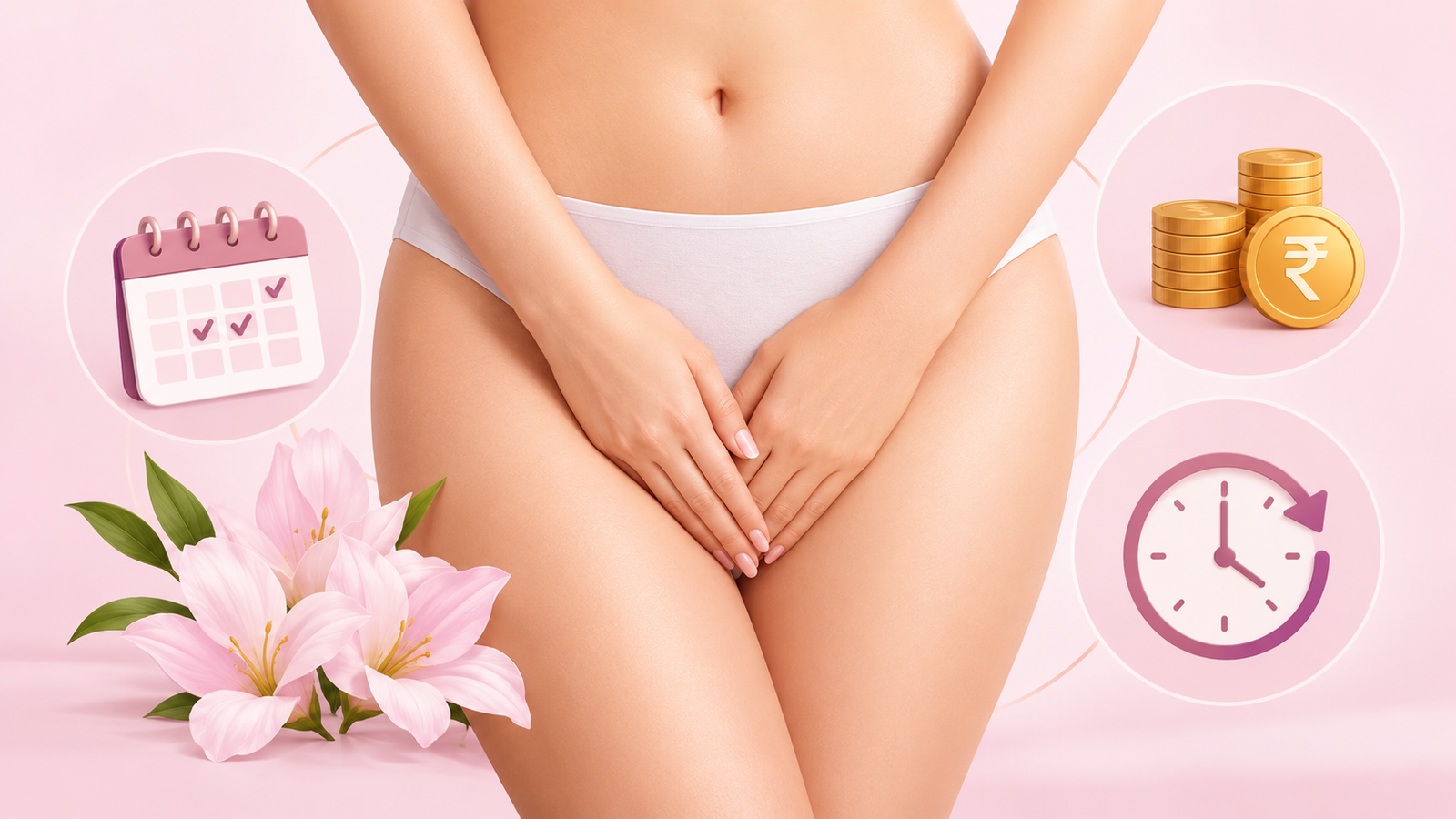
Genital whitening in clinic usually combines a prescribed cream with mild peels or laser toning, given every two to four weeks for about six to eight sessions. Cost depends on area size, method and number of sessions. Results fade without maintenance, because friction and hormones keep causing darkening, so plan monthly or quarterly top-ups.
<style type="text/css"> </style> Genital whitening in clinic usually combines a prescribed cream with mild peels or laser toning, given every two to four weeks for about six to eight sessions. Cost depends on area size, method and number of sessions. Results fade without maintenance, because friction and hormones keep causing darkening, so plan monthly or quarterly top-ups.
Genital whitening treatment cost depends on the treatment area, pigmentation cause, method selected and number of sessions. Options may include prescribed creams, carefully selected superficial chemical peels or laser-based treatments for external skin. However, results vary, evidence for cosmetic genital lightening is limited, and no method guarantees permanent results or an exact number of sessions.
Darkening around the bikini line, inner thighs and external genital skin is common. Hormonal changes, friction, genetics and natural skin pigmentation can all influence appearance.
Some people seek cosmetic lightening because of personal preferences. Others are concerned about pigmentation that developed after shaving, irritation or skin inflammation.
Before considering treatment, it is important to understand that darker genital skin is usually normal and does not automatically indicate a medical problem.
Cosmetic lightening is optional, and treatment should never be presented as necessary for cleanliness, attractiveness or sexual health.
Which Genital Whitening Methods Are Used, and How Do They Differ?
Different approaches may be considered depending on the location, cause and depth of pigmentation.
There is no single treatment suitable for every patient.
1. Prescription Pigmentation Creams
Topical products may contain ingredients intended to reduce excessive pigmentation or manage inflammation.
Depending on the diagnosis, a dermatologist may consider selected agents such as azelaic acid or other prescribed treatments for appropriate external skin.
However, products used safely on facial skin are not automatically suitable for genital skin.
The vulva and nearby skin can be particularly sensitive.
Never apply strong bleaching agents, unprescribed steroid combinations or chemical lightening products to intimate skin without medical guidance.
2. Superficial Chemical Peels
Superficial chemical peels use carefully selected chemical agents to exfoliate the upper skin layers.
They may be considered for certain types of external skin pigmentation after assessment.
Potential risks include:
-
Burning or stinging
-
Irritation
-
Contact dermatitis
-
Increased pigmentation
-
Uneven skin colour
-
Rare scarring
Peels should not be applied indiscriminately to genital mucosa.
3. Laser Genital Whitening Treatment
A laser genital whitening treatment may be discussed for selected external skin areas.
Different laser technologies interact with pigment in different ways.
Examples sometimes marketed for pigmentation include Q-switched lasers and other pigment-targeting devices.
However, evidence supporting routine cosmetic genital lightening with lasers is limited.
Laser treatment can cause burns, blistering, post-inflammatory hyperpigmentation, hypopigmentation or scarring.
Darker skin types may be particularly vulnerable to pigment changes if inappropriate settings are used.
4. Combination Treatment
Some clinicians may recommend treating the underlying cause of pigmentation first, followed by a carefully selected topical or procedural approach.
Combination treatment should not automatically mean that every patient needs creams, peels and lasers together.
The safest approach depends on the diagnosis and individual skin characteristics.
For an overview of available assessment approaches, see Pigmentation protocols.
How Many Genital Whitening Sessions Are Usually Needed?
There is no universally established number of sessions for genital whitening.
Some clinics advertise packages involving six to eight visits, often separated by several weeks. However, these schedules are not a medically validated standard for every patient.
The number of visits depends on:
-
Cause of pigmentation
-
Skin type
-
Treatment area
-
Previous irritation
-
Response to the chosen method
-
Whether the treatment causes adverse effects
Cream-Based Treatment
Topical products may require several weeks before a clinician can assess whether pigmentation is improving.
Treatment should be reviewed regularly to check for irritation and determine whether continued use is appropriate.
Chemical Peel Sessions
Some patients may be offered a series of superficial peels.
The interval between treatments depends on the peel formulation, skin response and healing.
Additional sessions should not proceed if the skin remains irritated.
Laser Sessions
Laser treatment may require multiple appointments when clinically appropriate.
The number and spacing of sessions cannot be predicted reliably without examination.
A test area may be considered when appropriate, particularly for patients at increased risk of pigment changes.
Why More Sessions Are Not Always Better
Excessive treatment can damage the skin barrier.
Repeated irritation may produce more pigmentation rather than less.
If pigmentation becomes darker, painful or inflamed, treatment should be reassessed instead of automatically increasing the number of sessions.
What Factors Affect Genital Whitening Treatment Cost?
The genital whitening treatment cost depends on the size of the area, the technique used, the number of visits and the level of clinical supervision.
A treatment package should be evaluated for both its price and its medical suitability.
1. Treatment Area
A small bikini-line area may require a different treatment plan from extensive pigmentation affecting both inner thighs.
The location also affects safety.
Skin on the outer thigh differs from vulvar mucosal tissue and should not be treated using the same assumptions.
2. Treatment Method
Prescription creams, supervised peels and laser procedures have different cost structures.
A laser-based treatment may involve equipment, protective measures and additional clinical assessment.
However, a higher price does not necessarily mean better or safer results.
3. Number of Sessions
Multiple visits can increase the total cost.
Patients should ask whether the quoted amount includes consultation, review appointments and management of complications.
4. Maintenance Requirements
Some pigmentation may recur if friction, inflammation or other contributing factors persist.
Maintenance should be recommended only when there is a clear clinical reason and the skin tolerates treatment.
Genital Whitening Cost Comparison Table
The following table explains common cost drivers. Actual prices must be confirmed by the clinic before publication.
| Treatment Area or Method | Effect on Cost | Typical Number of Sessions | Price Band |
|---|---|---|---|
| Bikini-line pigmentation | Depends on area size and method | Individually assessed | ₹[verified figure] |
| Inner-thigh pigmentation | Larger areas may increase treatment time | Individually assessed | ₹[verified figure] |
| Labia majora external skin | Requires careful anatomical and skin assessment | No established standard | ₹[verified figure] |
| Perianal external skin | Sensitive location may require additional precautions | No established standard | ₹[verified figure] |
| Prescription creams | Depends on formulation and treatment duration | Follow-up over several weeks | ₹[verified figure] |
| Superficial chemical peels | Cost may increase with each procedure | Variable; no universal schedule | ₹[verified figure] |
| Q-switched laser toning | Depends on equipment, treated area and visits | Variable; evidence is limited | ₹[verified figure] |
| Carbon laser procedures | Suitability and evidence for this indication require assessment | No established standard | ₹[verified figure] |
| Maintenance treatment | Depends on recurrence and clinical need | Not automatically required | ₹[verified figure] |
Pricing note: These are placeholders, not actual treatment quotations. Confirm the treatment offered, medically appropriate session count and verified fees before publishing prices.
Are EMI Options Available?
Patients considering elective treatment may wish to discuss payment arrangements before booking.
For information about available financing arrangements, visit EMI options.
Availability, eligibility and terms should be confirmed directly with the clinic.
How Long Do Genital Whitening Results Last?
The genital whitening results duration varies because pigmentation can be influenced by several ongoing factors.
No treatment can guarantee permanent lightening.
Some people may notice changes after treating an underlying inflammatory condition. Others may experience limited improvement or recurrence.
Why Can Darkening Return?
Common contributing factors include:
Friction: Repeated rubbing from clothing, walking or skin folds may contribute to irritation and pigmentation.
Hormonal changes: Hormonal fluctuations can affect skin pigmentation.
Hair removal: Shaving, waxing or repeated irritation may contribute to post-inflammatory pigmentation.
Inflammatory skin conditions: Eczema, dermatitis and certain infections can cause colour changes.
Individual skin characteristics: Genetics and baseline skin tone influence pigmentation patterns.
Does Everyone Need Monthly Maintenance?
No.
Monthly or quarterly maintenance sessions are sometimes advertised, but there is no established schedule that applies to everyone.
Repeated peels or laser sessions may be inappropriate if they cause irritation.
Patients should discuss whether maintenance is necessary rather than committing to indefinite treatments.
For additional guidance, read Keeping results: pigmentation maintenance.
How Can You Maintain Results Without Damaging the Skin?
Gentle skincare and avoiding unnecessary irritation may help reduce pigmentation caused by inflammation.
Practical measures include:
-
Wearing comfortable clothing that reduces friction
-
Avoiding aggressive scrubbing
-
Using gentle, fragrance-free external cleansers when needed
-
Avoiding unprescribed bleaching creams
-
Managing underlying skin conditions
-
Reviewing hair-removal methods if they repeatedly cause irritation
-
Seeking assessment for new or changing pigmentation
Do not attempt to lighten internal vaginal tissue or other mucosal surfaces using cosmetic products.
What About Inner-Thigh Pigmentation?
Inner-thigh pigmentation may be associated with friction, inflammation or other skin conditions.
In some cases, darkened, thickened or velvety skin can indicate acanthosis nigricans, which may warrant assessment for insulin resistance or other underlying conditions.
Patients can read more about Inner thigh whitening.
Treating the underlying cause may be more important than cosmetic lightening.
Intimate Whitening Treatment Vapi: What Should You Ask Before Booking?
Patients searching for intimate whitening treatment vapi should focus on appropriate medical assessment, realistic expectations and treatment safety rather than choosing a clinic solely by package price.
At Elegance Intimate Wellness, patients considering consultation with Dr. Ashutosh Shah can discuss their pigmentation concerns, available treatment information, possible side effects and whether specialist dermatological assessment is appropriate.
Before agreeing to treatment, ask:
-
Is my pigmentation normal or caused by a medical condition?
-
Which skin areas can be treated safely?
-
What evidence supports the recommended treatment?
-
Who will supervise the procedure?
-
What are the risks for my skin type?
-
Could treatment make pigmentation worse?
-
How will progress be measured?
-
What is the total verified cost?
-
What happens if I experience burns or irritation?
A named, appropriately qualified clinician should supervise treatment planning and any peel or laser procedure.
Who Should Avoid or Postpone Genital Whitening Treatment?
Not everyone is a suitable candidate for cosmetic pigmentation treatment.
Treatment may need to be postponed or avoided in patients with:
-
Active genital infection
-
Open wounds or broken skin
-
Dermatitis or significant irritation
-
Unexplained pigmentation changes
-
A history of problematic scarring
-
Previous adverse reactions to lightening products
-
Pregnancy or breastfeeding, depending on the treatment
-
Conditions that impair wound healing
When Does Pigmentation Need Medical Assessment?
Seek evaluation for pigmentation that is:
-
New or rapidly changing
-
Associated with itching or pain
-
Accompanied by ulcers or bleeding
-
Irregular in colour or shape
-
Present as a new isolated dark lesion
-
Associated with thickened or velvety skin
These changes should not automatically be treated as cosmetic concerns.
Genital Whitening Session Tracking Sheet
Patients receiving a supervised course of treatment can use a simple record to monitor their response.
| Session | Date | Treatment Used | Skin Response | Follow-Up Decision |
|---|---|---|---|---|
| Consultation | [Date] | Skin assessment | Baseline findings | Confirm suitability |
| Session 1 | [Date] | [Verified method] | [Document response] | Continue, adjust or stop |
| Session 2 | [Date] | [Verified method] | [Document response] | Continue, adjust or stop |
| Session 3 | [Date] | [Verified method] | [Document response] | Continue, adjust or stop |
| Review | [Date] | Clinical reassessment | Compare with baseline | Decide whether further treatment is appropriate |
If clinical photographs are used, obtain informed consent and use consistent lighting, camera distance and positioning. Photographs should be stored confidentially.
Have a Private Question?
Every concern deserves an honest answer. Book a confidential consultation with Dr. Ashutosh Shah at Elegance Clinic, Surat, for guidance made just for you.

About the Author
Dr. Ashutosh Shah is a cosmetic gynecologist and plastic surgeon with over 22 years of experience. At Elegance Clinic in Surat, he is known for safe, honest and completely confidential intimate and aesthetic care.
Is genital whitening painful?
Some topical treatments may cause mild irritation, while chemical peels or lasers can produce stinging or discomfort. Significant burning, blistering or persistent pain is not an expected cosmetic benefit and requires medical assessment.
Can whitening be done on the labia minora?
The labia minora contain delicate tissue, and natural pigmentation varies widely. Routine cosmetic lightening of this area is not supported by strong safety evidence. Harsh chemicals, peels and lasers should not be applied without specialist assessment.
Does laser whitening work on very dark skin?
Laser treatment may carry a greater risk of post-inflammatory hyperpigmentation or hypopigmentation in darker skin types. Suitability depends on the device, settings, diagnosis and operator expertise. Improvement is not guaranteed.
Can I do whitening during pregnancy or breastfeeding?
Elective cosmetic lightening is generally best postponed during pregnancy. During breastfeeding, suitability depends on the product, treated area and available safety evidence. Discuss any proposed treatment with an appropriate clinician.
Is genital whitening safe for men too?
Men may also experience normal genital pigmentation or pigmentation related to friction and inflammation. Cosmetic lightening is not automatically safe, and sensitive genital skin requires medical assessment before any topical or procedural treatment.
Can I combine whitening with laser hair reduction?
Combining procedures may increase irritation or pigmentation risks. The treating clinician should assess the skin and plan appropriate spacing. Patients considering intimate whitening treatment vapi should ask whether hair reduction and pigmentation treatment are suitable together rather than booking both automatically.