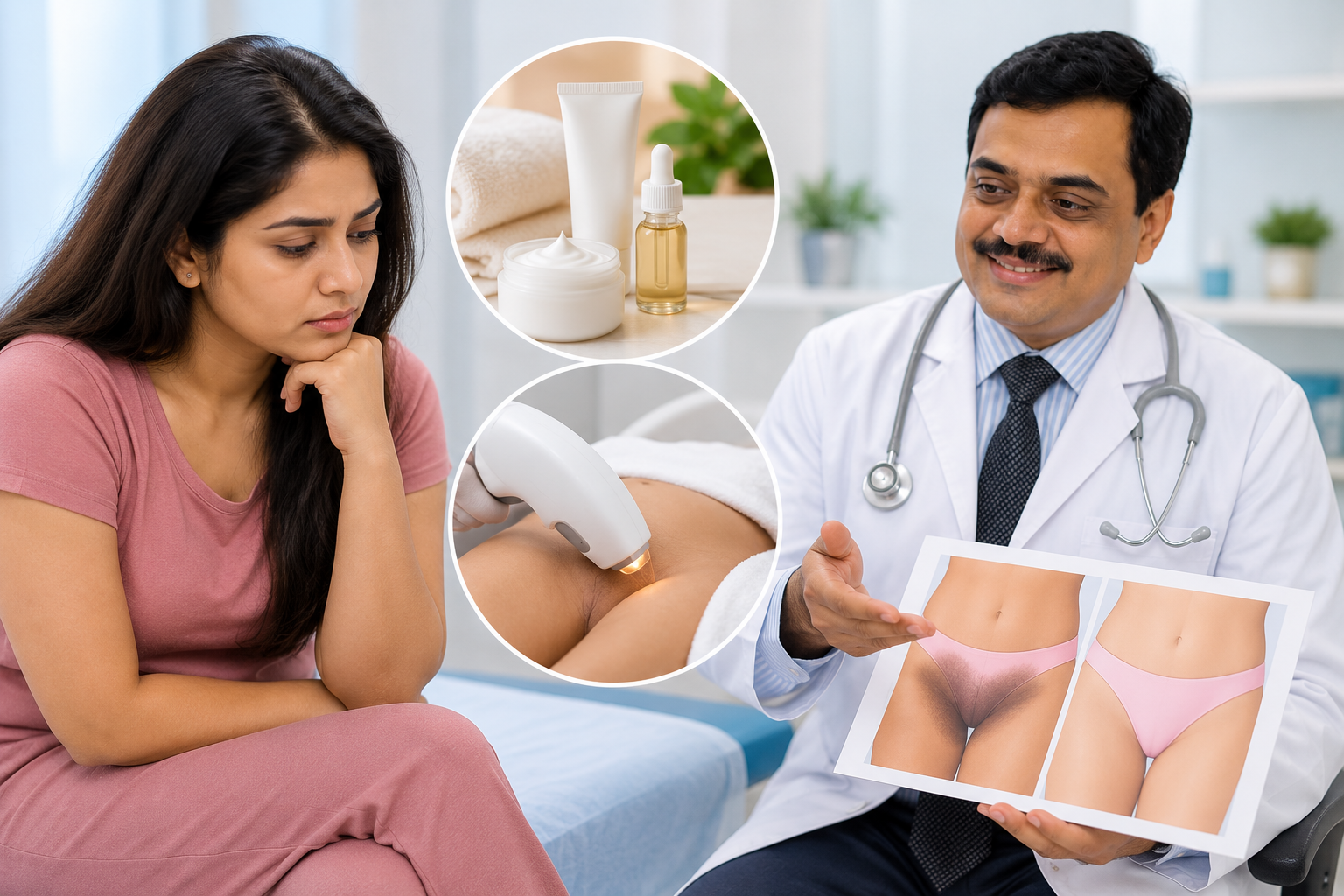
What is Inner Thigh Brightening?
Inner Thigh Brightening means assessing why the inner thighs have darkened and then, if appropriate, treating the surface pigment that remains. Importantly, this order matters more here than on any other part of the body. Dark inner thighs are frequently a health signal rather than a beauty concern, so a medical review comes first. Our parent page on laser intimate whitening covers the general approach, while this page concentrates on the metabolic angle.
Could darkening of my inner thighs be a medical sign?
Yes, and quite often it is. Velvety, slightly thickened brown or grey darkening across the inner thighs, groin folds, neck and armpits is called acanthosis nigricans. Because it reflects the way insulin behaves in the body, it is strongly associated with insulin resistance, polycystic ovarian syndrome, weight gain and type 2 diabetes. All of those are common across India, therefore this pattern deserves attention rather than a laser quotation. Skin tags in the same folds add to the suspicion. Meanwhile, many women reach a clinic for the colour and leave having discovered an undiagnosed metabolic problem, which is genuinely the more valuable outcome.
Which checks come before any cosmetic treatment?
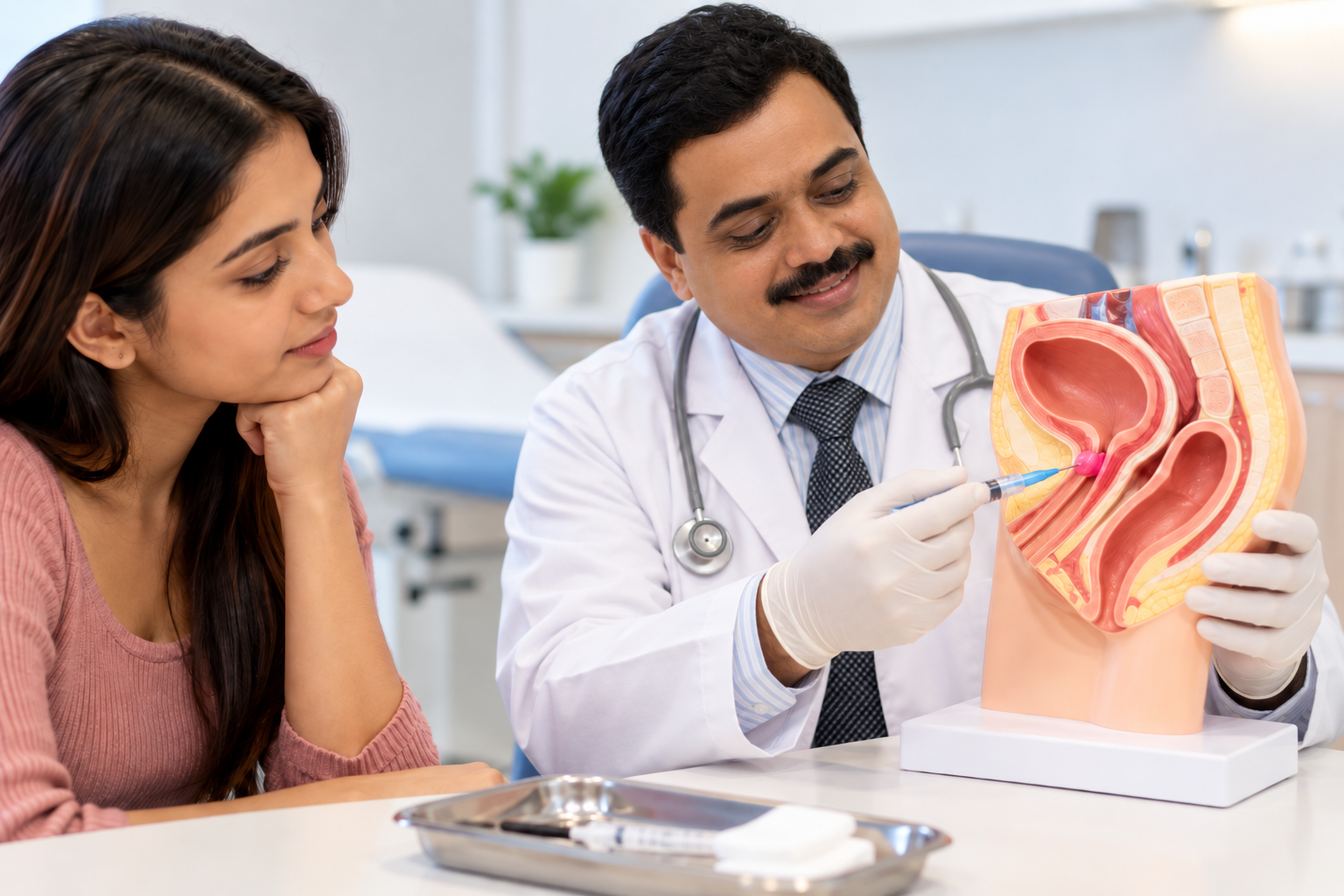
Basic blood work usually comes first, together with a proper history and examination. The list below is what usually gets arranged.
- Fasting blood sugar, and often an HbA1c to look at longer term control.
- Weight, waist measurement and a discussion about diet and activity.
- Menstrual history, since irregular cycles and PCOS frequently travel with this pattern.
- Thyroid and hormonal review where the history points that way.
- Medication review, because certain drugs also drive this kind of darkening.
Improving the underlying condition often improves the skin without cosmetic work. Weight reduction, better blood sugar control and treatment of PCOS all soften the velvety texture over months. Consequently, we would rather refer you for a medical opinion than sell sessions that cannot address the real driver.
What other causes should be ruled out?
Several other conditions also darken this area, and each has its own treatment. Fungal infection, especially tinea cruris, is extremely common in a humid climate and leaves lasting marks as it clears. Post inflammatory pigmentation follows shaving, waxing, boils and old episodes of chafing. Contact dermatitis develops from soaps, intimate washes, fragranced products and hair removal creams. Additionally, lichen simplex builds up where skin has been scratched for months, and lichen sclerosus requires gynaecological care rather than a cosmetic plan. Further reading sits on our conditions page.
Why are inner thighs naturally darker, and why do they chafe?
Inner thigh skin is naturally deeper in tone because pigment cells are more active in the groin, genital area, bikini line and perianal region. Genetics decide most of that, while hormones adjust it through life. Meanwhile, the thighs meet and rub with every step, so heat, sweat and friction build up in a fold that rarely dries out. Skin responds to repeated rubbing by thickening and darkening, which is a protective reaction rather than damage. Nothing about it reflects hygiene, and no amount of washing will change it.
Which products are unsafe on thigh and groin skin?
Lightening creams sold without prescription are unsafe, and in this area they are used more heavily than almost anywhere else. Mercury appears in some imported preparations, and it is toxic, with kidney and nerve damage reported after prolonged use. Potent steroids cause the second and larger problem across India, since they are freely used as lightening creams. Skin thins, stretch marks appear across the thigh, and colour rebounds darker when the tube runs out. Crucially, steroids also allow fungal infection to spread quietly underneath, and steroid modified tinea has become a widespread problem in this country. High strength hydroquinone without supervision can darken skin instead of lightening it. Have every product you use checked by a doctor.
What helps day to day?
Controlling friction and moisture usually helps most, and it costs almost nothing. Below are the measures that make a genuine difference.
- Cotton shorts or thigh bands under skirts and dresses to stop skin rubbing skin.
- A barrier or anti chafing balm before walking, cycling or gym work.
- Prompt drying after bathing, since damp folds encourage fungus.
- Loose breathable clothing in humid weather rather than tight synthetic fabric.
- Gentler hair removal, or fewer sessions, so the skin is irritated less often.
Because weight reduction relieves both friction and insulin resistance together, it does more for this area than any single treatment. Progress is slow, however, so patience is needed.
What can a clinic offer for the remaining pigment?
A clinic can offer prescription topical care, low strength peels and a cautious laser course once the cause is under control. Each of these acts on surface pigment only, therefore none of them touches the metabolic driver. Below is a plain comparison.
| Option | What it addresses | Honest limitation |
|---|---|---|
| Medical management | Insulin resistance, PCOS, weight and blood sugar | Slow, but it treats the actual cause |
| Antifungal treatment | Tinea and the marks it leaves behind | Needs full courses, and recurrence is common |
| Topical pigment care | Residual surface discolouration | Months of use, with irritation possible |
| Peels or laser sessions | Surface tone and texture | Returns quickly if friction continues |
How is a session carried out?
Sessions begin only when the skin is calm, free of infection and no longer being scratched. A patch test is taken first, because melanin rich skin can react unpredictably to heat. Treatment covers both thighs in roughly twenty minutes, with cooling used as it proceeds. Afterwards you may notice warmth and pinkness lasting a day or so. Sittings are spaced several weeks apart, and progress is photographed with your consent.
What results are realistic?
Realistic results are partial and slow, and they depend far more on the cause than on the device. Inner Thigh Brightening works reasonably where friction has been controlled and blood sugar addressed, whereas it disappoints when those continue unchanged. Improvement usually appears across two to four months. Some women get a clear change, while others get very little. Above all, recurrence is expected in an area that rubs daily, so maintenance forms part of any honest plan.
What are the risks?
Risks include burns, blistering, darker patches and, although less commonly, scarring. Melanin rich Indian skin is particularly prone to reacting to heat with more pigment, which is the opposite of what was wanted. Additionally, peels can sting badly in a fold that is already moist and irritated. Infection remains possible whenever the skin barrier is disturbed. Nobody should accept these risks while the underlying cause remains untreated, since the benefit in that situation is small and short lived.
What does it cost in India?
Costs are quoted in rupees and usually reflect the area covered, the method chosen and how many sittings are advised. Blood tests and medical review carry their own charges, though these are usually modest and far more useful. Publishing a treatment price without an examination would be unhelpful, so none appears here. Instead a clear written estimate is given after examination, covering the whole plan.
Why choose Elegance Clinic?
Elegance Clinic in Surat therefore looks for a reason before reaching for a device, which matters greatly with this pattern of darkening. Dr. Ashutosh Shah will send you for blood work when the skin suggests it, even though that delays any cosmetic plan. Where the answer is medical, you will be told so plainly. Related pages sit under intimate skin and grooming, including laser hair reduction for women whose marking follows repeated shaving.
A private consultation with Dr. Ashutosh Shah in Surat will sort out what is causing this and what, if anything, is worth treating. Bring any recent blood reports with you, since they often shorten the discussion.
Note: This page is for general information and is not a substitute for a medical consultation. Darkening of intimate skin is usually normal, and where it is not, the cause should be assessed before any cosmetic treatment. Results vary between individuals and no outcome can be promised.
Ready to Talk, Privately?
Book a confidential consultation with Dr. Ashutosh Shah. There is no pressure, only clear and honest guidance.