
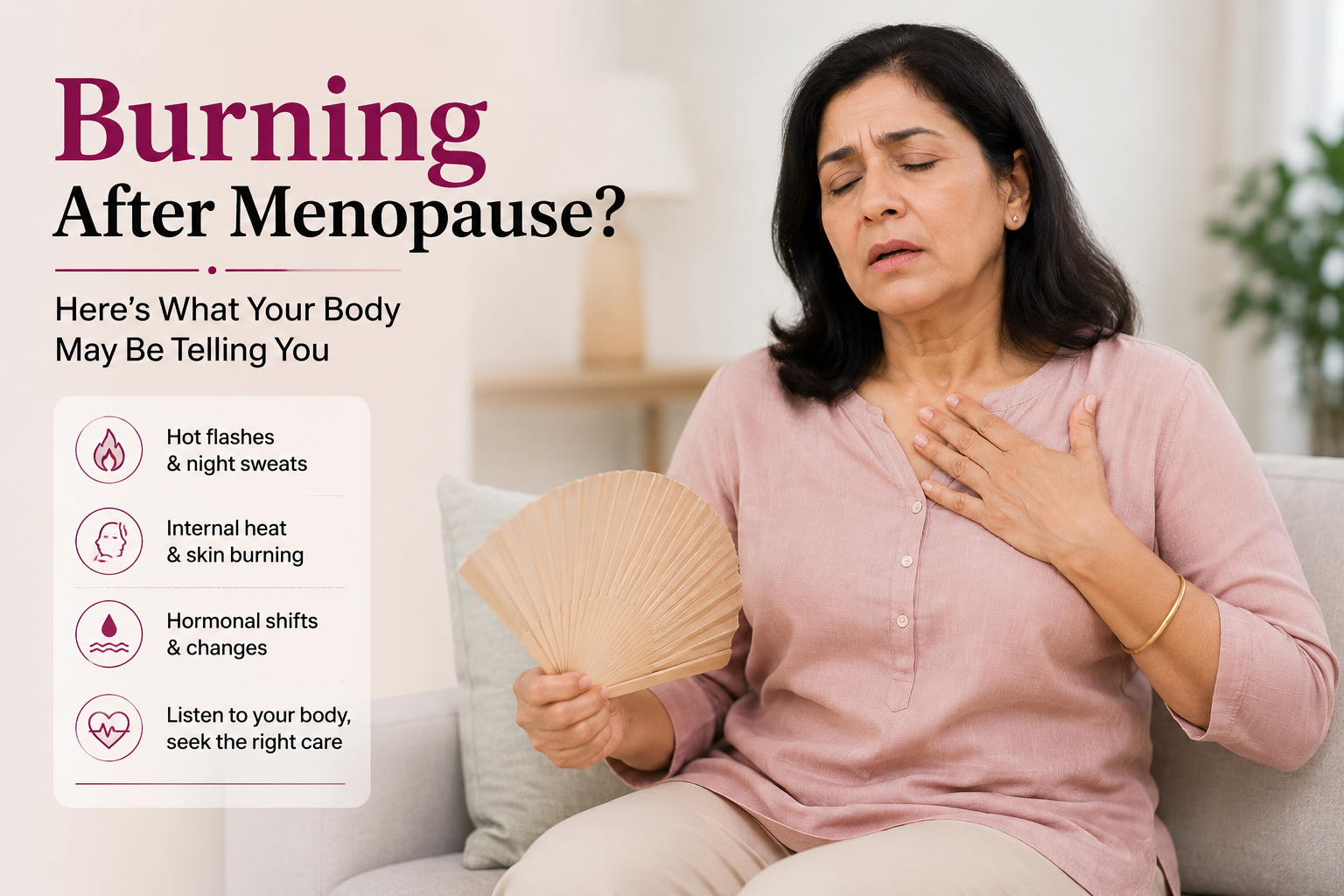
Burning After Menopause? Here’s What Your Body May Be Telling You
Pain during intimacy after menopause can be an uncomfortable and frustrating experience. Some women notice burning, dryness, stinging, tightness, or soreness during or after intimate contact. Because these symptoms can be sensitive to discuss, many women delay seeking help or assume that discomfort is simply a normal part of getting older.
Pain during intimacy after menopause can be an uncomfortable and frustrating experience. Some women notice burning, dryness, stinging, tightness, or soreness during or after intimate contact. Because these symptoms can be sensitive to discuss, many women delay seeking help or assume that discomfort is simply a normal part of getting older.
However, persistent pain is worth discussing with a qualified specialist. Menopause-related hormonal changes can affect vaginal moisture, elasticity, and tissue sensitivity, but other conditions can also cause similar symptoms. Finding the underlying reason is the first step toward choosing the right treatment.
What Does Pain During Intimacy After Menopause Feel Like?
Pain can vary from woman to woman. It may occur at the entrance of the vagina, deeper during penetration, or continue for some time after intimacy.
You may notice:
- Burning or stinging during intimacy
- Vaginal dryness or reduced lubrication
- A sensation of tightness or friction
- Tenderness or soreness afterward
- Irritation around the vaginal area
- Discomfort that makes intimacy difficult
- Pain that becomes more noticeable over time
Some women experience only mild discomfort initially, while others may eventually avoid intimacy because they expect it to be painful.
Why Does Intimacy Become Painful After Menopause?
One of the main reasons is the natural decline in estrogen that occurs during menopause.
Estrogen helps maintain the health, moisture, thickness, and elasticity of vaginal tissues. When estrogen levels decrease, the vaginal tissues may gradually become drier and less flexible. Natural lubrication may also reduce.
This can increase friction during intimacy and contribute to pain during intimacy after menopause.
These menopause-related changes are sometimes described as genitourinary syndrome of menopause (GSM). GSM can involve vaginal and urinary symptoms and may become more noticeable as time passes after menopause.
Is Pain During Intimacy After Menopause Only Caused by Dryness?
No. Vaginal dryness is an important cause, but it is not the only possible explanation.
Pain or burning may also be associated with:
Hormonal changes
Reduced estrogen can affect vaginal tissue health and lubrication.
Vaginal dryness
Insufficient lubrication can increase friction and make penetration uncomfortable.
Vaginal or vulvar irritation
Certain soaps, intimate washes, fragrances, or other products may irritate sensitive tissue.
Vaginal infections
Some infections can cause burning, irritation, unusual discharge, or discomfort during intimacy.
Pelvic floor muscle tension
Overactive or tense pelvic floor muscles can contribute to pain with penetration.
Skin conditions
Certain dermatological conditions can affect the vulvar area and cause burning or soreness.
Medications or other health factors
Some medications and medical conditions may contribute to dryness or changes in intimate comfort.
This is why persistent pain during intimacy after menopause should not automatically be assumed to be caused by menopause alone.
Can Menopause Cause Burning During Intimacy?
Yes. Menopause can contribute to burning during intimacy, particularly when declining estrogen levels lead to vaginal dryness and increased tissue sensitivity.
When lubrication decreases, friction can increase. This may create a burning or stinging sensation during penetration and sometimes leave the area sore afterward.
However, burning can also occur because of infection, irritation, skin conditions, or other problems. If the symptom is persistent, severe, recurrent, or accompanied by unusual discharge, bleeding, sores, or urinary symptoms, medical evaluation is important.
Why Does Vaginal Dryness Get Worse After Menopause?
Vaginal dryness can become more noticeable because estrogen remains lower after menopause rather than returning to premenopausal levels.
The tissues may become less elastic and produce less natural lubrication. Some women may experience occasional dryness, while others notice persistent discomfort.
Dryness can become particularly noticeable during intimacy because friction places additional stress on already sensitive tissue.
Can Pain During Intimacy Affect Your Relationship?
It can.
When intimacy repeatedly causes pain, a woman may begin to anticipate discomfort before intimacy even starts. This can lead to avoiding sexual activity, reduced confidence, emotional stress, or difficulty communicating with a partner.
The problem is not simply physical. Persistent intimate discomfort can affect overall quality of life.
Seeking appropriate care can help women understand that they do not have to silently tolerate these symptoms.
When Should You See a Specialist?
You should consider professional evaluation if pain during intimacy:
- Happens repeatedly
- Is becoming more severe
- Continues despite using lubrication
- Is accompanied by burning or persistent irritation
- Causes soreness that lasts after intimacy
- Leads you to avoid intimacy
- Is associated with unusual discharge or odor
- Occurs with bleeding after intimacy
- Is accompanied by urinary discomfort or recurrent urinary symptoms
A consultation can help distinguish menopause-related changes from infections, skin conditions, pelvic floor problems, or other causes.
How Is Pain During Intimacy After Menopause Diagnosed?
A specialist may begin by discussing your symptoms, menopause history, medications, previous treatments, and general intimate health.
Depending on your symptoms, an examination may be recommended to look for:
- Vaginal dryness
- Tissue changes
- Irritation or inflammation
- Signs of infection
- Skin abnormalities
- Other possible causes of pain
The goal is not simply to treat the symptom but to understand why intimacy has become painful.
What Treatments Can Help?
Treatment should be selected according to the underlying cause rather than using the same approach for every woman.
1. Vaginal lubricants
Lubricants can reduce friction during intimacy and may improve immediate comfort. They are particularly useful when dryness is a major contributor to discomfort.
2. Vaginal moisturizers
Vaginal moisturizers are intended for regular use and can help some women manage ongoing dryness. They are different from lubricants, which are generally used around the time of intimacy.
3. Local estrogen treatment
For appropriate patients, a healthcare professional may recommend local estrogen therapy to address certain menopause-related vaginal changes. Whether this is suitable depends on individual medical history and should be discussed with a qualified clinician.
4. Non-surgical intimate wellness treatments
Some women may consider non-surgical intimate wellness procedures for specific menopause-related concerns. The suitability, expected benefits, limitations, and risks should be discussed during an individual consultation.
5. Treatment for underlying conditions
If pain is caused by an infection, skin condition, pelvic floor dysfunction, or another medical problem, treating that condition is an important part of improving comfort.
Can You Reduce Discomfort During Intimacy?
Some simple measures may help reduce friction and irritation:
- Use an appropriate lubricant when needed.
- Avoid fragranced intimate products that may cause irritation.
- Avoid harsh soaps on sensitive intimate tissues.
- Give your body adequate time for arousal and natural lubrication.
- Discuss discomfort openly with your partner.
- Do not continue an activity that causes significant pain.
- Seek professional advice if symptoms continue.
These measures may improve comfort, but they do not replace an evaluation when pain is persistent.
Is Pain During Intimacy After Menopause Treatable?
In many cases, symptoms can be managed or improved once the underlying cause is identified.
The appropriate approach depends on whether the discomfort is primarily related to dryness, hormonal changes, infection, tissue sensitivity, pelvic floor tension, or another condition.
There is no single treatment that is right for every woman. A personalized assessment is therefore important.
Pain During Intimacy After Menopause in Surat
Women experiencing pain during intimacy after menopause in Surat can seek confidential professional guidance rather than continuing to tolerate discomfort.
At Elegance Clinic, intimate wellness concerns can be discussed in a private and supportive setting. Dr. Ashutosh Shah can assess your concerns and help determine which treatment options may be appropriate based on your symptoms and individual needs.
Whether you are experiencing vaginal dryness, burning, irritation, or discomfort during intimacy, getting the right evaluation can help you understand what is happening and what can be done.
Conclusion
Pain during intimacy after menopause is common, but it is not something women have to silently accept. Changes in estrogen levels can contribute to vaginal dryness, reduced elasticity, burning, and increased sensitivity, while other medical conditions can cause similar symptoms.
The most appropriate treatment depends on the underlying cause. If intimate discomfort is affecting your confidence, relationship, or quality of life, professional evaluation can help you understand the reason and explore suitable options.
Looking for Menopause Intimate Care in Surat?
If you are experiencing pain during intimacy after menopause, vaginal dryness, burning, or irritation, consult Elegance Clinic in Surat. With personalized evaluation and guidance from Dr. Ashutosh Shah, you can discuss your symptoms confidentially and understand which intimate wellness options may be suitable for you.
Book a confidential consultation at Elegance Clinic and take a step toward more comfortable intimate wellness.
Have a Private Question?
Every concern deserves an honest answer. Book a confidential consultation with Dr. Ashutosh Shah at Elegance Clinic, Surat, for guidance made just for you.

About the Author
Dr. Ashutosh Shah is a cosmetic gynecologist and plastic surgeon with over 22 years of experience. At Elegance Clinic in Surat, he is known for safe, honest and completely confidential intimate and aesthetic care.
Can menopause cause pain during intimacy?
Yes. Lower estrogen levels can cause vaginal dryness, reduced elasticity, and tissue sensitivity, which may make intimacy painful.
Can vaginal dryness cause pain during intimacy after menopause?
Yes. Reduced lubrication can increase friction and irritation, leading to discomfort or pain during intimacy.
Can menopause cause burning during intimacy?
Yes. Hormonal changes and vaginal dryness may cause burning or stinging during or after intimacy.
Can pain during intimacy after menopause be treated?
Yes. Treatment depends on the cause and may include lubricants, moisturizers, prescribed therapies, or suitable intimate wellness treatments.
Can pain during intimacy after menopause affect sexual health?
Yes. Ongoing pain may lead to avoiding intimacy, reduced confidence, and relationship difficulties.
Can pain during intimacy after menopause be caused by an infection?
Yes. Infections can cause burning, irritation, discharge, and pain, so persistent symptoms should be professionally evaluated.