
What Makes BBL Fat Transfer Safer? A Guide to Safety Protocols
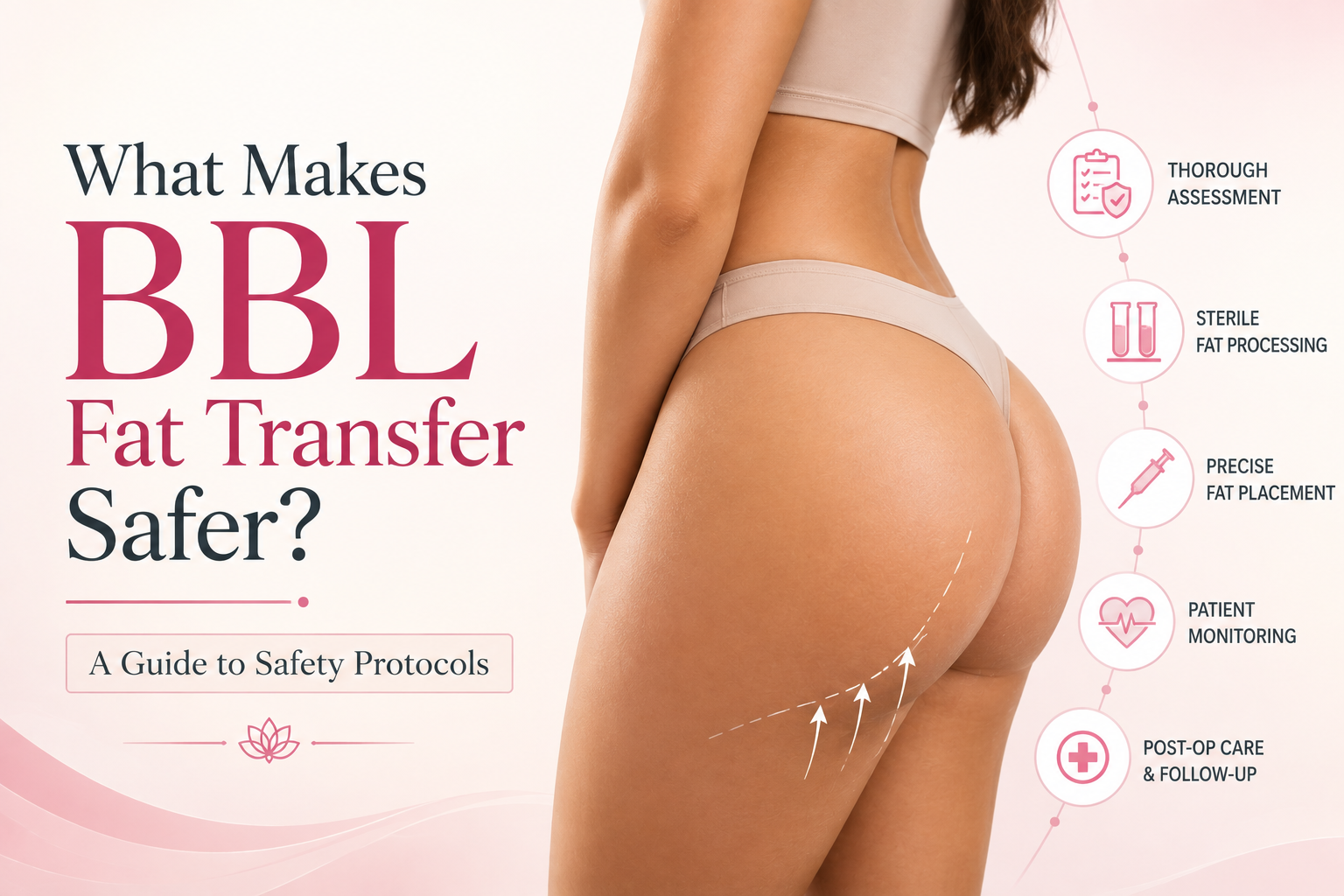
BBL fat transfer safety should be the priority when considering a Brazilian Butt Lift (BBL). Unlike many cosmetic procedures, gluteal fat grafting has specific safety concerns, particularly the risk of fat embolism when fat is unintentionally placed too deeply. Major plastic-surgery organizations recommend careful patient selection, qualified surgical teams, appropriate facilities, and techniques that keep injected fat in the safe subcutaneous plane.
BBL fat transfer safety should be the priority when considering a Brazilian Butt Lift (BBL). Unlike many cosmetic procedures, gluteal fat grafting has specific safety concerns, particularly the risk of fat embolism when fat is unintentionally placed too deeply. Major plastic-surgery organizations recommend careful patient selection, qualified surgical teams, appropriate facilities, and techniques that keep injected fat in the safe subcutaneous plane.
What Is BBL Fat Transfer?
A Brazilian Butt Lift, commonly called a BBL, is a body-contouring procedure that uses a person's own fat to enhance the size, shape, or contour of the buttocks.
Typically, fat is collected through liposuction from areas such as the abdomen, thighs, hips, or flanks. The harvested fat is then processed and carefully transferred to the buttocks.
The procedure can provide two aesthetic benefits:
Fat removal → Fat processing → Gluteal fat transfer → Buttock contour enhancement
However, the technique requires particular attention to anatomy and injection depth. Safety guidelines emphasize avoiding intramuscular fat injection because deeper placement can increase the risk of serious fat embolic complications.
Why Does BBL Fat Transfer Safety Matter?
BBL surgery has historically attracted significant safety concerns because fat can potentially enter blood vessels if it is injected too deeply.
A fat embolism can occur when fat enters the circulation and travels to the lungs or, in rare circumstances, other organs. This is why international surgical organizations have emphasized safer injection techniques and appropriate anatomical planes.
The goal of modern BBL safety protocols is simple: enhance the buttocks while minimizing avoidable risks.
1. Real-Time Ultrasound Guidance
One of the most important developments in BBL fat transfer safety is the use of real-time ultrasound during gluteal fat grafting.
Ultrasound can allow the surgeon to visualize tissue layers and monitor the position of the cannula during injection. This helps support accurate placement of fat in the intended subcutaneous plane.
Recent evidence continues to investigate ultrasound-guided BBL techniques. A 2026 scoping review found ultrasound to be a useful safety adjunct, while also noting that the available evidence remains largely observational and that further comparative research is needed.
Why this matters
Instead of relying only on tactile sensation, real-time imaging can provide additional anatomical information during the procedure.
2. Keeping Fat in the Appropriate Plane
Where the fat is placed matters.
Current safety recommendations emphasize subcutaneous fat placement and avoiding intramuscular injection.
The surgeon must understand the anatomy of the buttocks and carefully control the cannula trajectory and depth.
This is one reason why choosing an experienced, appropriately trained surgeon is an important part of BBL fat transfer safety.
3. Appropriate Surgical Instruments and Technique
Safe gluteal fat grafting requires more than simply transferring fat.
The surgeon must maintain control of the cannula, use an appropriate approach, and continuously consider the cannula's location and depth.
Safety recommendations also emphasize techniques designed to minimize unintended deeper passes and avoid high-pressure bolus injections.
4. Qualified Surgeon and Surgical Team
A BBL should not be treated as a routine cosmetic procedure.
The surgical team should have appropriate training and experience in gluteal fat grafting, and the procedure should be performed in a properly regulated facility equipped to provide surgical and emergency care.
The American Society of Plastic Surgeons and collaborating organizations specifically emphasize appropriate surgeon credentialing, facility standards, and direct physician involvement in patient care.
What should patients ask?
Before choosing a BBL provider, ask:
- Who will perform my procedure?
- What training and experience do they have with BBL surgery?
- Is real-time ultrasound used during fat injection?
- Where will the procedure be performed?
- What safety protocols are followed?
- What postoperative care is provided?
- How are complications handled if they occur?
5. Thorough Preoperative Assessment
BBL fat transfer safety begins before surgery.
During consultation, the surgeon should assess your medical history, previous procedures, medications, overall health, body composition, and aesthetic goals.
The consultation is also an opportunity to determine whether the procedure is appropriate for you and whether your expectations are realistic.
A personalized surgical plan can help balance the desired cosmetic result with safety considerations.
6. Don't Prioritize Size Over Safety
A larger buttock is not necessarily a better outcome.
Attempting to transfer an excessive amount of fat can create additional technical challenges. If the desired result cannot be safely achieved in one procedure, your surgeon may discuss whether a staged approach is more appropriate.
The fundamental principle should be: Safety first, aesthetic enhancement second.
The amount and placement of transferred fat should be determined according to individual anatomy and safe surgical technique not simply the desired volume.
7. Postoperative Monitoring Matters Too
BBL fat transfer safety doesn't end when the procedure is complete.
Patients should receive clear instructions regarding:
- Wound care
- Activity restrictions
- Medication use
- Follow-up appointments
- Warning signs of complications
- When to contact the surgical team
Professional safety guidance emphasizes that surgeons should remain involved in postoperative care and be prepared to manage complications.
BBL Fat Transfer Safety: What Patients Should Look For
| Safety Factor | Why It Matters |
|---|---|
| Experienced surgeon | Supports appropriate surgical decision-making |
| Real-time ultrasound | Helps visualize tissue planes and cannula position |
| Subcutaneous fat placement | Helps avoid deeper/intramuscular injection |
| Proper surgical facility | Provides appropriate surgical and emergency resources |
| Preoperative assessment | Helps identify individual risks |
| Controlled technique | Helps reduce avoidable procedural risks |
| Postoperative follow-up | Supports early recognition and management of complications |
Is BBL Fat Transfer Completely Risk-Free?
No. BBL fat transfer is not completely risk-free.
Even with modern safety measures, complications can occur. Possible complications may include infection, bleeding, fluid collections, fat necrosis, contour irregularities, anesthesia-related complications, and fat embolism.
However, modern safety protocols aim to reduce preventable risks. Evidence on ultrasound-guided gluteal fat grafting has reported favorable safety outcomes in studied cohorts, although researchers continue to emphasize the need for stronger evidence and standardized techniques.
Therefore, patients should focus on risk reduction rather than promises of zero risk.
BBL Fat Transfer Safety in Surat
If you are considering BBL fat transfer in Surat, selecting the right surgical team and facility is an important first step.
At Elegance Clinic, patients can discuss their body-contouring goals, suitability for BBL, expected results, safety considerations, and recovery requirements with Dr. Ashutosh Shah.
A personalized consultation can help determine whether BBL is appropriate for your anatomy and goals and explain the safety protocols used for your procedure.
Conclusion
BBL fat transfer safety depends on much more than the procedure itself. Surgeon experience, patient selection, facility standards, real-time ultrasound guidance, appropriate fat placement, controlled technique, and postoperative care all contribute to a safer treatment pathway.
If you are considering BBL fat transfer in Surat, speak with Dr. Ashutosh Shah at Elegance Clinic about your individual goals, suitability, potential risks, and the safety protocols used during treatment.
Ready to understand your BBL options?
Book a consultation with Elegance Clinic to discuss BBL fat transfer safety, expected outcomes, and a personalized treatment plan.
Have a Private Question?
Every concern deserves an honest answer. Book a confidential consultation with Dr. Ashutosh Shah at Elegance Clinic, Surat, for guidance made just for you.

About the Author
Dr. Ashutosh Shah is a cosmetic gynecologist and plastic surgeon with over 22 years of experience. At Elegance Clinic in Surat, he is known for safe, honest and completely confidential intimate and aesthetic care.
Is BBL fat transfer safe?
BBL fat transfer can be performed safely when appropriate safety protocols, qualified surgical care, and proper fat-placement techniques are followed.
What makes BBL fat transfer safer?
Real-time ultrasound guidance, subcutaneous fat placement, experienced surgeons, proper patient selection, and appropriate postoperative monitoring can improve BBL safety.
Does ultrasound make BBL fat transfer safer?
Yes, real-time ultrasound can help the surgeon monitor cannula position and tissue depth during fat injection.
What is the main risk of BBL fat transfer?
One of the most serious risks is fat embolism, which can occur when fat unintentionally enters a blood vessel.
Is BBL fat transfer completely risk-free?
No, BBL fat transfer is not risk-free, but careful surgical planning and established safety protocols can help reduce complications.