
Bartholin Cyst and Abscess: Treatment Options and Preventing Recurrence
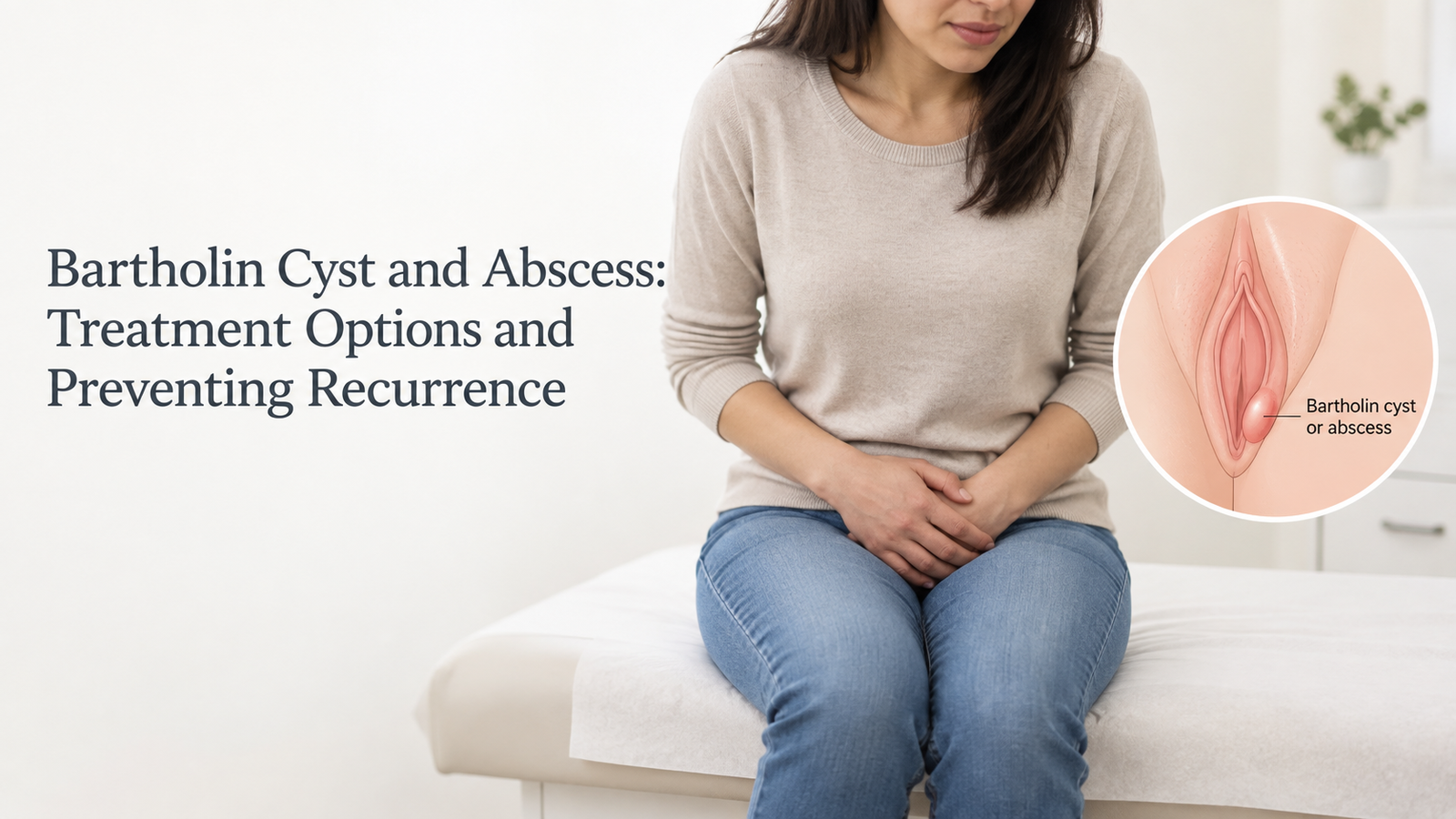
A small, painless Bartholin cyst can often be watched, while a painful or infected cyst may need drainage. For a symptomatic or recurrent cyst, procedures such as catheter placement or marsupialisation may be considered rather than simple incision alone because creating a continuing drainage pathway can help reduce the chance of the opening sealing over and the cyst returning.
A small, painless Bartholin cyst can often be watched, while a painful or infected cyst may need drainage. For a symptomatic or recurrent cyst, procedures such as catheter placement or marsupialisation may be considered rather than simple incision alone because creating a continuing drainage pathway can help reduce the chance of the opening sealing over and the cyst returning.
A Bartholin cyst usually appears as a lump near one side of the vaginal opening. Some remain small and cause no symptoms, while others enlarge, become uncomfortable or develop an infection known as a Bartholin abscess.
The right Bartholin cyst treatment depends on the size of the lump, pain, infection, recurrence, age and whether there are any features that require further investigation.
What Does the Bartholin Gland Do and Why Do Cysts Form?
The Bartholin glands are small glands located near the vaginal opening. Their ducts open into the vulvar vestibule and contribute a small amount of lubricating fluid.
Normally, you do not notice these glands.
A Bartholin cyst develops when the opening of a Bartholin duct becomes blocked. Fluid then accumulates behind the obstruction and forms a swelling.
What Causes the Duct to Become Blocked?
Sometimes there is no obvious reason. In other cases, local inflammation, infection or previous irritation may contribute to obstruction.
The important distinction is between a cyst and an abscess.
A cyst may be:
- Small
- Painless
- Soft or fluctuant
- Discovered accidentally
- Uncomfortable only during certain activities
An abscess is infected and is more likely to cause:
- Significant pain
- Rapid enlargement
- Tenderness
- Redness
- Difficulty sitting or walking
- Discomfort during intimacy
- Occasionally fever or feeling unwell
A painful lump near the vaginal opening should therefore be assessed rather than assumed to be a harmless cyst.
Not every vulvar lump is caused by a Bartholin gland. Other cysts, skin lesions and less common conditions can appear in a similar location.
Which Cysts Can Be Watched and Which Need Drainage?
Not every Bartholin cyst needs an operation.
Small, Painless Cysts
A small cyst that causes no pain, shows no signs of infection and has no concerning features may sometimes be managed conservatively.
Observation may be reasonable when:
- The cyst is small
- There is no significant pain
- There is no fever
- There are no signs of abscess
- It is not interfering with daily activity
- Examination does not identify concerning features
A clinician should still confirm that the lump is consistent with a Bartholin cyst, particularly if it is new or atypical.
When Does a Cyst Need Treatment?
Treatment becomes more likely when the cyst is:
- Painful
- Large
- Repeatedly recurring
- Interfering with sitting or walking
- Causing discomfort during intimacy
- Infected
- Developing into an abscess
A painful abscess often requires drainage because simply waiting may leave the patient with significant symptoms.
Can Sitz Baths Help?
Warm sitz baths can provide comfort and may sometimes encourage a small cyst to drain spontaneously.
However, sitz baths should not delay medical assessment when there is severe pain, rapidly increasing swelling, fever or other signs of infection.
Do not squeeze, puncture or attempt to drain a Bartholin cyst yourself.
If you are unsure whether a vulvar procedure is appropriate, read Is cosmetic gynaecology safe.
How Does Incision and Drainage Differ From Marsupialisation and Catheter Placement?
Several procedures can drain a symptomatic Bartholin cyst or abscess, but they do not all work in the same way.
Simple Incision and Drainage
An incision is made to allow trapped fluid or pus to escape.
Although this can relieve pressure, simply opening and draining the cyst without maintaining a drainage pathway may allow the opening to close again.
That can contribute to recurrence.
Catheter Placement
After drainage, a small catheter may be placed through the opening.
The catheter helps maintain a temporary drainage tract while a new epithelialised opening forms. The exact duration it remains in place depends on the device, clinical situation and treating clinician's protocol.
This approach may be used for suitable symptomatic cysts or abscesses.
Marsupialisation
During marsupialisation, the cyst is opened and the edges are sutured in a way that creates a more durable opening for continued drainage.
Marsupialisation is commonly considered for recurrent or symptomatic Bartholin cysts and selected abscesses.
The purpose is not simply to empty the cyst it is to reduce the likelihood that the duct immediately seals over again.
Bartholin Cyst Treatment Comparison
| Treatment option | When it may be used | Anaesthesia | Recovery | Recurrence consideration |
| Observation | Small, painless, uncomplicated cyst | None | No procedural recovery | Cyst may remain, resolve or enlarge |
| Sitz baths / conservative care | Selected small or mildly symptomatic cysts | None | Minimal | Does not guarantee prevention of recurrence |
| Simple incision and drainage | Rapid relief may be required for a painful collection | Local or other anaesthesia depending on circumstances | Often relatively short | Recurrence can occur if the opening closes |
| Catheter drainage | Symptomatic cyst or abscess where a drainage tract is desired | Commonly local anaesthesia | Initial soreness; catheter remains temporarily | Designed to maintain drainage and reduce early closure |
| Marsupialisation | Recurrent or persistent symptomatic cysts and selected abscesses | Local, regional or general depending on case | Usually requires a healing period | Creates a continuing opening to help reduce recurrence |
| Gland excision | Selected recurrent, persistent or diagnostically concerning cases | Usually requires operative anaesthesia | Longer than simple drainage | Removes the affected gland but carries greater procedural complexity |
The choice is individualized rather than based solely on which procedure sounds most definitive.
For other vulvar conditions requiring assessment, see Vulvar lesion treatment.
What Does Recovery Look Like After Each Option?
Recovery varies considerably according to whether the cyst drains spontaneously, a catheter is placed, marsupialisation is performed or the gland is excised.
After Simple Drainage
Pain caused by pressure may improve after successful drainage.
There may still be temporary:
- Tenderness
- Swelling
- Minor discharge
- Local discomfort
Follow the clinician's instructions for hygiene, medication and activity.
After Catheter Placement
A catheter can initially feel unfamiliar or uncomfortable.
Patients need instructions about:
- Keeping the area clean
- What to do if the catheter falls out
- Activity restrictions
- Intimacy
- Follow-up
- When the catheter should be removed
Do not remove it yourself unless instructed.
Marsupialisation Recovery
Marsupialisation recovery generally involves an initial period of soreness and local wound healing.
Some discharge or spotting may occur after the procedure. Hygiene instructions and activity restrictions should be followed carefully.
The exact time for returning to exercise, intimacy and other activities depends on healing and the clinician's advice rather than a fixed number of days for everyone.
What Symptoms Are Not Normal?
Contact your treating clinician if you experience:
- Increasing rather than improving pain
- Increasing swelling
- Persistent or heavy bleeding
- Fever
- Foul-smelling discharge
- Worsening redness
- Difficulty passing urine
- Other unexpected symptoms
Seek urgent medical attention if symptoms are severe or you become significantly unwell.
Why Do Some Cysts Recur and How Is Recurrence Reduced?
A recurrent Bartholin cyst usually means the duct has become obstructed again or the drainage opening has closed.
Simply emptying the cyst does not necessarily correct the tendency for the duct to become blocked.
Why Can Simple Drainage Recur?
If a small incision closes quickly after drainage, fluid can begin collecting again.
This is why catheter placement or marsupialisation may be preferred in suitable recurrent cases: they aim to establish a longer-lasting drainage pathway.
Does Marsupialisation Guarantee It Will Never Return?
No procedure can promise zero recurrence.
Recurrence can still occur after treatment, although procedures designed to maintain drainage may reduce the likelihood compared with simple drainage alone in appropriate cases.
What If It Keeps Coming Back?
Repeated recurrence deserves reassessment.
The clinician may review:
- Whether the lump is definitely Bartholin-related
- Previous treatments
- How quickly it recurred
- Whether infection is present
- Patient age
- Examination findings
- Whether another procedure is appropriate
- Whether tissue sampling or gland excision should be considered
At Elegance Clinic, Dr. Ashutosh Shah can assess recurrent intimate-area concerns and determine whether conservative care, drainage, marsupialisation or further evaluation is appropriate based on the individual clinical findings.
Patients concerned about privacy during assessment can also read about Confidential care and privacy.
When Is Excision or a Biopsy Considered?
Most typical Bartholin cysts in younger patients do not require gland removal or biopsy.
However, the approach changes when the lump has atypical features or occurs in an age group where a new Bartholin-area mass warrants greater caution.
When Might a Biopsy Be Considered?
Biopsy may be considered when:
- The mass has an unusual appearance
- It feels solid rather than cystic
- It is fixed or irregular
- The diagnosis is uncertain
- There are other concerning examination findings
- A new Bartholin-area mass occurs in an older patient, particularly around age 40 or above
The purpose is to exclude uncommon but potentially important alternative diagnoses.
When Might the Gland Be Excised?
Complete gland excision is more extensive than drainage or marsupialisation.
It may be considered in selected situations such as persistent recurrence, treatment failure or when diagnostic evaluation requires it.
Because gland excision carries different risks and recovery considerations, it is not normally the first treatment for every simple Bartholin cyst.
For an overview of available procedures, visit the Cosmetic gynaecology service hub.
Conclusion
Bartholin cyst treatment depends on whether the cyst is painless, symptomatic, infected or recurrent.
A small uncomplicated cyst may only need observation, while a painful Bartholin abscess often requires drainage. For appropriate cases, catheter placement or marsupialisation creates a continuing drainage pathway and may help reduce recurrence compared with simply opening and emptying the cyst.
Repeatedly recurrent or atypical lumps need reassessment rather than repeated self-treatment. In selected patients, biopsy or gland excision may be considered.
Most importantly, do not attempt to squeeze, puncture or drain a painful vulvar lump at home. Severe pain, fever, rapidly increasing swelling or significant illness should prompt timely medical assessment.
Have a Private Question?
Every concern deserves an honest answer. Book a confidential consultation with Dr. Ashutosh Shah at Elegance Clinic, Surat, for guidance made just for you.

About the Author
Dr. Ashutosh Shah is a cosmetic gynecologist and plastic surgeon with over 22 years of experience. At Elegance Clinic in Surat, he is known for safe, honest and completely confidential intimate and aesthetic care.
Will a Bartholin cyst go away without treatment?
A small, painless cyst may sometimes settle or drain without a procedure. A painful, enlarging, recurrent or infected cyst should be medically assessed.
How painful is drainage and is anaesthesia used?
Anaesthesia is generally used for procedural drainage, but the type depends on the procedure and clinical situation. Patients may experience temporary soreness afterwards.
How long does healing take after marsupialisation?
Initial soreness generally improves as the wound heals, but recovery varies. Your clinician should advise when exercise, intimacy and other activities can safely resume.
Why does the cyst keep coming back?
Recurrence can happen when the Bartholin duct becomes blocked again or the drainage opening closes. Recurrent cysts may require catheter placement, marsupialisation or further evaluation.
Can sitz baths help?
Warm sitz baths may ease discomfort and sometimes help a small cyst drain. They should not replace medical assessment for severe pain, fever or rapidly worsening swelling.
When is a biopsy advised for a recurrent lump?
Biopsy may be considered when a mass is atypical, solid, persistent or diagnostically uncertain, and greater caution is generally used for a new Bartholin-area mass in patients around 40 or older.