What is stretch mark treatment around the bikini area?
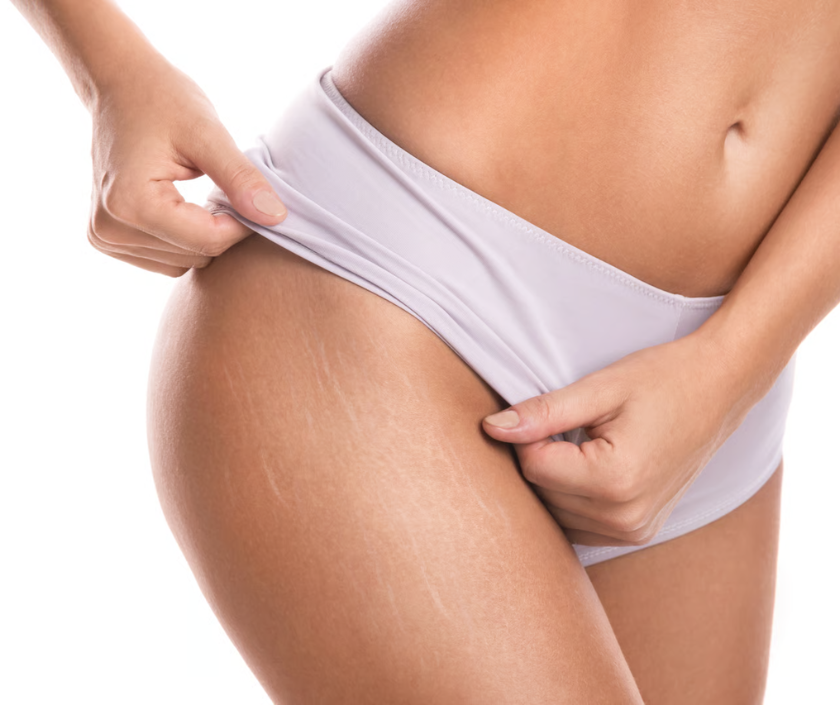
Stretch mark treatment around the bikini area is a set of non surgical methods aimed at improving how the marks look and feel, not at deleting them. Importantly, marks form in the dermis, the layer beneath the surface, where fibres have torn and healed as narrow scars. Because they are scars, no cream, device or injection can restore untouched skin. Stretch Mark Treatment Around the Bikini Area therefore works on colour, texture and how much the marks catch the light.
Why do stretch marks form in this area?
They form when skin is stretched faster than its supporting fibres can adapt, and the groin and hip creases are classic sites. Pregnancy is the commonest trigger, though rapid weight gain, the adolescent growth spurt, bodybuilding and some hormonal conditions do the same. Genetics decide a great deal, which is why two women with identical pregnancies can end up with completely different skin. Potent steroid creams applied for long periods also thin skin and produce stretch marks, so any cream used on this area deserves a doctor's review.
Cushing syndrome and other hormonal disorders occasionally show up as widespread purple marks, therefore sudden striae in a woman who has not gained weight should be assessed rather than treated cosmetically. Meanwhile, marks that appeared during a pregnancy years ago need no investigation at all.
Can stretch marks be removed completely?
No, and any claim otherwise should make you cautious. Removal would mean recreating normal dermal architecture, yet no available treatment achieves that. Instead, honest treatment softens the ridged or indented texture, reduces redness, narrows the contrast against surrounding skin and makes the marks less noticeable in daylight. Improvement of roughly twenty five to fifty per cent in appearance is a sensible expectation for many women, though some see less and results cannot be promised.
Why do red marks respond better than white ones?
Red or purple marks are recent and still inflamed, so the skin is actively remodelling and treatment simply nudges a process already underway. By contrast, white marks are mature scars with reduced pigment cells and thinned dermis, meaning there is far less biological activity to work with. Timing is consequently the strongest predictor of success, ahead of the device chosen or the money spent.
| Feature | Red or purple marks | White marks |
|---|---|---|
| Age | Weeks to about a year | Usually over a year |
| Blood vessels | Active and visible | Sparse |
| Pigment cells | Present | Reduced or absent |
| Likely response | Better, sometimes marked | Limited, mostly texture |
| Realistic aim | Fade colour, flatten texture | Soften edges, smooth surface |
What treatment options are available?
Options fall into a small, well known group, though none of them removes a scar. The choice depends on the age of the marks and your skin type.
- Topical retinoids for newer marks, used under supervision and never in pregnancy
- Microneedling, which remodels the dermis and suits texture and older marks
- Fractional laser, which can help texture and colour but needs caution in Indian skin
- Vascular laser for early red marks, aimed at the blood vessels giving the colour
- Chemical peels at low strength, which even out the surrounding surface
- Simple moisturising and massage, which improve comfort and appearance modestly
Who is likely to benefit, and who is not?
Women with recent, red, narrow marks and stable weight benefit most from Stretch Mark Treatment Around the Bikini Area. Benefit falls away sharply in several situations, and saying so early is kinder than letting you discover it after six sessions.
- Wide, white, deeply indented marks present for many years
- Weight that is still rising or falling significantly
- A pregnancy planned within the next year, since new marks may appear
- An expectation of removal rather than improvement
- Untreated hormonal or steroid related causes, which need medical management first
How is treatment carried out?
Treatment happens in the clinic on a day care basis, so you go home the same day. Numbing cream is applied first for device based work, then the area is cleaned and the chosen device is passed over the marked skin along and across each mark. Sessions typically last twenty to thirty minutes depending on how much skin is involved. Home care is then agreed, since what you do between visits matters as much as the visits themselves.
How many sessions are needed?
A course is unavoidable, so four to six sessions spaced four to six weeks apart is the usual starting plan. Remodelling continues for months after the last session, therefore the final assessment is made at around six months rather than immediately. Maintenance sessions once or twice a year keep texture improved, particularly where skin is still under strain. Progress is reviewed honestly, and treatment is stopped if the skin is clearly not responding.
What is recovery like?
Recovery is short for most methods, though it varies with the device used. Microneedling leaves redness and pinpoint scabbing for two to four days, whereas fractional laser may leave a sunburnt appearance and crusting for up to a week. Meanwhile, loose clothing helps, the area should be kept clean and dry, and hair removal is paused until healing is complete. Sun exposure is irrelevant here for most women, but friction from tight jeans is not, so choose comfort for a few days.
What are the risks?
Risks include darker or lighter patches, prolonged redness, infection, blistering and, though uncommonly, a worsened scar. Pigment change deserves the most attention in Indian skin, because a burn or excessive setting can leave a mark more visible than the stretch mark itself. Infection matters in this region since the skin stays warm and covered. Rarely, treatment over an undiagnosed rash aggravates it, which is why the area is examined before anything is started.
What does it cost in India?
Fees are quoted in rupees, since they depend on the method, the size of the area and the number of sessions agreed. Packages are widely offered, however a package bought before anyone has assessed whether your marks are likely to respond is poor value. Home care products are costed separately and are usually modest. A clear written estimate is given after examination rather than over the telephone.
Why choose Elegance Clinic?
Elegance Clinic in Surat will tell you when treatment is unlikely to be worth your money, which is the most useful thing a clinic can offer here. Dr. Ashutosh Shah assesses the age and type of your marks, checks for a medical cause where the pattern is unusual, and sets out what each option can and cannot do. Related pages sit under stretch marks around the bikini area and across the wider intimate skin and grooming section. Where symptoms point to a medical problem, our conditions pages explain the assessment involved.
Should you want a straight answer about what is realistic for your skin, a private consultation with Dr. Ashutosh Shah in Surat can be arranged quietly and without pressure. Bring photographs from when the marks first appeared if you have them, since their age guides the plan. Details are on our contact page.
Note: This page is for general information and is not a substitute for a medical consultation. Darkening of intimate skin is usually normal, and where it is not, the cause should be assessed before any cosmetic treatment. Results vary between individuals and no outcome can be promised.
Ready to Talk, Privately?
Book a confidential consultation with Dr. Ashutosh Shah. There is no pressure, only clear and honest guidance.