What is C Section Scar Correction?
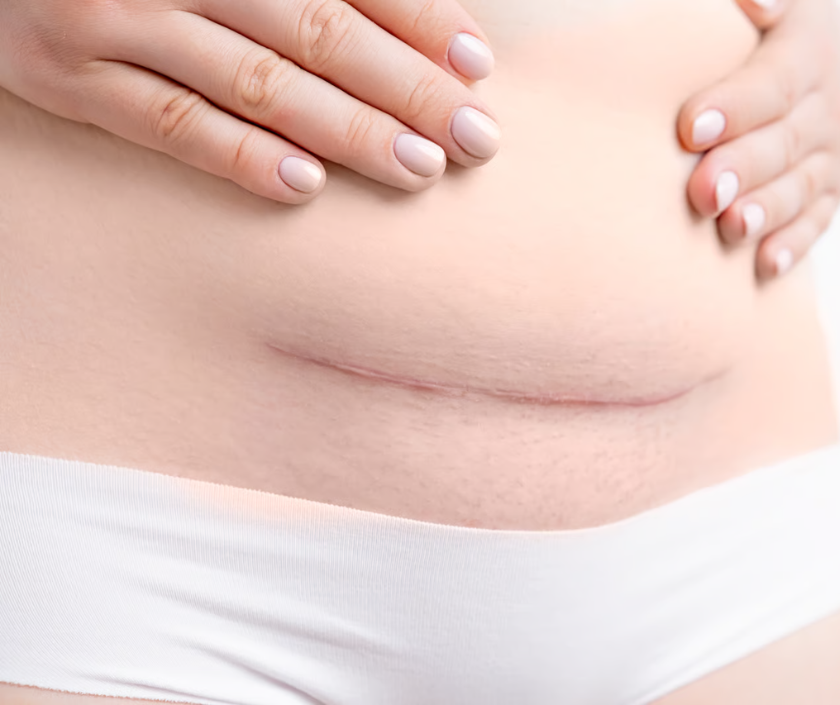
C Section Scar Correction is surgery that removes an old caesarean scar and rebuilds the area in layers, so the skin lies flat and moves freely again. Most caesarean scars settle into a thin, low line that causes no trouble. However, some heal poorly. A shelf of skin may hang over the line, the scar may sit stuck to the muscle below, or it may widen and thicken. Where such problems persist, an operation becomes the honest answer, and it belongs to our wider group of genital scar revision procedures.
Why do women consider surgery for a caesarean scar?
Women come forward because the scar is uncomfortable, catches on clothing or looks nothing like the neat line they expected. Typical complaints include a fold that traps sweat and rubs, a dimple visible through fitted clothes, a dragging feeling on standing, numbness above the line and a sharp catching pain at one point. Importantly, appearance and symptoms usually travel together, therefore both are discussed openly.
What causes the overhanging shelf of skin above the scar?
The shelf forms when the scar sits low and fixed while the skin and fat above it stay loose, so the softer tissue folds over that fixed line. Pregnancy stretches the abdominal wall considerably, and it does not always shrink back. Consequently a step develops, with a damp groove that can carry a rash or a fungal infection. Drying carefully and treating infection come first, yet no cream will flatten genuinely excess skin.
Why does a caesarean scar feel tethered, depressed or numb?
Tethering happens when the healing scar binds down to the muscle sheath instead of gliding over it. That fixed point pulls the surface inwards, which is why the line looks depressed and puckers when you tense your stomach. Numbness is separate, because small sensory nerves are divided during a caesarean. Some feeling usually returns over a year or two, though rarely all of it. Occasionally a nerve is caught within scar tissue, and that gives a sharp, electric pain at one spot.
Why do some scars widen, thicken or turn keloid?
Scars widen where tension pulls the edges apart, and they thicken where the body lays down too much collagen. Keloid and hypertrophic scarring is more common in Indian skin and in other deeply pigmented skin, therefore it is planned for openly rather than assumed away. Crucially, keloid can return after excision and sometimes comes back worse, so cutting it out is never the whole plan. Steroid injection, pressure, silicone and close follow up are combined with surgery, while a woman with a strong keloid history may be advised not to operate at all.
Which changes need medical assessment before cosmetic surgery?
Certain changes are not cosmetic problems, and they need a doctor before any cosmetic operation. Please arrange prompt assessment for the following.
- A new lump, or a lump that is growing, hardening or becoming fixed
- Skin dimpling or puckering that is new, or an orange peel texture
- A wound that will not heal, or one that keeps opening or discharging
- A lump in the caesarean scar that swells and hurts with every period, which can be scar endometriosis
- A bulge that appears on coughing or standing, which may be a hernia rather than a scar
Such findings are assessed with examination and, where needed, imaging. Above all, cosmetic surgery is never the first step while any of them remains unexplained.
Should non surgical treatment be tried first?
Yes, non surgical care is tried first in almost every case, because it is safe, inexpensive and often enough. Silicone gel or sheets, massage, sun protection, microneedling and fractional laser soften texture and blend colour on a scar that is flat and freely mobile. Our page on non surgical caesarean scar treatment sets out that route in full. By contrast, no device removes surplus skin or releases a scar welded to muscle. Where those are the problems, months of creams merely delay the answer.
| Problem | Non surgical care | Surgery |
|---|---|---|
| Dark or uneven colour | Often helps over months | Not a reason to operate |
| Raised or thickened line | Silicone and injections may flatten it | Considered only if that fails |
| Overhanging shelf of skin | No useful effect | Excision is the only answer |
| Tethered, depressed scar | Massage helps a little | Release and layered repair |
When is the right time to operate, and who is suitable?
Surgery is deferred until the scar has matured, which usually means about a year after delivery. A young scar is red, firm and still remodelling, so operating early tends to give a poorer result than waiting does. Suitable candidates are women in stable health at a stable weight, not smoking, with diabetes and haemoglobin controlled, and with their family complete. Another pregnancy will stretch the repair again, therefore childbearing is usually finished first.
How is the operation performed?
The old scar is cut out as a narrow strip, the tethering underneath is released, and the layers are then closed separately without tension. Your surgeon marks the planned line with you standing, since the fold sits differently once you lie down. Where a shelf exists, the excess skin and fat above the scar are removed along with it, so the new line rests flat and low inside underwear. Deeper layers are checked for buried stitch material and for muscle that healed out of position. Fine absorbable sutures hold the fat, the deep layer and the skin. The operation usually takes one to two hours, and many women go home the same day.
Is it combined with a tummy tuck or liposuction?
Often it is, because the scar is rarely the only concern after pregnancy. Where the skin above is loose and the abdominal muscles have separated, an abdominoplasty addresses everything in one sitting and the old scar is removed inside the excised skin. Liposuction may be added to thin a heavy fold. Meanwhile, a woman who wants only the scar improved can have exactly that. Combined surgery means longer anaesthesia, a longer recovery and more risk, so it is chosen deliberately. Related birth scar work is covered on our post delivery scar correction page.
What is recovery like?
Expect soreness, bruising and swelling for two to three weeks, followed by steady improvement. Pain is managed with simple tablets, and an abdominal binder supports the repair for several weeks. Walking starts on the day of surgery, because movement lowers the risk of clots. Desk work resumes at around two weeks, while lifting and gym sessions wait six weeks. Swelling above the line settles over months, therefore the final shape is judged late.
What results are realistic, and what are the limits?
A caesarean scar can be improved, yet it can never be erased. Surgery trades a poor scar for a better one, so you should expect a thinner, flatter, lower line rather than bare skin. Overhang and tethering respond well, and most women notice the difference in clothing within a few months. Colour, by contrast, fades slowly and may stay a little darker than the skin around it. Numbness sometimes improves only partly. Results vary between individuals, and no outcome can be promised.
What are the risks?
Risks include bleeding, infection, fluid collection, delayed healing, wound separation and a new scar that thickens or spreads. Smoking, uncontrolled diabetes and a raised weight increase every one of them, which is why they are addressed before a date is offered. Keloid can recur despite excision and added treatment. Clots in the leg or lung are uncommon but serious, so early walking and, where appropriate, blood thinners are used. No operation is risk free, therefore fever, spreading redness or sudden swelling must be reported at once.
What does it cost in India?
Charges are quoted in rupees and depend on the extent of excision, the anaesthesia, theatre time, the hospital and the city. A short revision under local anaesthesia sits at the lower end, whereas C Section Scar Correction combined with abdominoplasty costs considerably more. At Elegance Clinic a clear written estimate follows your examination, listing surgeon, anaesthetist, theatre, consumables, garments and review visits. Insurance occasionally contributes where a hernia or a genuinely symptomatic scar is treated, though approval depends on your policy.
Elegance Clinic offers privacy, an unhurried examination and a surgeon who says plainly when waiting or non surgical care is the better path. Dr. Ashutosh Shah assesses the scar, the skin above it and the abdominal wall together, then explains what each option can and cannot do. Book a private consultation in Surat through the contact page, with no obligation to proceed.
Note: This page is for general information and is not a substitute for a medical consultation. Any wound that will not heal, a lump or bulge in or near the scar, or new pain or bleeding should be assessed by a doctor before considering cosmetic surgery. Results vary between individuals and no outcome can be promised.
Ready to Talk, Privately?
Book a confidential consultation with Dr. Ashutosh Shah. There is no pressure, only clear and honest guidance.