What is non surgical treatment of a caesarean scar?
Non surgical treatment means improving the appearance and feel of a caesarean scar without any operation. Silicone products, massage, microneedling and fractional laser are the mainstays, since each works on the scar tissue that is already there. Importantly, nothing is cut, nothing is removed and no anaesthesia is needed beyond numbing cream. C Section Scar Treatment of this kind aims at a flatter, softer, less obvious line rather than a rebuilt abdomen.
How does a caesarean scar settle on its own?
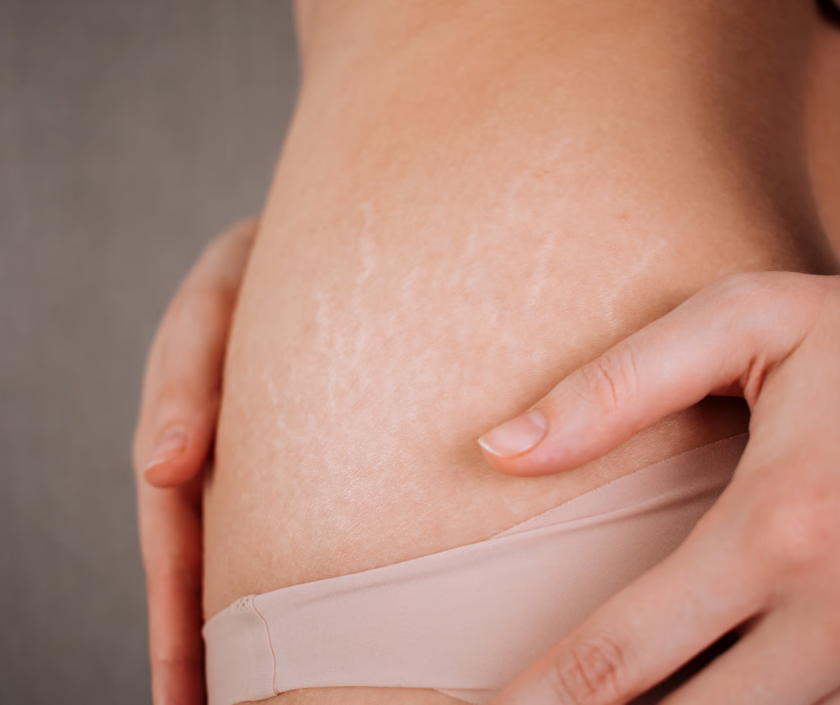
Most caesarean scars improve considerably over the first eighteen months with no intervention at all. Early on the line looks red or purple and feels firm, because new blood vessels and dense collagen dominate. Then, over months, the redness fades, the firmness softens and the scar flattens as fibres reorganise. Patience is therefore part of the plan, and starting expensive treatment at six weeks often means paying for something time would have done anyway.
Some scars behave differently. Thickened, itchy, raised scars and keloids appear in a minority of women, while darker skin carries a higher tendency to both. Meanwhile a scar can settle nicely yet stay pigmented, or sit slightly indented where the tissue underneath has tethered. Therefore, recognising which pattern you have decides what is worth doing.
Do silicone gel and silicone sheets actually help?
Silicone remains the best supported non surgical option for scars, so it is usually the first thing recommended. Sheets or gel hold moisture at the surface, which appears to signal the scar to lay down less collagen and therefore reduces thickness and redness. Consistency is what makes it work, so twelve hours a day for at least two to three months is the usual instruction. Sheets suit a flat abdomen and gel suits a crease or a fold, and neither works if used for a fortnight and abandoned.
What does scar massage do?
Massage loosens the connections between the scar and the tissue underneath, so it helps a tethered or pulling scar most. Firm circular and cross friction pressure along the line, for a few minutes twice daily, gradually improves glide and reduces the dragging feeling many women describe when standing up. Numbness above the scar is common after a caesarean, though gentle stroking helps the area become less strange to touch. Begin only once the wound is fully closed and your doctor agrees, usually around six weeks.
Can microneedling improve the scar?
Microneedling can improve a scar that is indented, uneven in texture or slightly wide, by remodelling collagen through controlled micro injury. Several sessions spaced four to six weeks apart are needed, and change builds across months rather than weeks. Raised or keloid scars are a different matter, since needling can occasionally aggravate them, so those are managed with silicone, pressure and sometimes injections instead. Sterile technique matters because the lower abdomen sits under clothing and stays warm.
Where does fractional laser fit in?
Fractional laser is used mainly for texture and colour once the scar is mature, generally after six to twelve months. Narrow columns of heat prompt remodelling, softening a raised edge and blending a colour mismatch. Settings must be conservative in Indian skin, because the same energy that improves a scar can leave a darker patch alongside it. Test patching is sensible, while three to five sessions is a common plan.
What about the darker line along the scar?
Darker colour along a caesarean scar is usually post inflammatory pigmentation, and it commonly fades slowly by itself. Melanin rich skin holds this pigment longer, so a year or more of gradual fading is normal rather than a failure. Sun exposure is rarely the issue at this site, though friction from waistbands and repeated hair removal certainly is. Above all, avoid unregulated lightening creams bought online.
Products of that kind are a real hazard in India. Mercury containing creams are toxic and can harm the kidneys and nerves, while potent topical steroids sold as lightening creams thin the skin, worsen fungal infection and cause rebound darkening once stopped. Steroid modified fungal infection is now a widespread problem across the country. High strength hydroquinone used without supervision can also produce paradoxical darkening. Bring whatever you are applying to your appointment and have it reviewed.
Who is likely to benefit?
Women with a flat or mildly raised scar, reasonable skin quality and realistic aims benefit most. Good indications include the following.
- A firm, red or thickened line within the first year
- A scar that pulls or feels stuck when you stand or stretch
- Uneven texture or a slightly indented edge
- Pigmentation along the line that has plateaued
- Numbness and sensitivity that make the area feel foreign
When is surgery the honest answer instead?
Surgery is the honest answer when the problem is shape rather than surface. A thick overhanging shelf of skin above the scar, a deeply tethered scar that dips inwards, a scar that has widened badly or one that sits too high will not be corrected by any device or cream. Devices remodel tissue, they cannot reposition or remove it. Where that is your situation, the surgical route is explained on our page for caesarean scar correction.
What results should I expect?
Expect a scar that is flatter, softer, less itchy and closer in colour to the surrounding skin, rather than an abdomen without a scar. Every caesarean leaves a permanent line, so honest treatment reduces how much it announces itself. Improvement develops over three to six months and continues quietly afterwards. Results differ between women because healing is individual, so no particular outcome can be promised at the outset.
What are the risks and limits?
Risks are modest with silicone and massage, though slightly higher with devices. Skin irritation, redness, temporary darkening, infection and, rarely, worsening of a keloid are the recognised problems. Starting too early can disturb healing, therefore timing is checked before anything begins. Limits matter just as much, since no non surgical method removes excess skin, corrects a scar placed too high or flattens a genuine overhang.
What does it cost in India?
Costs are quoted in rupees and vary widely, because silicone sheets and massage cost very little while a laser course costs considerably more. Choosing the cheapest option first is often correct, since silicone and massage are also the best value for a young scar. Sessions, review visits and home products are itemised before you commit. A clear written estimate follows examination, never a phone call.
Why choose Elegance Clinic?
Elegance Clinic in Surat starts by working out whether your scar needs time, a simple measure, a device or an operation. Dr. Ashutosh Shah performs caesarean scar surgery as well as non surgical scar work, therefore he has no reason to push a device at a problem it cannot solve. Related options are grouped on our scar improvement page, and the wider intimate skin and grooming section covers grooming and pigmentation concerns.
For a considered opinion on C Section Scar Treatment, a private consultation with Dr. Ashutosh Shah in Surat can be arranged at your convenience. Bring any creams, sheets or oils you have been using, along with the approximate date of your surgery. Our contact page has everything you need to get in touch.
Note: This page is for general information and is not a substitute for a medical consultation. Darkening of intimate skin is usually normal, and where it is not, the cause should be assessed before any cosmetic treatment. Results vary between individuals and no outcome can be promised.
Ready to Talk, Privately?
Book a confidential consultation with Dr. Ashutosh Shah. There is no pressure, only clear and honest guidance.