
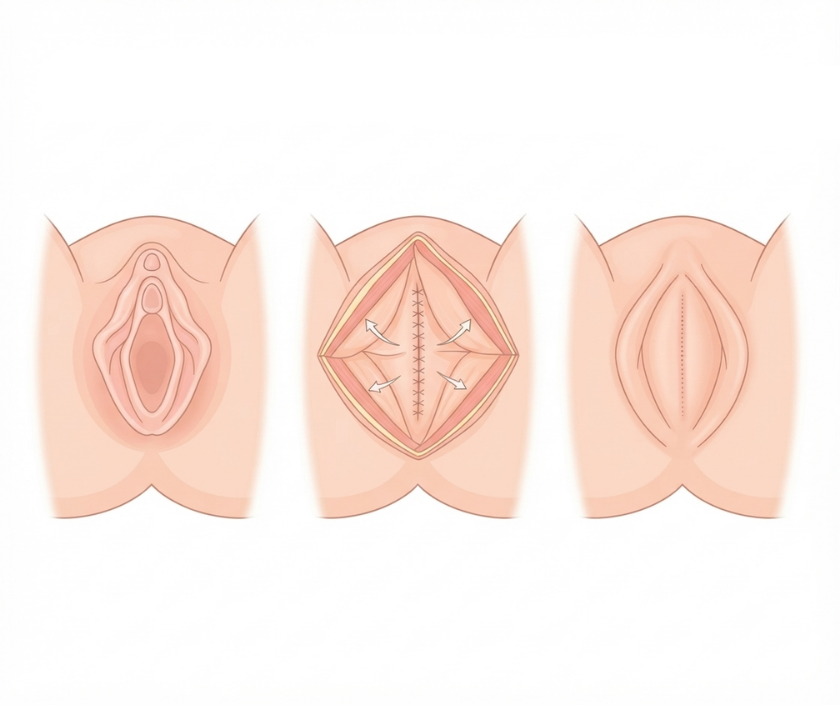
What is vaginal closure and perineal reconstruction?
Vaginal Closure and Perineal Reconstruction removes or closes the vaginal canal and rebuilds the perineum. Rather than a single fixed step, it is often part of a wider masculinising plan. For many people it accompanies metoidioplasty or phalloplasty, especially where urethral lengthening is planned. Because the canal lining is removed or sealed, the area heals into firm, closed tissue. Through careful layering, the perineum is reshaped for a masculine contour.
Who might choose this operation?
People who choose this operation usually want the vaginal canal closed as part of their transition. Some plan it alongside phalloplasty, while others want it as a step on its own. Because goals differ, the plan is always individual. Good general health and settled, informed decisions both matter here. Above all, the choice is deeply personal and never rushed.
Why is it often combined with other surgery?
It is often combined because closing the canal supports urethral lengthening and a masculine perineum. Although it can be done alone, pairing it with metoidioplasty or phalloplasty is common. For this reason, timing is planned around your wider goals. Meanwhile, combining steps can reduce the number of separate operations. As a result, the team maps the sequence carefully with you.
How is the operation performed?
The operation is performed under general anaesthesia and takes several hours. First, the surgeon removes or closes the canal lining. Next, the space is closed in layers to prevent a cavity remaining. After that, the perineum is rebuilt with supporting tissue. Because nearby structures matter, the urethra and pelvic floor are protected. Finally, the wounds are closed and a catheter supports early healing.
What results can I realistically expect?
You can realistically expect a closed canal and a firmer, more masculine perineum. Because results differ between people, the team gives an honest picture beforehand. Meanwhile, swelling settles over weeks, so the final look takes time. Since healing varies, outcomes cannot be guaranteed. Vaginal Closure and Perineal Reconstruction aims for a comfortable, durable result rather than any single ideal.
What are the risks and complications?
This is major surgery, so the risks are explained plainly.
- Bleeding, infection, or delayed healing
- A pocket or cavity if closure is incomplete
- Fistula, an unwanted opening between structures
- Urinary problems where the urethra is involved
- Scarring, which is permanent
- Occasional need for revision
Because problems are easier to manage early, follow up is close. The team discusses each risk with you honestly before you decide.
Is it done in one stage?
The closure itself is usually one stage, yet it often sits within a staged masculinising plan. Because phalloplasty in particular is staged, this step is timed within the sequence. For some people a small revision follows if a pocket remains. Revision like this is common and is not a failure. So the team plans each stage calmly, without pressure.
How does it affect passing urine?
Passing urine can change when the operation is combined with urethral lengthening. Because the urethra may be rerouted, the stream and position can alter. For this reason, a catheter supports early healing. Meanwhile, most people settle into a comfortable pattern over the following weeks. If narrowing or a fistula develops, it is treated as needed.
What about fertility and hormones?
Fertility is discussed before treatment, since decisions are easier made early. Because closing the canal and other masculinising steps affect future options, the team raises this openly. Where you may want biological children, preservation is arranged in good time. Meanwhile, hormones are managed with your prescribing doctor and surgical team. You should never change doses yourself before an operation.
What is recovery like?
Recovery begins with a hospital stay and catheter care. At first, rest, wound care, and gentle movement come first. Because energy returns gradually, time off work is wise. Meanwhile, swelling and bruising fade over several weeks. Most people resume gentle daily life within a few weeks, with fuller healing over months.
How does it compare to leaving the canal in place?
Some masculinising plans keep the canal, so honest comparison helps. The table sets out the difference.
| Approach | Canal | Suits |
|---|---|---|
| Vaginal closure | Removed or closed | Urethral lengthening plans |
| Vaginal preservation | Kept | Those who wish to retain it |
For wider counselling, reach our dedicated transgender health service. You may also read about metoidioplasty with vaginal preservation or phalloplasty with vaginal preservation.
How do I begin at Elegance Clinic?
Begin with a private, unhurried consultation with Dr. Ashutosh Shah in Surat. During that meeting, he assesses you, explains the plan, and provides a clear written estimate after examination. Because this is a permanent step, you are encouraged to take your time. When ready, contact Elegance Clinic for a confidential appointment.
Note: This page is for general information and is not a substitute for a medical consultation. Gender affirming surgery is individualised, carries real risks, is often staged, and outcomes vary between people. Dr. Ashutosh Shah and the team will advise honestly what is appropriate for you.
Ready to Talk, Privately?
Book a confidential consultation with Dr. Ashutosh Shah. There is no pressure, only clear and honest guidance.

