What is Top Surgery for Chest Masculinization?
Top Surgery for Chest Masculinization is an operation that removes breast tissue and reshapes the skin above it, so the chest takes on a flat masculine contour. Nipples are usually made smaller and moved during the same sitting, because a masculine chest carries smaller areolae set lower and further apart. Surgeons also call this chest masculinisation or chest reconstruction, therefore you may meet three names for one operation. This page stays deliberately practical, while transition journey and counselling content lives on our dedicated transgender health site.
Why do transgender men choose chest surgery?
Most transgender men come for this operation because the chest they have does not match who they are, and because binding has begun to wear them down. Relief from daily binding matters a great deal, since long term binding can bruise ribs, restrict breathing and make exercise harder than it should be. Clothing and swimming open up afterwards, so many men describe the change as practical as much as personal. Being transgender is not a disorder, therefore this is reconstructive work rather than treatment for an illness.
What does the operation actually change?
Surgery changes three things, namely the volume of breast tissue, the amount of skin covering the chest, and the size and position of the nipple. Tissue is taken out through whichever incision suits you, although a thin even layer is deliberately left behind so the result does not look scooped and hollow. Muscle is never cut, therefore whatever pectoral shape you already have is what shows once swelling has gone. Chest hair, where testosterone has brought it on, carries on growing as before.
How is the right technique chosen for me?
Technique follows three findings above all, namely how much breast tissue is present, how well the skin springs back, and where the nipple currently sits. Elasticity decides whether skin has to be removed, because skin that no longer retracts will simply drape once the volume beneath it has gone. Position of the nipple counts too, since a nipple lying well below the chest fold cannot be shifted far without either a graft or a longer incision. Weight, old scars, smoking and diabetes then shape the final plan.
What are the three main techniques?
Three techniques cover almost every chest, namely double incision with free nipple grafts, periareolar and keyhole. Each route trades scar length against how reliably the chest can be flattened. Below is a plain comparison, however the honest choice comes after examination rather than from a table.
| Technique | Usually suits | Scar | Nipple sensation | Flattening |
|---|---|---|---|---|
| Double incision with free nipple grafts | Larger chests, or skin with poor elasticity | Two long scars running across the chest, plus a graft edge around each nipple | Commonly reduced or absent | Most reliable |
| Periareolar | Small to moderate chests with good elasticity | A circle hidden at the areolar border | More often preserved | Good, although revision is more common |
| Keyhole | Small chests, excellent elasticity, nipple already well placed | A short scar at the lower areolar edge | Usually preserved | Limited, since no skin is removed |
Every one of these leaves a permanent scar, so nobody should tell you otherwise. Fuller detail on the commonest route sits on the double incision page.
Who is a good candidate?
Good candidates are adults in reasonable health whose weight has been steady and whose expectations are grounded. Recognised standards of care exist for gender affirming surgery, so assessment, informed consent and, where relevant, supporting documentation form part of the pathway. Requirements differ between surgeons, hospitals and countries, therefore the team will simply tell you what applies in your case rather than leave you guessing. Smokers are asked to stop well beforehand, because nicotine starves healing skin and grafts of blood supply.
Does testosterone change the timing?
Hormone therapy does alter chest tissue over months and years, so timing is worth discussing rather than rushing. Testosterone shifts fat distribution and tissue texture, which can change how much skin needs removing. Decisions about continuing or pausing hormones around the date of surgery belong with your prescribing doctor and the surgical team together, never with one person acting alone. Nobody has to be on hormones to be taken seriously here.
What happens on the day of surgery?
Surgery is done under general anaesthesia and usually runs between two and four hours, depending on technique. Markings are drawn while you sit upright, because the chest fold and the pectoral border only show properly in that position. Tissue is then removed, contour is checked from several angles, and nipples are sized and placed to suit the new shape. Small drains are sometimes used, so a single night in hospital is occasionally advised.
What is recovery like?
Recovery is quicker than most people expect, although it is not instant. Soreness and tightness peak over the first three or four days, therefore simple pain relief and rest carry you through that stretch. Desk work often restarts within one to two weeks, while driving waits until you can brake sharply without flinching. Swelling settles across two to three months, yet contour keeps refining for six months to a year.
- drains, where used, usually come out within a few days
- dressings over nipple grafts stay undisturbed for about a week
- arms are kept low and close for the first fortnight
- lifting, pushing and pulling wait roughly six weeks
- scars stay pink and firm for months before they fade
Do I still bind afterwards, and when can I train again?
Binding stops for good, however a compression vest takes its place for a while. That garment is worn almost continuously for four to six weeks, because steady pressure reduces swelling, discourages fluid from collecting and helps the skin settle onto the chest wall. Comfort improves quickly once it comes off, so most men stop thinking about it well before the six week mark. Returning to a binder afterwards serves no purpose and can rub healing scars.
Light walking starts within days, whereas structured training returns in stages. Cardio and lower body work usually resume around four to six weeks, while chest, shoulder and back loading waits until roughly eight weeks. Swimming needs every wound fully closed, therefore six weeks is a common milestone. Contact sport comes back last, because a knock to a healing chest can undo careful work.
What are the risks?
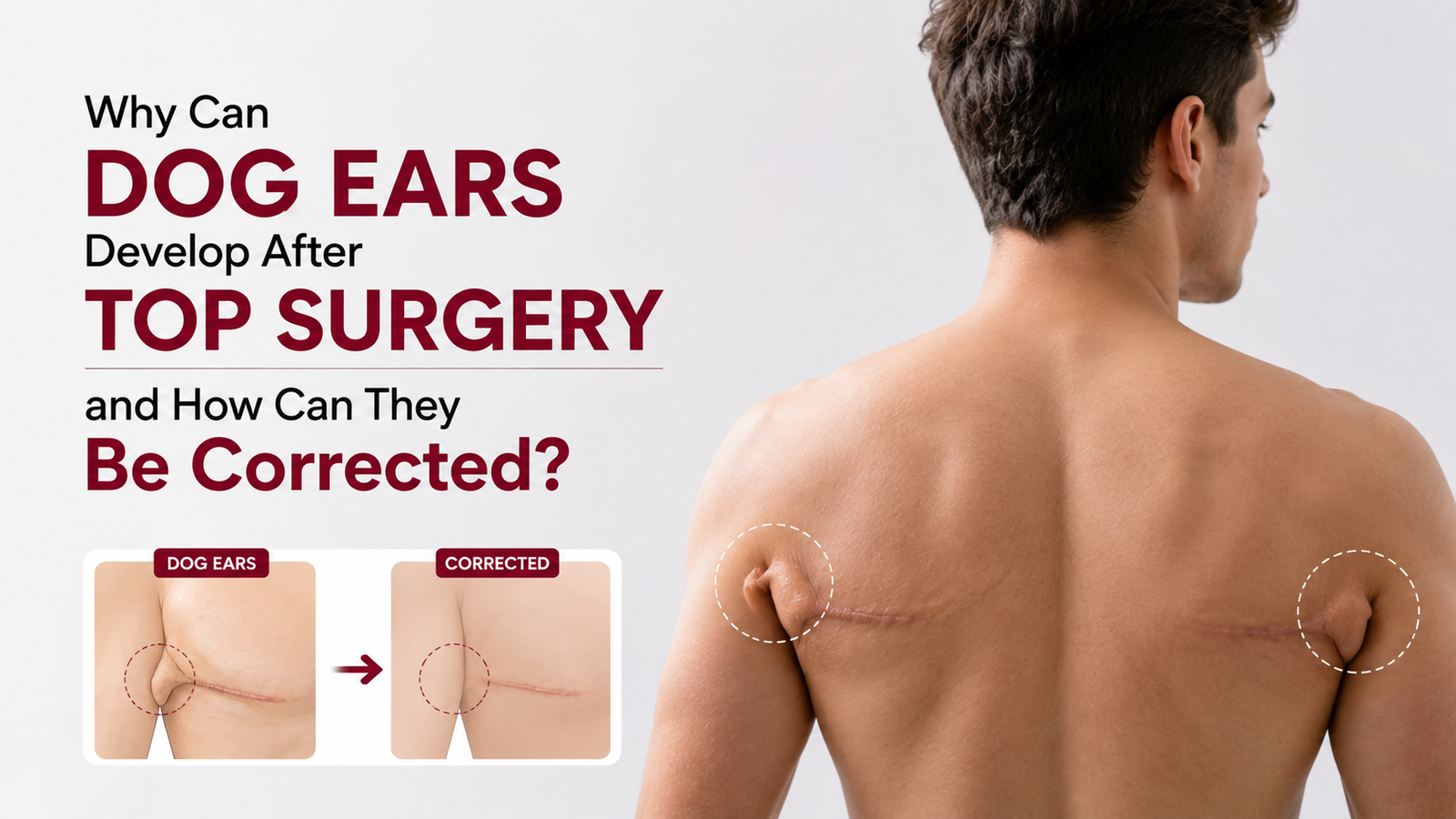
No chest operation is risk free, so the list is given plainly rather than buried at the bottom. Bleeding, a collection of blood under the skin, infection, fluid collections and slow healing can all happen. Nipple grafts may lose pigment or, less often, partly fail, therefore tattooing is occasionally needed later. Scars sometimes thicken or turn keloid, which matters more in Indian skin than many websites admit. Revision for a small dog ear, residual fullness or nipple position is fairly common, and it is not a failure.
What does it cost in India?
Cost in rupees depends on the technique used, theatre and anaesthesia time, and whether an overnight stay is needed. Because chests differ so widely, quoting a figure over the telephone would mislead you. A clear written estimate after examination is given instead, with each item listed separately. Cheaper is rarely safer, therefore compare what is included rather than the headline number alone.
Why choose Elegance Clinic?
Dr. Ashutosh Shah performs chest masculinisation at Elegance Clinic in Surat, with time given to planning and to plain answers. Privacy is taken seriously here, so consultations are unhurried and records are handled discreetly. Related routes, dog ear correction and revision options are set out across the FTM top surgery section.
If you are weighing up Top Surgery for Chest Masculinization, a private consultation will tell you which technique your chest actually allows. Bring any questions written down, since it is easy to forget them on the day. Nobody is rushed towards a date, and honest answers come first.
Note: This page is for general information and is not a substitute for a medical consultation. Every procedure carries risk, results vary between individuals, and no outcome can be promised. Dr. Ashutosh Shah will advise honestly whether a procedure is appropriate for you.
Ready to Talk, Privately?
Book a confidential consultation with Dr. Ashutosh Shah. There is no pressure, only clear and honest guidance.