What is Double Incision Top Surgery?
Double Incision Top Surgery is the technique that removes breast tissue through two horizontal cuts across the chest, then trims the loose skin and replaces the nipples as grafts. Reliability is the reason it remains the commonest route worldwide, because both volume and skin envelope are controlled directly. Scars are its price, so the choice deserves clear eyes rather than persuasion. Wider transition care and counselling are covered on our dedicated transgender health site.
Who does this technique suit best?
Larger chests suit this approach, and so does any chest whose skin has lost its spring. Elasticity decides more often than cup size does, since skin that stays stretched after weight change or after years of binding will not shrink back by itself. Anyone whose nipple sits low tends to end up here as well, because lifting it on a stalk of tissue over that distance is not always safe. Ageing skin, stretch marks and a previous pregnancy all push the choice in this direction.
Where exactly will the scars sit?
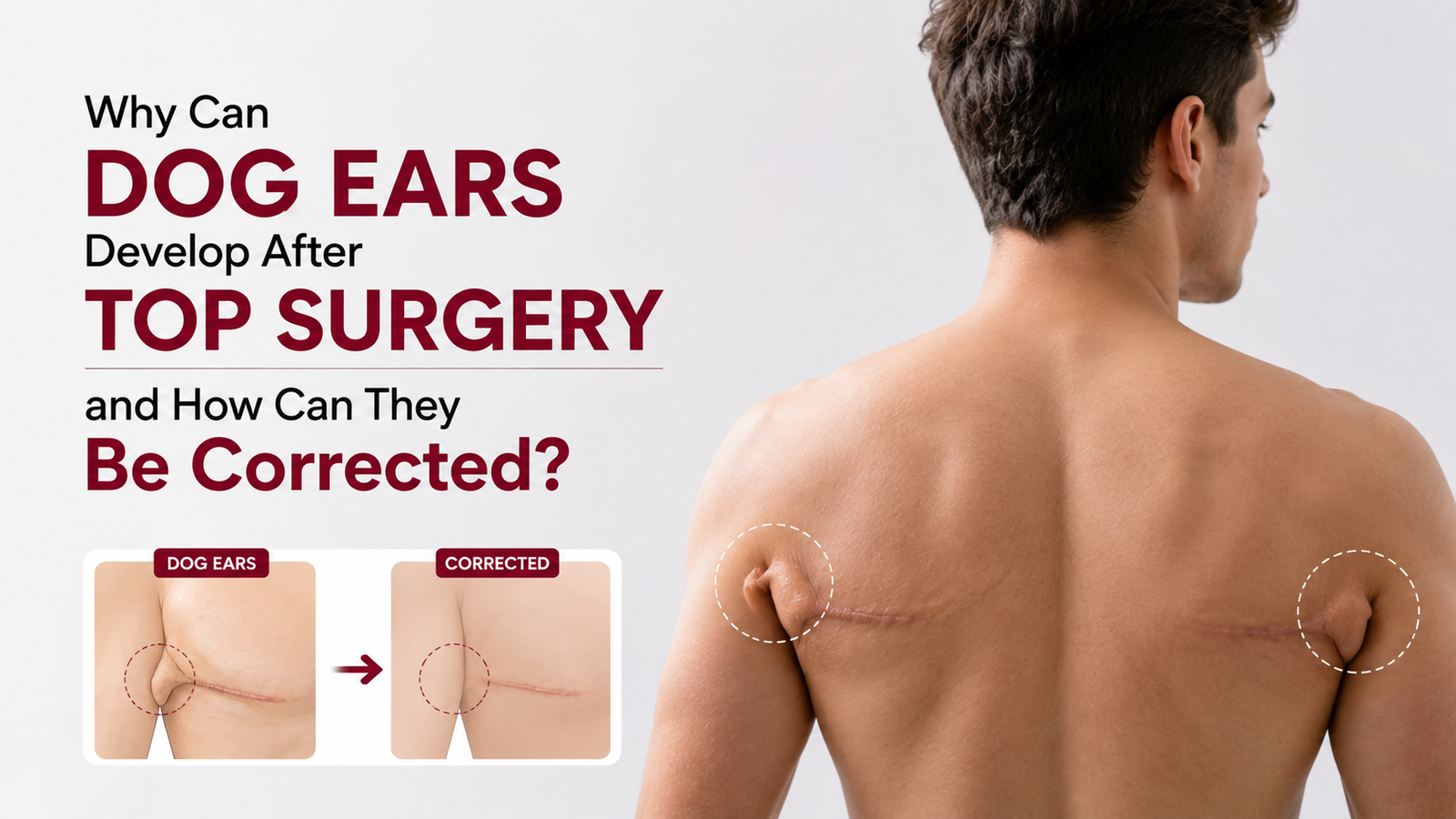
Scars run horizontally across each side of the chest, roughly along or just above the line where the breast fold used to be. Each line begins near the breastbone and travels outward towards the side of the chest, often finishing close to the outer edge of the pectoral muscle. Length depends on how much skin has to go, therefore a bigger chest means a longer line. Around each nipple sits a second fine circular scar where the graft was set in. Planning aims to keep the outer ends where a vest or shirt covers them.
Why are free nipple grafts used?
Grafts become necessary because the nipple cannot travel far enough on its own blood supply once that much skin is removed. Detaching it, trimming it smaller and stitching it back as a graft is safer than stretching a thin stalk across a long distance. Blood supply then grows in from the chest wall beneath during the days that follow. Position can also be judged fresh, so the nipple ends up where a masculine chest carries it rather than where it happened to sit before.
Will I keep nipple sensation?
Sensation is commonly reduced after free nipple grafting, and erotic sensation is often lost altogether. Nerves are divided when the nipple is detached, therefore this is expected rather than a complication. Some touch feeling frequently returns over one to two years as nerves grow into the graft, although how much comes back cannot be predicted for any one person. Anyone who places nipple sensation above all else should say so early, since that may steer the discussion towards a different technique. Honesty on this point matters more than comfort does.
What is the honest trade being made?
The bargain here is easy to state, namely the flattest and most predictable chest in exchange for the longest scars and commonly reduced nipple feeling. Both halves of that bargain are real, so neither is glossed over here.
| What you gain | What you accept |
|---|---|
| Dependable flattening, even on a large chest | Two long horizontal scars that are permanent |
| Direct removal of spare skin, so less looseness later | A circular graft scar around each nipple |
| Nipple size and placement chosen afresh | Commonly reduced or absent nipple sensation |
| Lower chance of residual tissue needing removal | Graft pigment can lighten and may need tattooing |
| Dog ears can often be dealt with at the same sitting | More wound care early on, including graft dressings |
How is the operation performed?
Work begins with markings drawn while you sit upright, after which general anaesthesia is given. Nipples are harvested first and kept safe, then the breast tissue is removed and the contour is smoothed by hand and eye. Skin is trimmed only once you have been sat up on the operating table, because that is the honest way to judge what is genuinely spare. Closure follows in layers, drains are commonly placed, and each graft is stitched into its marked position beneath a bolster dressing. Theatre time usually runs to about three hours.
What does the first week look like?
Rest fills most of the first week, with a compression vest on and arms kept low and close. Pain tends to be described as soreness and tightness rather than anything sharp, so tablets are generally enough. Drains come out once the output falls, often on the second or third day. Sleeping propped up helps a great deal, therefore a wedge of pillows is worth arranging before admission. By the end of that week most men feel bored rather than unwell.
How do the nipple grafts heal?
Bolster dressings stay in place for roughly five to seven days, because a graft must not be disturbed while it takes. Underneath, the tissue often looks dark, dry and unpromising, which alarms people needlessly. Crusting lifts across two or three weeks to reveal pink skin that slowly regains colour. Partial loss at the edges happens occasionally and usually heals with dressings alone, whereas complete loss is uncommon. Final pigment is frequently lighter than before, so medical tattooing remains an option later.
When does the chest look settled?
Swelling hides the true shape for six to eight weeks, therefore early photographs rarely reflect the end result. Firm ridges along the scar lines are normal at six weeks and soften considerably by four months. Contour is broadly settled by half a year, while scars keep fading and flattening for a year or more. Patience genuinely pays here, since a good number of early concerns resolve without any further surgery.
What can go wrong?
An operation of this size carries real risks, so they are listed rather than skated over.
- bleeding or a blood collection needing an early return to theatre
- infection or slow wound healing, particularly among smokers
- seroma, a pocket of fluid that sometimes needs draining
- partial or, less often, complete loss of a nipple graft
- scars that thicken, widen or become keloid
- dog ears at the outer end of either scar line
- asymmetry of scar level, nipple height or chest contour
- reduced skin and nipple feeling that may never fully return
Further surgery is needed by a fair number of men, and it is a normal part of the pathway rather than a failure. Small puckers at the scar ends are dealt with on the dog ear correction page.
What does it cost in India?
Fees in rupees reflect theatre and anaesthesia time, chest size, dressings, drains and follow up visits. Since this technique takes longer than the smaller approaches, it usually costs more than they do. A clear written estimate after examination is provided, with every element itemised. Very low prices deserve suspicion, because savings usually come out of theatre standards or follow up care.
Why choose Elegance Clinic?
Dr. Ashutosh Shah plans each chest individually at Elegance Clinic in Surat, and he will say plainly whether a smaller scar approach is realistic for you. Recognised standards of care exist, so assessment, informed consent and any paperwork are handled respectfully rather than as hurdles invented on the spot. Rules differ between hospitals and between countries, therefore what applies in your case is explained at the consultation. Alternatives are compared across the FTM top surgery section.
Booking a private consultation is the sensible next step if Double Incision Top Surgery looks likely to suit your chest. Photographs of results you consider good are welcome, since pictures communicate faster than words do. Nothing has to be settled in one visit, and later questions are expected.
Note: This page is for general information and is not a substitute for a medical consultation. Every procedure carries risk, results vary between individuals, and no outcome can be promised. Dr. Ashutosh Shah will advise honestly whether a procedure is appropriate for you.
Ready to Talk, Privately?
Book a confidential consultation with Dr. Ashutosh Shah. There is no pressure, only clear and honest guidance.