What is a dog ear after top surgery?
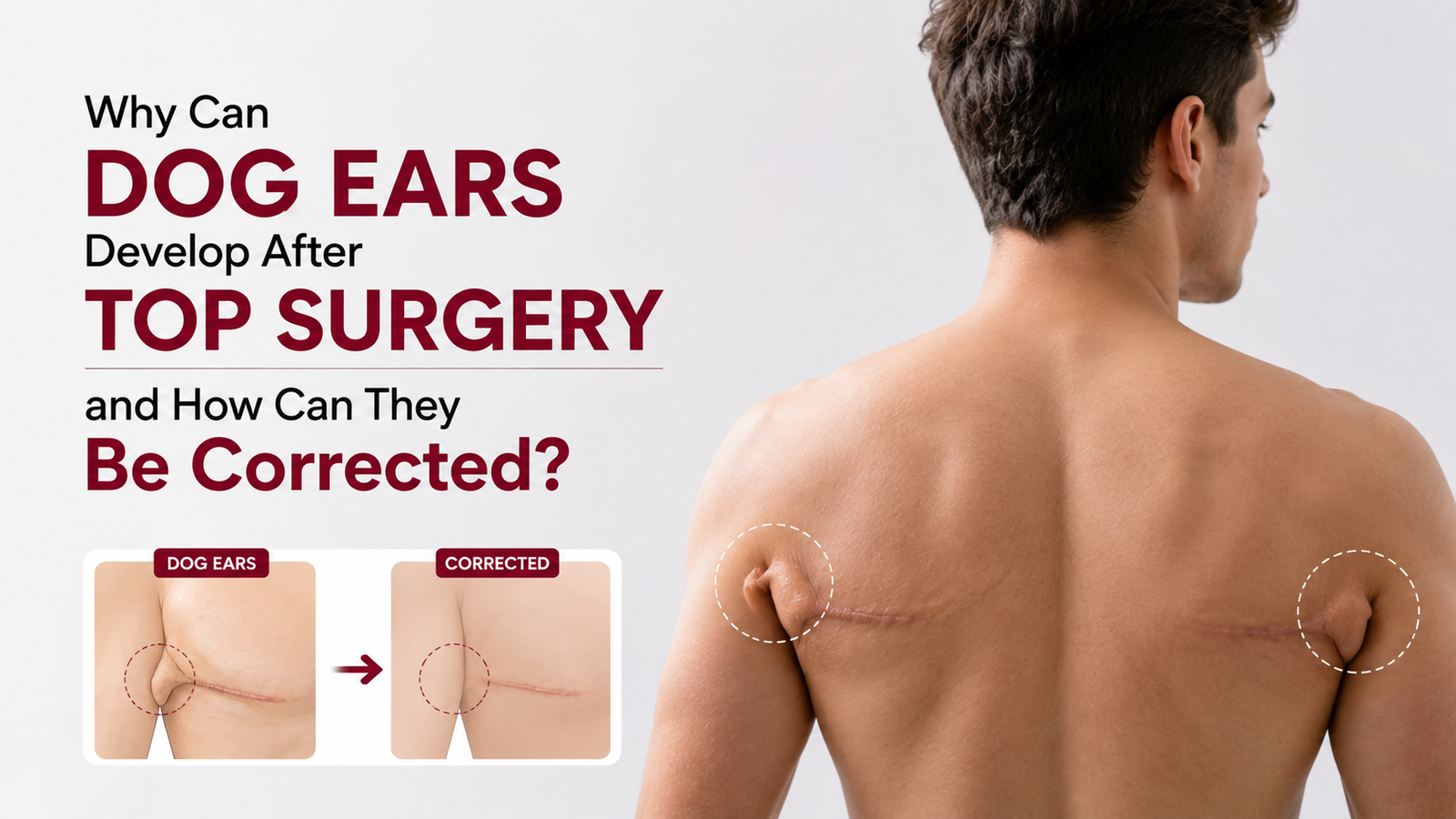
A dog ear is a small puckered fullness at the end of a surgical scar, where skin gathers rather than lying flat. Names like this sound odd, however the description is accurate, since the raised fold really does resemble a folded ear. Most men notice one at the outer end of the chest scar, near the armpit or curling slightly towards the back. Nothing about it is dangerous, and it ranks among the commonest reasons for a small second procedure. Meanwhile, support through the wider transition is set out on our dedicated transgender health site.
What does Dog Ear Correction After Top Surgery involve?
Dog Ear Correction After Top Surgery is a small operation that removes the puckered skin and fat at the scar end, then lays the area flat. Local anaesthesia is usually enough, so this is normally a day visit with no admission. Spare tissue comes away as a narrow ellipse, and the scar is extended a little to let the skin sit smoothly. Theatre time often runs under an hour, therefore most men are home by lunchtime.
Why do dog ears form?
Dog ears form because the skin at each end of a closure has more length than the tissue it is being joined to. Curved chests make this worse, since a straight line of stitches laid across a rounded surface always leaves spare skin somewhere. Fat towards the side of the chest adds to the bulk, particularly where liposuction has not been used in that area. Early swelling exaggerates the fold as well, therefore many look worse at six weeks than they do at six months.
Where do they usually sit?
The outer end of the chest scar is the usual site, close to the armpit or wrapping slightly around towards the back. Some men get a smaller one at the inner end near the breastbone, although that happens less often. Fullness further round the side, sometimes called a side roll, is a related problem and often needs liposuction rather than cutting. Careful marking before the first operation reduces the chance, yet nothing removes it entirely.
Are they a sign that surgery went wrong?
No, a dog ear is not a sign of poor surgery, and it happens in the most experienced hands. Anatomy causes it more often than technique does, because chests are curved and skin behaves as it pleases. Surgeons frequently accept a small pucker on purpose rather than extend a scar further at the first sitting. Correcting it later, once swelling has gone and the true amount is visible, gives a neater result than guessing early would.
Why do surgeons wait several months?
Waiting is advised because a good number of these folds shrink or vanish without any help. Swelling takes months to clear completely, therefore what looks like spare skin at six weeks may be fluid instead of tissue. Scars soften across the same period, which flattens the fold considerably on its own. Most surgeons review at three months and again at six, so the decision rests on what is genuinely still there.
Which ones settle on their own?
Settling can usually be predicted by six months, and the signs are not subtle.
| More likely to settle | More likely to need correction |
|---|---|
| Small, soft and mostly swelling | Firm, and made largely of fat |
| Clearly shrinking between visits | Unchanged between three and six months |
| Flattens easily when pressed | Stays raised even under pressure |
| Invisible under a shirt | Shows through clothing or catches on a bag strap |
How is the correction done?
Correction starts with marking while you sit or stand, because the fold only shows itself properly under gravity. Local anaesthetic is then injected, and the puckered skin is removed as a narrow ellipse continuing the line of the existing scar. Fat underneath is trimmed or suctioned, since leaving it behind simply rebuilds the bulge. Closure follows in layers and a small dressing is all that is needed. Both sides are usually treated at the same visit, so one recovery covers everything.
What is recovery like?
Recovery is quick, with most men back to their usual routine within a few days. Soreness lasts three or four days, therefore ordinary painkillers generally suffice. Heavy lifting and gym work wait two to three weeks, since tension across a fresh scar end can widen it. Stitches dissolve or come out at around ten days. Swimming waits until the wound has closed fully, which is usually a fortnight.
Will my scar get longer?
Yes, the scar becomes a little longer, and that is the trade being made for a flatter chest. Extension usually measures one to three centimetres, so it is modest in practice. Direction counts for more than length, because a scar carried along the natural fold hides better than one straying upward. Most men judge the exchange worthwhile once they see the difference in a fitted shirt. Thickened or raised scars are dealt with on the revision and scar revision page.
What are the risks?
Even a small procedure carries risk, so the possibilities are listed rather than assumed away.
- bleeding or bruising at the end of the scar
- infection, uncommon with a wound this size
- a thickened, widened or raised scar
- a residual pucker needing one further tidy
- numbness along the newly lengthened portion
- slight asymmetry between the two sides
- slow healing in smokers or where blood supply is poor
What does it cost in India?
Fees in rupees are modest beside the original operation, since theatre time is short and general anaesthesia is often unnecessary. Treating one side or both changes the figure, as does the amount of liposuction required. Some surgeons include early revision within an agreed period, therefore it is worth checking what your original quotation covered. A clear written estimate after examination is given before anything is booked.
Why choose Elegance Clinic?
Dr. Ashutosh Shah reviews chests at three months and again at six at Elegance Clinic in Surat, so any pucker is judged once it has settled. Advice is sometimes simply to leave it alone, and that counts as a proper answer rather than a lack of interest. Where correction genuinely helps, it is arranged as a short day procedure with little disruption to work. Related touch ups are covered across the FTM top surgery section.
If a fold at the end of your chest scar is bothering you, Dog Ear Correction After Top Surgery is a straightforward answer once the timing is right. Come in for a look rather than worrying at home, since a few minutes of examination usually settles the question. Reassurance is offered where it is deserved, and honest advice where it is not.
Note: This page is for general information and is not a substitute for a medical consultation. Every procedure carries risk, results vary between individuals, and no outcome can be promised. Dr. Ashutosh Shah will advise honestly whether a procedure is appropriate for you.
Ready to Talk, Privately?
Book a confidential consultation with Dr. Ashutosh Shah. There is no pressure, only clear and honest guidance.