
What is Post Transition Body Contouring?
Post Transition Body Contouring is refinement surgery carried out after the main steps of transition are complete and the body has settled. Rather than a single large operation, it usually means a series of smaller, targeted corrections. Fine adjustment is the aim, not a fresh start.
Typical requests involve a flank that never quite flattened, a residual fullness left after earlier surgery, or proportions that shifted as hormone therapy took effect. Each of those is assessed on its own merits.
When is the right time to consider it?
The right time is once hormone therapy has been steady for a couple of years and weight has held stable for at least six months. Fat redistribution continues quietly across that period, which is exactly why rushing produces regret. Earlier surgery should also have healed fully, commonly a year or more.
Waiting feels frustrating when you are ready emotionally. Nevertheless the body decides the timetable, and operating too early usually means operating twice.
Why does waiting for hormones to settle matter so much?
Hormone therapy moves fat gradually, and the pattern is not finished in the first year. Oestrogen therapy shifts fat towards hips, thighs and buttocks, while testosterone therapy draws it towards the abdomen, both across two to five years. Contouring midway through leaves a shape that keeps drifting afterwards.
Any decision to pause or continue hormones around an operation is made jointly by the prescribing doctor and the surgical team. Never adjust therapy yourself in order to bring surgery forward.
Which areas are commonly refined?
Refinement usually concentrates on transitions rather than whole regions. Common requests include the following.
- Flanks and lower back, where a residual roll interrupts the line of the torso.
- Upper hips, softened with a small graft or straightened with suction.
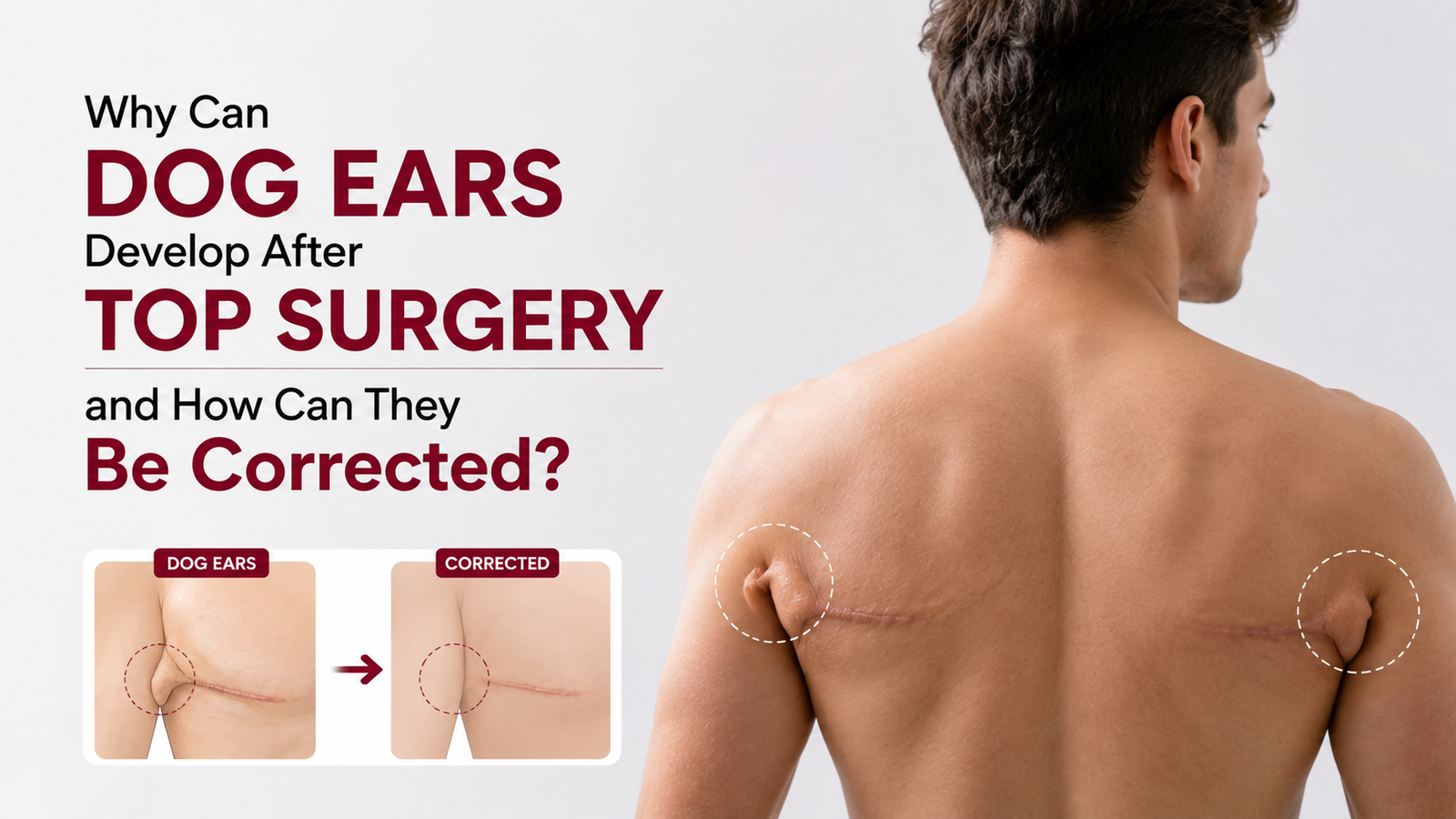
- Chest borders and the armpit tail after earlier top surgery.
- Inner and outer thighs, where proportion changed with hormone therapy.
- Arms, upper abdomen and the area beneath the buttock crease.
Is contouring a way to lose weight?
It is not. Liposuction is contour work carried out at a stable weight, never a treatment for obesity, and only a limited volume can be removed safely. Weight itself responds to diet, activity, sleep and medical management instead.
Skin quality sets the ceiling on what any contouring achieves. Where skin has lost elasticity, removing fat beneath it leaves folds rather than smooth curves, so excision becomes the honest answer even though it brings scars.
Why is staged planning better than one long operation?
Staging is safer, and it produces better shapes. Long combined operations increase blood loss, fluid shifts, clot risk and time under anaesthesia, all of which matter more than most people expect. Smaller stages also let each area settle so the next can be judged accurately.
Cost is spread across stages too, which many find easier. Above all, a shape assessed at six months tells you far more than a shape assessed on a swollen operating table.
What does a staged plan look like in practice?
Plans are individual, though the rhythm is fairly consistent. The table below shows a typical sequence.
| Stage | Usual focus | Interval before next stage |
|---|---|---|
| First | The largest area, often torso and flanks | Around six months |
| Second | Hips, thighs or small fat grafting | Three to six months |
| Third | Minor irregularities, scar revision if needed | Reviewed as required |
Who is a good candidate?
Suitable candidates are medically fit, hold a steady weight, have healed from earlier surgery and hold realistic aims about proportion. Non smokers heal considerably better, and diabetes should be well controlled beforehand. Clear priorities help, since treating everything at once is rarely wise.
Recognised standards of care apply to gender affirming procedures, so assessment, informed consent and sometimes documentation form part of the route, with requirements differing by surgeon, hospital and country. Your team explains what applies in your case. Journey planning and counselling live on our dedicated transgender health site.
How is it done?
Markings are drawn while you stand, comparing both sides and referring to earlier photographs. Tumescent fluid is infiltrated, then fat is suctioned through small openings hidden in creases wherever possible. Where a hollow needs filling, a modest fat graft is layered into the subcutaneous plane only.
Excision is added when loose skin is the main problem, and the scar position is agreed in advance. Anaesthesia depends on the extent, ranging from sedation for a small area to general anaesthesia for larger work.
What is recovery like?
Recovery mirrors the size of each stage rather than the whole plan. Bruising and swelling last two to three weeks, compression garments are worn for about six weeks, and desk work usually restarts within a week. Heavier stages involving excision need longer.
- Walking begins on the first day to protect against clots.
- Gym training waits roughly six weeks, longer after skin excision.
- Lymphatic massage is often advised once wounds have sealed.
- Each area is judged at six months, before the next stage is booked.
What are the risks?
Risks include bleeding, seroma, infection, numbness, contour irregularity, asymmetry, fat necrosis, wound healing problems after excision and deep vein thrombosis. No operation is risk free, and repeated procedures mean repeated exposure to those risks. Anaesthetic risk rises with the length of a procedure.
Scars from excision are permanent, and their quality varies with skin type and healing. Keloid and thickened scarring is more frequent in Indian skin, so scar care is planned from the start and is described under scar management.
What does each stage cost in India?
Cost is quoted per stage in rupees and reflects the areas treated, the anaesthesia, the theatre time and whether excision or grafting is involved. Garments and routine follow up are usually included in each stage. Tests and any inpatient stay are listed separately.
Estimating a whole plan in advance is possible only in broad terms, because later stages depend on how earlier ones settle. A clear written estimate is given after examination for the stage being planned. Supporting treatments appear on the trans wellness page.
Why plan staged surgery at Elegance Clinic?
Dr. Ashutosh Shah plans Post Transition Body Contouring in stages, and he will say plainly when the right advice is to wait another year. Consultations are private and unhurried, with your name and pronouns used throughout. Photographs and measurements guide each decision rather than impressions alone.
If you are considering refinement after the main steps are behind you, a calm discussion in Surat is a good place to begin. Times and telephone numbers appear on our contact page. Bring earlier operation notes, photographs and your hormone history.
Note: This page is for general information and is not a substitute for a medical consultation. Every procedure carries risk, results vary between individuals, and no outcome can be promised. Dr. Ashutosh Shah will advise honestly whether a procedure is appropriate for you.
Ready to Talk, Privately?
Book a confidential consultation with Dr. Ashutosh Shah. There is no pressure, only clear and honest guidance.