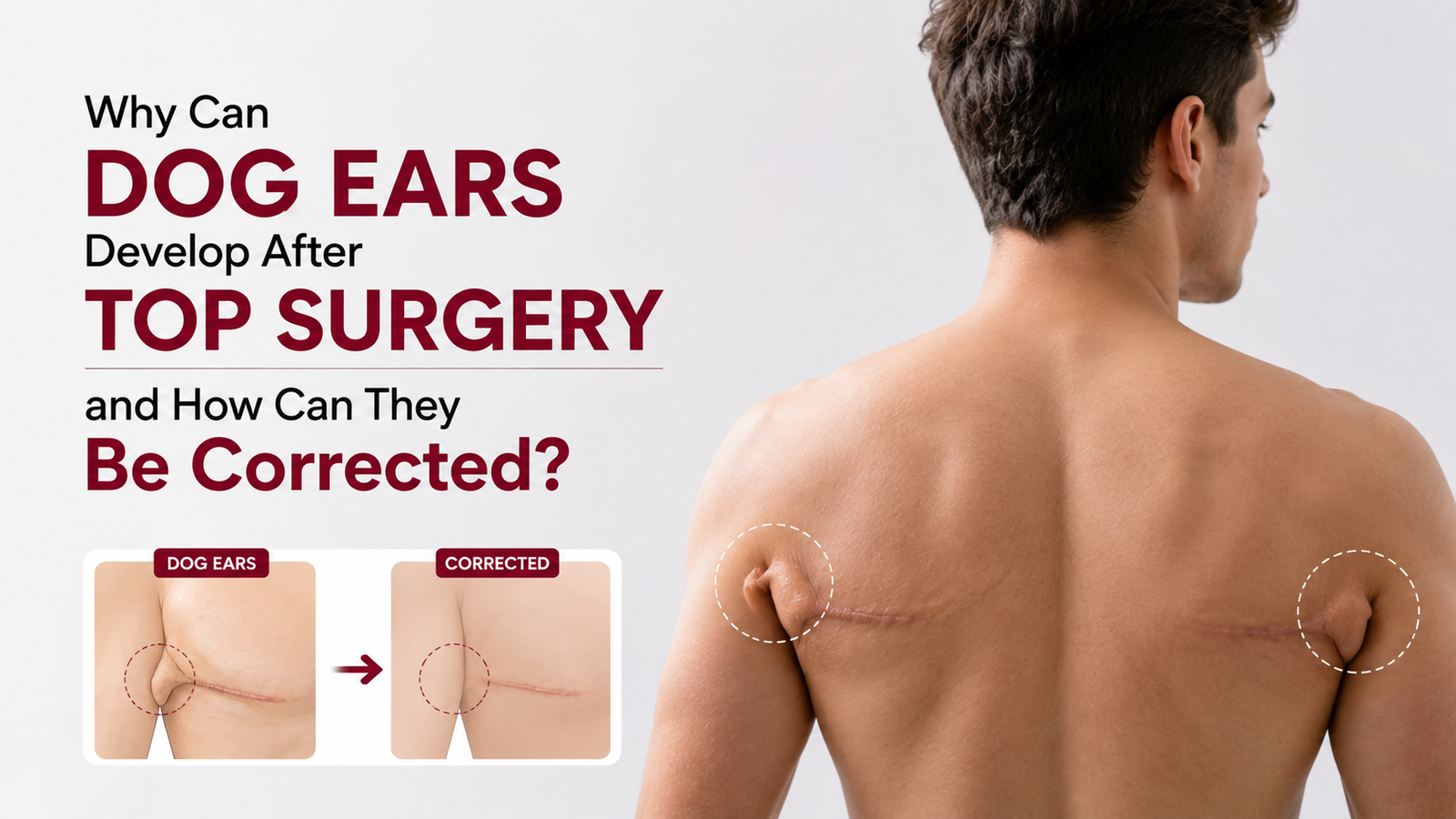
What is Periareolar Top Surgery?
Periareolar Top Surgery removes breast tissue through a cut made around the edge of the areola, then gathers the surrounding skin inward so the chest tightens without any long scar. Nipples stay attached to the chest wall throughout, therefore their blood supply and much of their feeling are kept. Suitability is narrow though, so an honest assessment comes before any promises. Meanwhile, counselling and the wider transition pathway are covered on our dedicated transgender health site.
Who is suitable for this technique?
Small to moderate chests with genuinely elastic skin suit this route best, because the skin has to do the tightening itself. Elasticity is judged by pinching the skin and watching how fast it springs back, because skin with good recoil will redrape neatly once the volume beneath has gone. Nipples already sitting close to the pectoral border help a great deal, since this approach cannot lift them far. Younger men without major weight change behind them are most often suitable, whereas thin or stretched skin usually rules the option out.
Where does the scar go?
The scar sits exactly at the border between darker areolar skin and paler chest skin, which is why it hides so well. Colour change along that junction disguises the line, therefore many men struggle to find it after a year. A second circle of stitching gathers the outer skin edge inward, so the area can look faintly pleated for several months. Nothing at all extends onto the open chest, so that is the main appeal of the technique.
How is tissue removed through such a small opening?
Tissue comes out piecemeal through the areolar opening, since the surgeon works beneath the skin in every direction. Liposuction is often used first to soften and reduce the fatty part, after which the firmer gland is cut free and lifted out. A thin layer is deliberately left under the nipple, because removing every last piece creates a dished hollow that looks worse than a small amount left behind. Working out at the edges matters too, since tissue tucked towards the armpit is easy to miss through a narrow window.
Is nipple sensation preserved?
Sensation is more often preserved here, because the nipple keeps its own blood and nerve supply and is never detached. Numbness during the first months is still common, although feeling usually improves as swelling goes down. Nothing can be promised, since nerves travelling through the removed tissue are inevitably disturbed. For anyone who values nipple sensation above scar length, therefore, this preservation is the strongest argument in favour.
How well does the chest flatten, and how often is revision needed?
Flattening is good on the right chest, whereas it disappoints on the wrong one, and that is the honest summary. Skin must retract by itself here, therefore any excess that fails to shrink shows up later as looseness or fine wrinkling. Revision is more likely than with longer scar techniques, and figures differ between surgeons according to how strictly patients were selected. Common reasons for a second procedure therefore include residual tissue, a stretched areola, puckering at the closure and skin that simply never tightened. Accepting a higher chance of a tidying operation is therefore part of choosing this route.
How does it compare with the double incision route?
Comparison comes down to scar length against reliability, although sensation weighs heavily in the balance too. Below is a plain summary, although your own chest decides which column applies.
| Point | Periareolar | Double incision |
|---|---|---|
| Scar | A circle at the areolar border | Two long lines running across the chest |
| Nipple | Stays attached, resized in place | Detached and replaced as a graft |
| Sensation | More often preserved | Commonly reduced or absent |
| Flattening | Depends on skin retracting on its own | Controlled directly by removing skin |
| Revision | Higher chance of a second procedure | Lower chance for residual tissue |
| Best suited to | Small chests, elastic skin, high nipples | Larger chests, loose skin, low nipples |
Full detail on the alternative sits on the double incision page.
What does recovery involve?
Recovery tends to be gentler than after the larger operation, although the rules run along similar lines. Compression is worn for four to six weeks, since even pressure helps skin settle down onto the chest wall. Desk work often restarts within a week, while gym training waits roughly six weeks. Drains are needed less often, therefore many men go home on the same day.
How do the gathers around the areola settle?
Gathering the skin leaves fine pleats around the areola, yet those pleats flatten over the months that follow. Purse string stitches hold the gather while healing happens, so some firmness and irregularity early on is entirely normal. Areolae can also spread or widen slightly with time, which is one common reason for a later touch up. Massage and silicone, started once the wounds are sound at about three weeks, then help the circle mature into a soft pale line.
What are the risks?
Risks here are still real, even though the operation is smaller than the alternatives.
- bleeding or a collection of blood under the skin
- infection or delayed healing at the closure
- residual tissue or an uneven contour, especially near the armpit
- a stretched, widened or flattened areola
- puckering, pleating or a visible ring around the areola
- loose skin that never retracts as hoped
- changed or reduced feeling in the nipple
- conversion to a longer scar technique at a later date
Can I move to a double incision later?
Conversion is possible, and it counts as a recognised step rather than an admission of defeat. Skin that refuses to retract can be removed later through the longer pattern, so trying the smaller approach first closes nothing off. Waiting six months to a year before deciding is usual, because early looseness frequently improves without help. Some men instead accept a slightly imperfect contour, valuing the hidden scar and preserved feeling more than perfect flatness.
What does it cost in India?
Fees in rupees reflect theatre and anaesthesia time, the amount of liposuction involved and follow up care. Shorter operating time usually makes it less expensive than the longer scar routes, so the opening figure looks attractive. Budgeting for a possible revision is wise though, since that cost is real and should not come as a surprise. A clear written estimate follows examination, therefore everything is set out item by item.
Why choose Elegance Clinic?
Dr. Ashutosh Shah assesses skin quality carefully at Elegance Clinic in Surat, and he will decline this technique where the chest will not support it. Saying no to an unsuitable request instead protects you from a disappointing result and a second operation. Recognised standards of care apply to gender affirming surgery, therefore assessment, consent and documentation are handled with respect and without invented hurdles. Each route is set out in turn across the FTM top surgery section, so comparison is straightforward.
A private consultation will settle quickly whether Periareolar Top Surgery is realistic for your chest, once the skin has been examined. Bring your questions, since the balance between scar and reliability is personal and worth talking through. Nobody is pushed towards the smaller scar simply because it sounds better.
Note: This page is for general information and is not a substitute for a medical consultation. Every procedure carries risk, results vary between individuals, and no outcome can be promised. Dr. Ashutosh Shah will advise honestly whether a procedure is appropriate for you.
Ready to Talk, Privately?
Book a confidential consultation with Dr. Ashutosh Shah. There is no pressure, only clear and honest guidance.