What is Feminization and Masculinization Liposculpture?
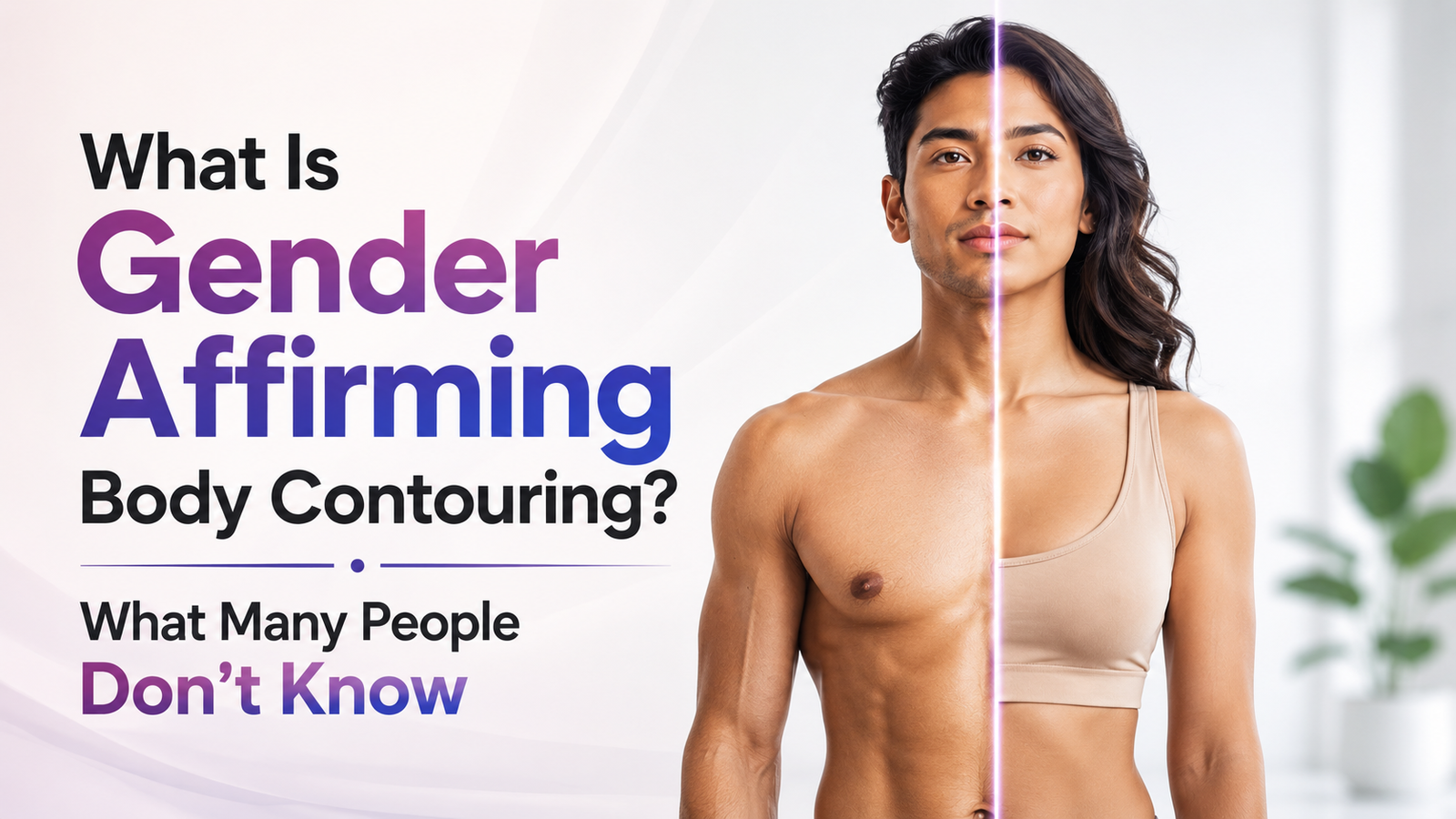
Feminization and Masculinization Liposculpture is contour surgery that removes fat selectively from certain areas and, in some plans, transfers a portion of it to others. Sculpting rather than debulking is the whole idea, so small volumes moved thoughtfully achieve more than large volumes moved carelessly.
Proportion drives the eye far more than overall size does. Because the brain reads the relationship between waist, flank, hip and shoulder, changing those relationships changes how a body is perceived long before anyone counts kilograms.
How does selective fat removal change the way a silhouette reads?
It works by editing outlines instead of shrinking everything. Taking fat from the flank deepens the inward curve above the hip, whereas leaving or adding fat lower down widens the outward curve below it. Consequently an identical waist measurement can read very differently.
Light and shadow do much of the work. Where a surface dips, a shadow forms, and shadows are what the eye reads as shape. Surgeons therefore plan in curves and transitions rather than in numbers.
What is planned for feminising goals?
For feminising goals the aim is usually a clearer difference between waist and hip. Fat is reduced at the waist and lower back, and it may be grafted to the upper outer hip to soften a squared corner. Meanwhile the upper abdomen is treated lightly, since over suction there flattens instead of curving.
Where fat is grafted near the hip or buttock, safety governs technique absolutely. Grafts go into the subcutaneous layer only, never into or beneath the gluteal muscle, because the large veins that carry fat to the heart and lungs lie within muscle. Ultrasound guidance confirms cannula position in real time, a blunt cannula of larger bore is used, and it is angled away from deep planes. Any provider offering placement inside the muscle should be avoided, whatever the price.
What is planned for masculinising goals?
Masculinising plans run in the opposite direction, towards a flatter flank and a squarer torso. Fat is taken from the hip, outer thigh and lower back so the line from ribcage to hip runs straighter. Additionally the upper abdomen and the chest borders may be refined so the torso reads wider above than below.
Definition is added carefully rather than aggressively. Over etching looks artificial under changing light and ages poorly, whereas an even, modest reduction still looks natural years later.
Can fat do what bone structure decides?
No, fat cannot overcome the frame beneath it. Pelvic width, rib flare, shoulder breadth and torso length are set by bone, and neither suction nor grafting will alter them. Honest planning starts by measuring what the skeleton allows.
Understanding that boundary early prevents genuine disappointment later. Someone with a narrow pelvis can gain a softer curve though not a wide one, while someone with broad hips can look straighter without becoming truly narrow. Frankness here is kinder than optimism.
Why does skin quality set the ceiling on the result?
Skin decides how the surface looks once the fat under it changes. Elastic skin redrapes smoothly, whereas thin or stretched skin can show waviness, dimpling or loose folds after the same operation. Stretch marks are a clue that the deeper layer has already given way.
- Firm elastic skin tolerates larger reductions and still looks smooth.
- Skin left loose by major weight change usually needs excision, not suction.
- Thin skin reveals small irregularities that thicker skin would hide.
- Ageing, sun exposure and smoking all reduce elasticity over time.
Who is a good candidate?
Suitable candidates are in reasonable health, at a stable weight, and clear about what proportion work can and cannot deliver. Liposuction is contour surgery for a stable weight, not a treatment for obesity, and it will not tighten loose skin. Above all, expectations discussed openly beforehand protect everyone involved.
Recognised standards of care apply to gender affirming procedures, so assessment, informed consent and sometimes documentation form part of the route. Rules differ by surgeon, hospital and country, and your team will set out what applies in your case. Journey planning and counselling support live on our dedicated transgender health site.
How is it done, and how much transferred fat survives?
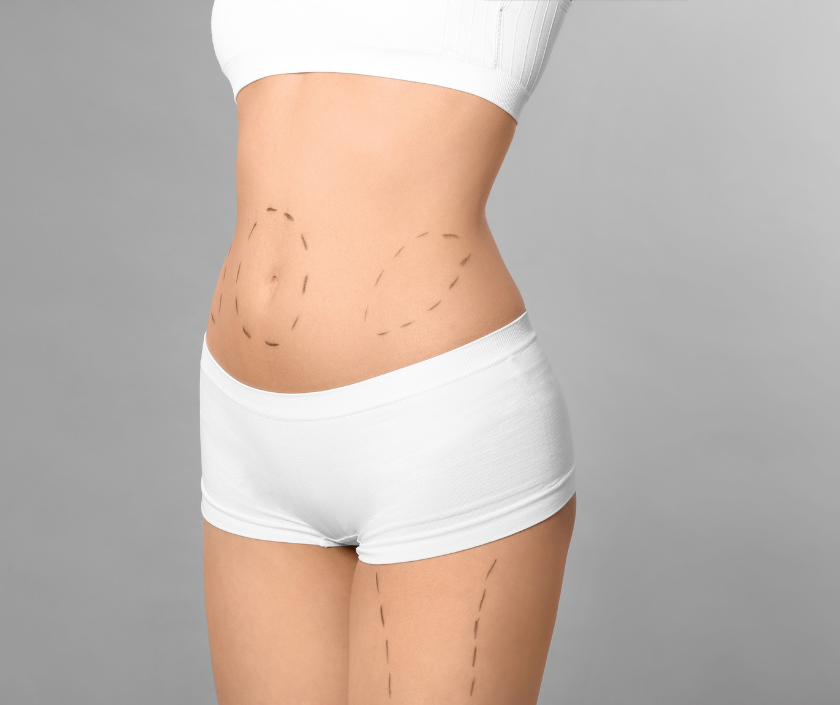
Markings are drawn while you stand, because posture and gravity change every curve. Tumescent fluid is infiltrated, after which fat is suctioned through small openings hidden in creases where possible. Where grafting is included, harvested fat is processed and injected in fine passes through separate entry points.
Only a proportion of grafted fat survives, commonly around half, and the remainder is reabsorbed across the first few months. Because of that, a second smaller session is sometimes planned from the beginning. Overfilling to compensate is unsafe and is not done here.
Does hormone therapy change the timing?
Yes, and it changes it considerably. Oestrogen therapy gradually redistributes fat towards the hips and thighs, while testosterone therapy shifts it towards the abdomen, both across months and years. Operating before that settles risks sculpting a body that is still moving.
Most surgeons therefore prefer roughly two years of stable therapy before fine proportion work. Decisions about pausing or continuing hormones around surgery are taken by the prescribing doctor together with the surgical team, never alone.
What is recovery like?
Recovery depends on how many areas are treated in one sitting. Soreness, bruising and swelling are expected for two to three weeks, and a compression garment is worn for about six weeks. Desk work usually resumes within a week.
- Sitting is restricted for several weeks where fat has been grafted to hip or buttock.
- Early walking helps circulation, while heavy training waits roughly six weeks.
- Lymphatic massage is often advised once the wounds have sealed.
- Final proportion is judged at around six months.
What are the risks?
Risks include bleeding, seroma, infection, numbness, contour irregularity, asymmetry, fat necrosis, firm lumps in grafted areas and deep vein thrombosis. No procedure is risk free, and fat embolism is the serious danger that governs technique in hip and buttock grafting. Occasional revision is not a failure.
Treating several areas at once raises risk, so staging is sometimes the safer path. Smoking, diabetes and certain medicines affect healing and are reviewed carefully beforehand.
What does liposculpture cost in India?
Cost reflects the number of areas, the volume handled, whether grafting is included, the anaesthesia and the theatre time. Fees are given in rupees and usually cover garments and routine follow up. Tests and any inpatient stay are itemised separately.
No honest figure can be quoted without an examination. You receive a clear written estimate afterwards, item by item, with the reasoning attached. Upper body work is covered on the chest contouring page and in more detail under chest liposuction.
Why choose Elegance Clinic for proportion work?
Dr. Ashutosh Shah treats Feminization and Masculinization Liposculpture as proportion work with clear boundaries, and he explains those boundaries before discussing benefits. Consultations are calm, private and free of sales pressure. Your name and pronouns are used as a matter of course.
If an unhurried second opinion would help, a consultation in Surat is a sensible starting point. Booking details are on our contact page. Photographs, measurements and your hormone history all assist the planning.
Note: This page is for general information and is not a substitute for a medical consultation. Every procedure carries risk, results vary between individuals, and no outcome can be promised. Dr. Ashutosh Shah will advise honestly whether a procedure is appropriate for you.
Ready to Talk, Privately?
Book a confidential consultation with Dr. Ashutosh Shah. There is no pressure, only clear and honest guidance.