What is Puffy Nipple Correction?
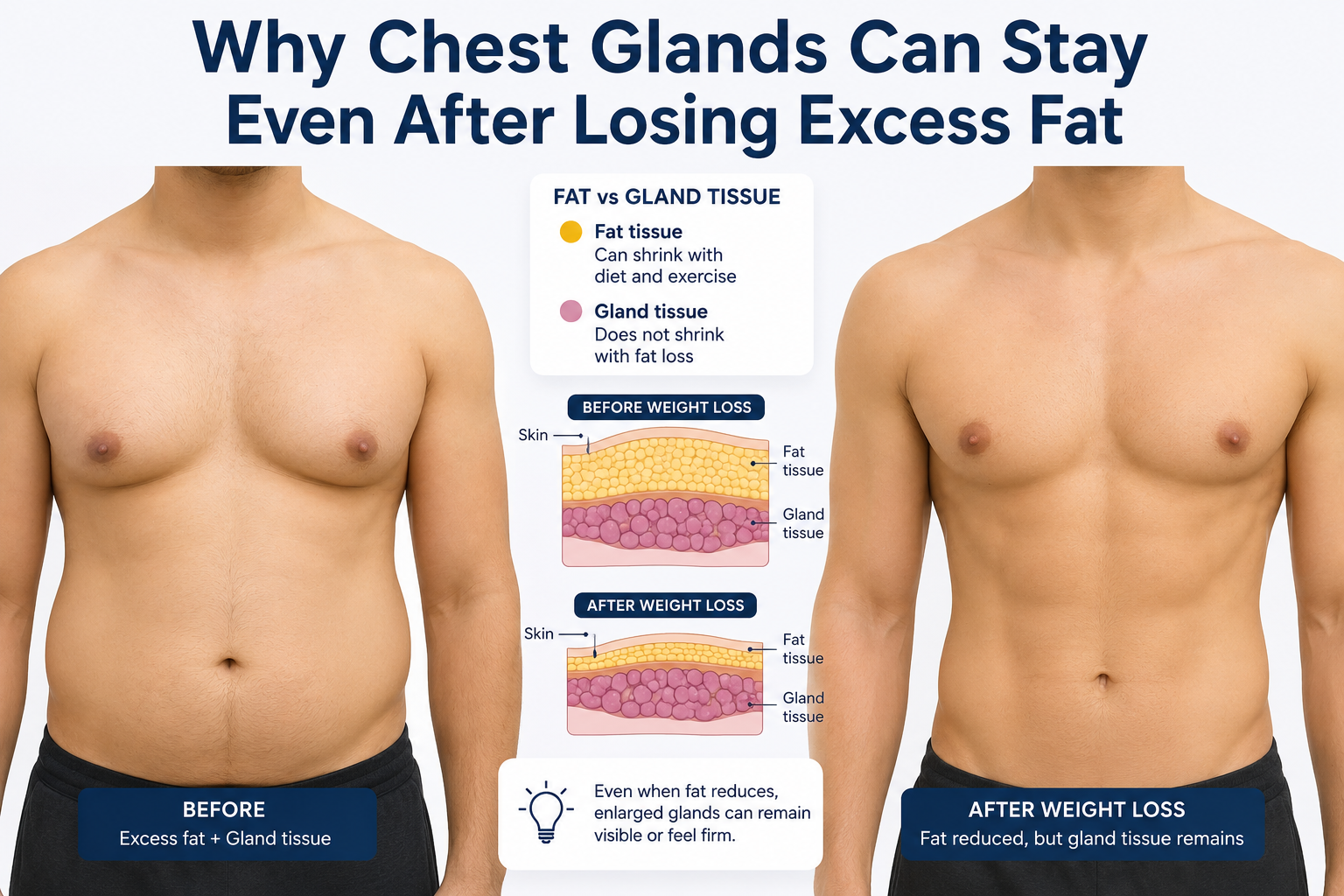
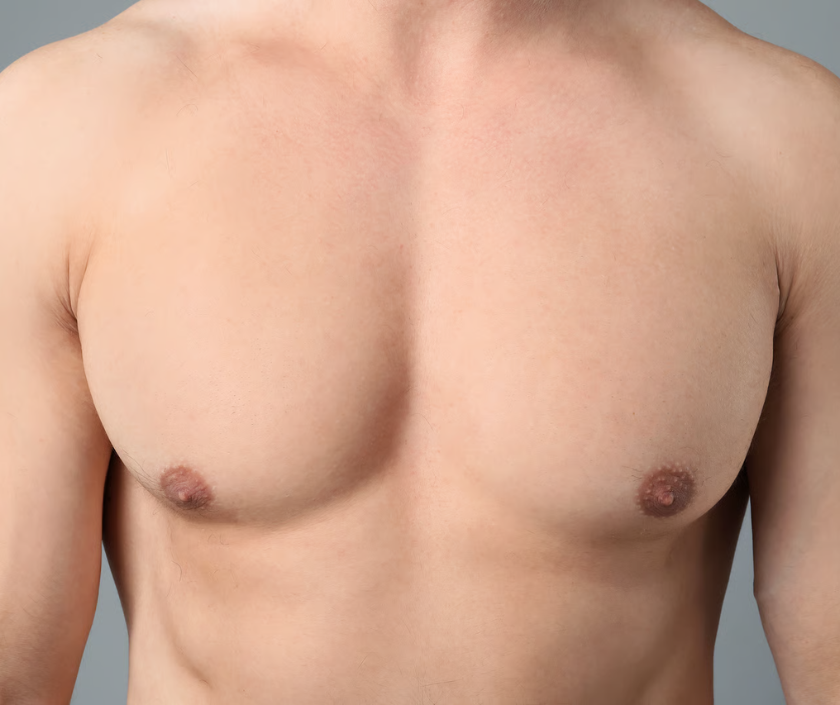
Puffy Nipple Correction is surgery that removes the small disc of gland sitting directly beneath the areola, so the areola stops being pushed forward. Only that pad of tissue is targeted, therefore the rest of the chest is left alone. The pattern is easy to recognise, because the chest looks lean from the side yet the areola looks domed. Most men describe it as a raised circle rather than a heavy chest.
Why does the areola look domed when the rest of me is lean?
The doming comes from glandular tissue, not from fat. Gland is firm, rubbery and concentrated in a coin sized disc right under the areola, so it lifts the skin above it into a mound. Body fat percentage barely changes this, which is why a very lean man can still see it clearly. Consequently dieting harder often makes the area look more obvious rather than less, since surrounding fat disappears and the disc then stands alone.
Why does liposuction alone fail to correct this?
Liposuction removes fat, whereas the problem here is gland, so a cannula simply slides past firm glandular tissue. Suction can thin the softer fat around the disc, yet it cannot cut through dense fibrous tissue. Worse, taking fat from around a gland that stays in place can leave the disc more sharply outlined than before. Men who have had suction alone often return saying the chest looks flatter although the areola still stands proud. Therefore excision of the gland through a small incision at the lower border of the areola is what actually changes the profile. Fine feathering with a cannula still helps, but as a finishing step rather than the main one.
Which chest changes must be assessed before surgery?
Certain findings mean examination and imaging come first, ahead of any cosmetic plan. Male breast cancer is uncommon, yet a firm lump on one side is exactly how it can present, so it is never assumed to be simple gland. Seek assessment promptly if you notice the signs below.
- Swelling or a lump that is new, or one that keeps enlarging while you watch it.
- Tissue that feels hard, or that seems tethered to skin or muscle when pressed.
- Discharge of fluid or blood from a nipple, above all when only one side is affected.
- Retraction of a nipple that used to sit normally, even if it fluctuates.
- Puckering or dimpling of the skin, so the surface resembles orange peel.
- Ongoing pain confined to one side, or a difference between the sides that widens quickly.
Ultrasound, mammography and sometimes a needle sample settle the question. Nothing cosmetic is booked until that picture is clear.
Is this gynecomastia, and what is causing it?
A puffy areola is usually true gynecomastia in a limited form, meaning gland rather than fat. Pseudo gynecomastia, by contrast, is fatty enlargement and behaves differently, which is why the two are separated on examination and by scan. Causes worth looking for include those listed here.
- Puberty, where gland growth is common and frequently resolves within a year or two.
- Drugs and substances, particularly anabolic steroids, though certain blood pressure medicines, some antipsychotics and cannabis also feature.
- Illness affecting the liver, thyroid or kidneys, since each alters hormone handling.
- Tumours of the testis or adrenal gland, rare but excluded when suspicion exists.
Blood tests and examination of the testes form part of a proper work up. Operating is sensible once the cause is treated or excluded and the chest has stayed stable for several months. Older men with a firm one sided lump are investigated before anything cosmetic is offered.
Should I be honest about anabolic steroids?
Yes, and it genuinely changes the plan. Many men with this pattern train seriously, and a proportion have used anabolic steroids or prohormones at some point. Conversion of those compounds to oestrogen drives gland growth under the areola, so tissue often appears during or just after a cycle. Nobody here is interested in judging you, however operating while a cycle continues invites the gland to return. Therefore we ask directly, we ask what was taken and for how long, and surgery is planned once use has stopped and the chest has settled. Medical treatment is sometimes tried when tissue is very recent, since early gland can respond, whereas long standing fibrous tissue does not.
Who is suitable for this operation?
Good candidates are lean or close to it, with a discrete disc under the areola and skin that springs back well. Weight should be stable, while general health and expectations both need to be sensible. Smoking must stop several weeks beforehand, because nipple skin depends on a delicate blood supply. Teenagers are generally advised to wait, since gland related to puberty often resolves without an operation.
How is the gland removed?
A small incision is made along the lower edge of the areola, where the change in skin colour hides it well. Through that opening the disc is dissected off the muscle below and the skin above, then removed whole so it can be sent for laboratory examination. Deliberately, a thin layer is left directly under the areola, otherwise the skin can stick down and create a dip. Liposuction is then used lightly around the edges to blend the border. Most men have this under sedation with local anaesthetic, so they go home the same day wearing a compression vest.
What is recovery like?
Light activity resumes the next day, while desk work restarts within two to four days. Compression is worn day and night for about three weeks, then during daytime for a further two. Chest and shoulder training pauses for four to six weeks, although running is usually allowed earlier. Numbness around the areola is common and settles over weeks to months. Bruising and firmness are normal early, therefore judging the shape at two weeks is misleading.
What results should I expect?
Expect the areola to sit flat against the chest rather than standing forward. Success after Puffy Nipple Correction is judged from the side, since that is the view where doming shows. Definition returns gradually as swelling clears, so the honest window for a final view is three to six months. Small irregularities, mild asymmetry and a visible scar line are all possible. Results vary between individuals, and a minority need a small revision for a residual lump or a dip.
What are the risks?
No surgery is risk free, however carefully it is done. Specific concerns include bleeding, a collection of blood under the skin, infection, a dip where too much tissue was taken, a residual lump where too little was, altered nipple sensation and scarring that thickens. Uncommonly the blood supply to the areola is compromised, which is why smoking matters so much. Seroma, a collection of fluid, occurs occasionally and may need draining. Above all, sudden swelling on one side in the first day or two must be reported immediately.
What is the cost in India?
Charges are in rupees and depend on the grade of the problem, the anaesthetic used, theatre time and whether liposuction is combined. Prices vary between cities and hospitals, so a quote from elsewhere may not translate to Surat. A clear written estimate after examination sets out surgery, anaesthesia, the compression vest, laboratory testing and follow up. Purely cosmetic work usually sits outside insurance cover, although documented disease is occasionally viewed differently.
Why choose Elegance Clinic?
Dr. Ashutosh Shah works from a diagnosis rather than from a photograph, so the disc is confirmed on examination and imaging before any incision is planned. Honest conversation about training, supplements and steroids is treated as clinical information instead of a confession. Discretion is standard, and our policy on privacy and confidentiality explains how records are handled. Other choices for men sit under male chest contouring, including Male Chest Liposuction when the chest is fatty rather than glandular.
If your areola looks domed despite a lean chest, a private consultation in Surat can establish whether gland is the reason and what removing it would involve. Questions are welcome, including awkward ones. Appointments are arranged through our contact page.
Note: This page is for general information and is not a substitute for a medical consultation. Any new breast lump, nipple change or skin change should be assessed by a doctor before considering cosmetic treatment. Results vary between individuals and no outcome can be promised.
Ready to Talk, Privately?
Book a confidential consultation with Dr. Ashutosh Shah. There is no pressure, only clear and honest guidance.