What is Cosmetic Breast Reshaping?
Cosmetic Breast Reshaping is breast reduction chosen for proportion and shape rather than to relieve physical symptoms. The operation is the same one used for medical reasons, however the reason for having it differs, and so does the conversation beforehand. Women who choose it usually feel out of proportion with the rest of the body, or dislike a shape that has changed with time. Our parent page on breast reduction surgery explains the technique, while this page deals with goals, expectations and limits.
Why do women choose reduction for shape alone?
Most describe a mismatch rather than pain. Clothes may fit badly, a swimsuit may never look right, and the breast may sit lower and wider than the woman wants. Others come after weight loss, when the breast has emptied and lengthened without becoming smaller. A further group simply dislike being the focus of attention. All of these are valid reasons, provided the woman is choosing for herself and not to satisfy somebody else. Motivation is therefore explored gently at consultation, because a decision made under pressure rarely ends well.
Why can a cup size not be promised?
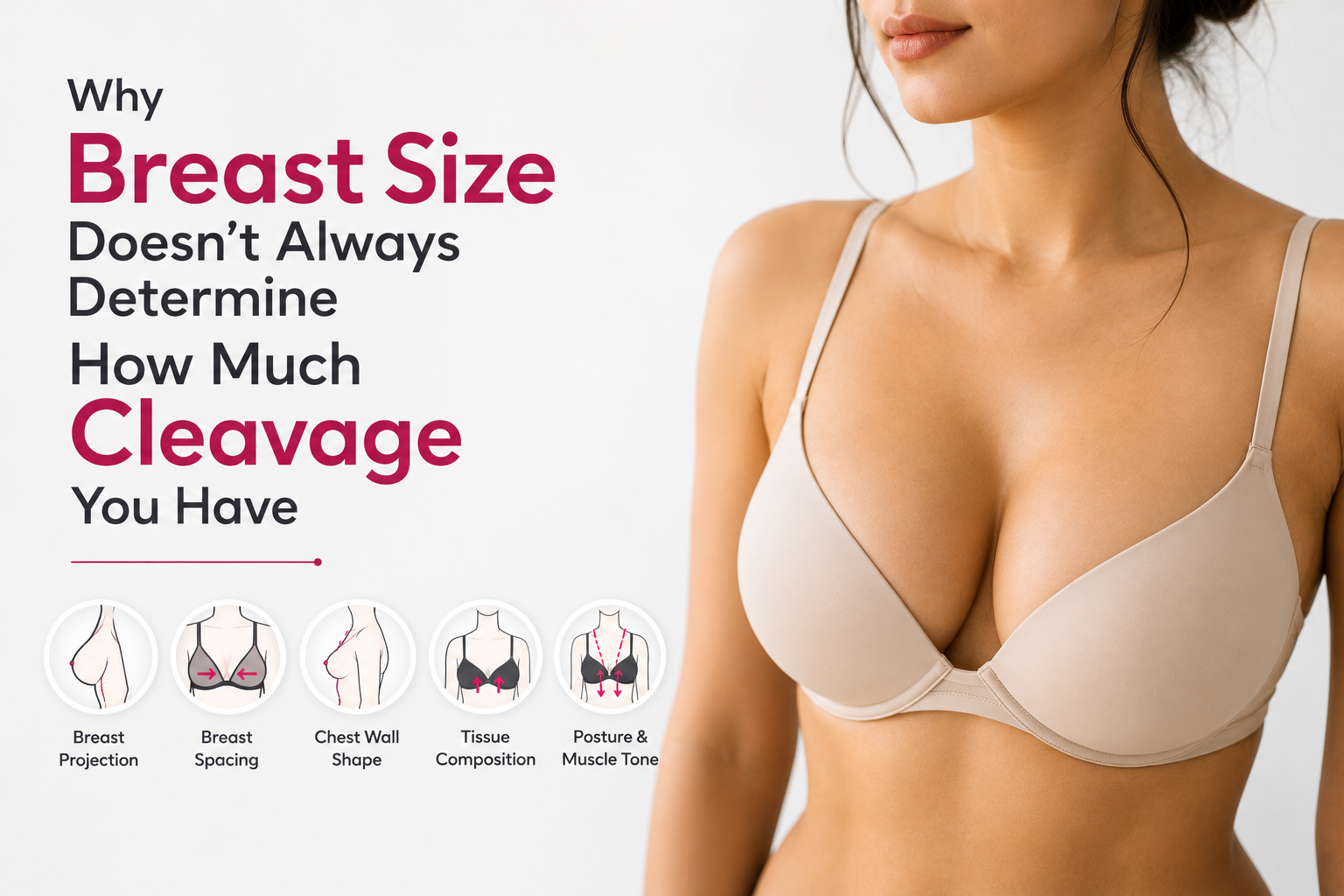
Bra sizing is not standardised, so no honest surgeon commits to a specific cup. A 34C from one brand may fit like a 36B from another, while Indian, European and American labelling differ again. Surgeons plan in grams of tissue removed and in measurements taken on the chest, not in letters. Furthermore, the amount that can be removed safely depends on the blood supply to the nipple and on how much tissue must remain to build a natural shape. Consequently the discussion centres on proportion and balance, with a size range offered as a rough guide rather than a target.
What makes a realistic goal?
A realistic goal describes shape, position and balance instead of a number. Useful aims discussed at consultation include the following.
- A breast that sits higher on the chest and moves less when unsupported.
- Nipples pointing forward rather than towards the floor.
- A narrower base, so the breast no longer spreads towards the armpit.
- Volume that suits your frame, shoulder width and height.
- Better balance between the two sides, without expecting them to match exactly.
Bringing photographs of shapes you like helps, so long as they describe a direction and are not treated as a promise. Above all, remember that skin quality, tissue type and chest shape set the limits of what surgery can produce. No two women obtain the same result from the same operation.
Which findings need medical assessment first?
Certain findings must be sorted out before any appearance based surgery, since they can point to breast cancer. See a doctor promptly if you find a lump that is new, growing, hard or stuck to the surrounding tissue. Do the same for discharge coming from a nipple, above all when it is blood stained or appears on one side only. Other warnings include a nipple that has recently drawn inward, skin that dimples or puckers, an area with the pitted look of orange peel, one sided pain that keeps going, and two breasts becoming quickly unlike each other. Examination and imaging answer these questions, sometimes with a biopsy, and cosmetic surgery only follows once the answer is clear. Being cautious here costs a few weeks, whereas being casual can cost far more.
How is the operation planned?
Planning starts with measurements taken while you stand, since gravity is part of the problem. Distances from the collarbone to the nipple and from the nipple to the fold tell the surgeon how far tissue must travel. Skin quality is judged by feel, because loose thin skin behaves quite differently from firm skin. Photographs are taken for the record. Afterwards the technique is matched to the tissue rather than to a preference, and the likely scar pattern is drawn and shown to you before you agree to anything.
What about symmetry?
Perfect symmetry is not achievable, and claiming otherwise would be false. Nearly every woman starts with one breast slightly larger, one nipple slightly higher, or a small difference in the level of the crease. Surgery reduces those differences considerably, yet it cannot make two independently healing tissues identical. Swelling also settles at different speeds on each side, which makes the early weeks misleading. Judging symmetry fairly means waiting six months. Small revisions under local anaesthesia remain possible later if a difference still bothers you.
Where will the scars sit?
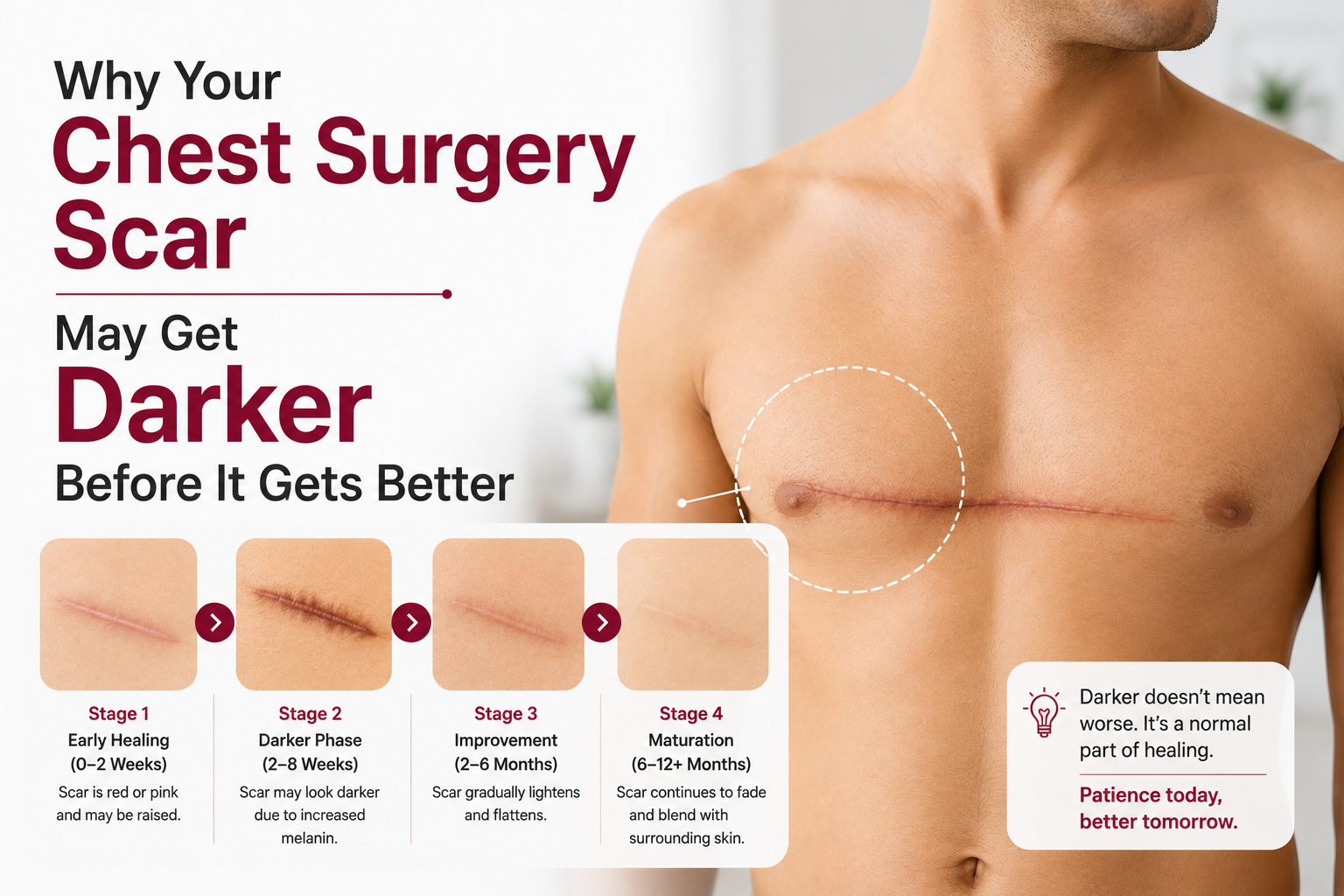
Scars are unavoidable in any reduction, and reshaping deliberately trades them for a better shape. The commonest pattern circles the areola and runs vertically down to the crease below the breast, which surgeons call a lollipop. Larger reductions add a horizontal line inside that crease, giving the anchor pattern, and a bra or bikini top covers it. Around the areola the line tends to disappear into the colour boundary. Lines stay red and firm for several months before softening, while full maturing takes a year or more. Skin that scars thickly can produce raised marks, so silicone gel, tape and massage are started once the wounds have healed.
Will surgery affect breastfeeding or a future pregnancy?
Feeding can be affected, and this should be settled in your mind before booking. Reduction takes away some of the tissue that makes milk, while work close to the areola may divide the ducts carrying it. Preserving the nipple on its own tissue pedicle keeps more function than moving it as a graft, although neither approach promises a normal supply. Pregnancy afterwards also enlarges and stretches the breast again, which may alter the shape achieved. Where a family is planned, say so early, because timing and technique can both take it into account.
How does recovery usually go?
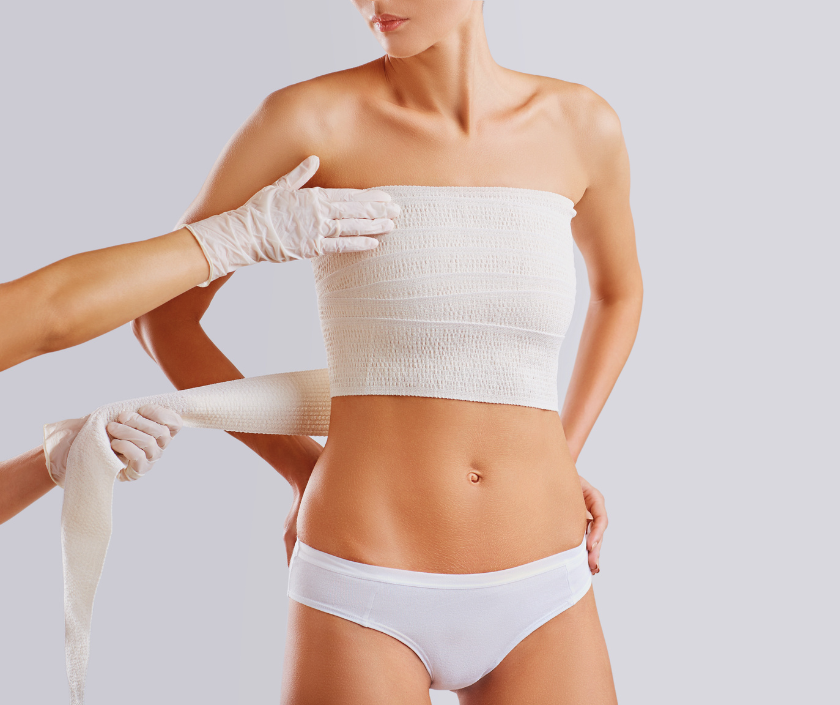
Most women describe the first week as sore and tiring rather than severely painful. Tablets manage the discomfort, and a soft surgical bra is worn continuously for around six weeks. Light activity begins immediately, desk work at one to two weeks, and exercise involving the chest at six. Bruising and swelling fade over a month or two, whereas the settled shape appears between six months and a year. Follow up appointments check the wounds first and the scars later, and scar treatment is guided at those visits.
Which risks should I weigh?
No aesthetic operation is without risk, and reduction has a specific list worth reading twice. Bleeding, infection and wound separation where the scars meet are the usual early problems. Nipple sensation frequently changes, sometimes for good, and rarely the nipple itself loses its blood supply. Firm areas of fat necrosis may appear and take months to soften. Shape also relaxes with time, gravity and weight change, so a result seen at one year is not fixed forever. Smoking multiplies wound problems, therefore stopping is required rather than merely suggested.
What does reshaping cost in India?
Fees vary with the volume removed, the complexity of the reshaping, theatre and anaesthetic time, the hospital and the stay. Because this is chosen for appearance, insurance usually does not apply, unlike reduction carried out for documented symptoms. Amounts are quoted in rupees only once you have been examined, since a figure offered beforehand would be meaningless. A clear written estimate then covers surgery, anaesthesia, garments and review visits.
Why choose Elegance Clinic?
Expectations are discussed here in plain language, including the things surgery cannot deliver. Dr. Ashutosh Shah plans around shape and balance instead of a cup size, and shows the scar pattern before any decision is made. Alternatives across the breast and chest aesthetics pillar are explained so that you can compare them properly, while confidentiality is handled exactly as described in our privacy and confidentiality policy.
Should Cosmetic Breast Reshaping be something you are weighing up, a quiet and unhurried consultation with Dr. Ashutosh Shah in Surat is the sensible next step.
Note: This page is for general information and is not a substitute for a medical consultation. Any new breast lump, nipple change or skin change should be assessed by a doctor before considering cosmetic treatment. Results vary between individuals and no outcome can be promised.
Ready to Talk, Privately?
Book a confidential consultation with Dr. Ashutosh Shah. There is no pressure, only clear and honest guidance.