
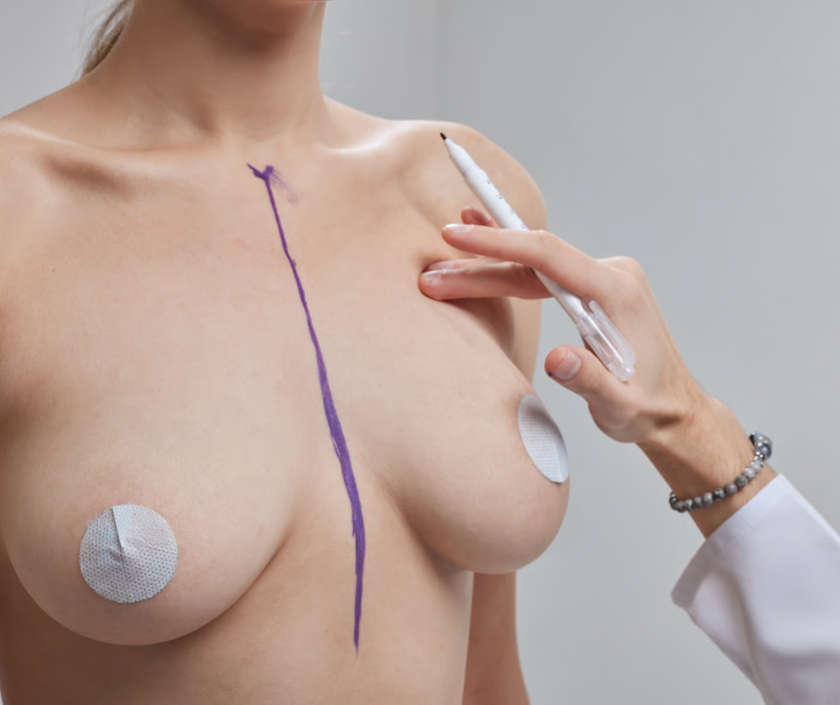
What is an Areola Reduction?
An Areola Reduction is an operation that makes the darker circle of skin around the nipple smaller in diameter. Skin is removed as a ring at the outer edge of that circle, and the surrounding edge is then stitched to the smaller one, therefore the scar lies exactly where dark skin meets pale skin. Nothing is done to the projecting tip unless you also want a nipple reduction at the same sitting. Most women have the procedure under local anaesthetic with sedation and go home the same day.
Why do women consider it after pregnancy or weight change?
Pregnancy, breastfeeding and large swings in weight stretch the areola, and it often does not return to its earlier width. Hormones darken and widen it during pregnancy, while the skin loses some of its elasticity afterwards. Consequently many women describe a circle that looks wide against a breast that has become softer or emptier. Others notice the change after losing weight, or simply once their breasts finished developing in the teenage years.
Is a large areola normal?
Yes, entirely. Areola size varies naturally between women, from very small to several centimetres across, and no measurement makes one healthier than another. Colour varies as well, since this skin is normally much darker than the skin around it and darkens further during pregnancy. Surgery is therefore only sensible when the width genuinely bothers you, rather than because an image somewhere set a standard.
Which breast changes must be assessed before cosmetic surgery?
Some changes need prompt assessment before any cosmetic plan, because they can be signs of breast cancer. Examination and imaging come first in that situation, and surgery for appearance is never the first step. Arrange a medical review promptly if you find:
- a new or growing lump, or one that feels hard or fixed to the tissue around it
- nipple discharge, particularly when it is bloody or comes from one side only
- a nipple that has recently turned inward or become retracted
- skin dimpling, puckering or an orange peel texture over the breast
- ongoing pain on one side, or a difference between the sides that is changing quickly
Most such findings turn out to be harmless. Nevertheless the sequence matters, because treatment for cancer works far better when it starts early.
Who is a good candidate?
Good candidates are adult women in good health, with a clear breast examination, who accept that they are trading width for a scar. Skin quality counts, since thin or heavily stretched skin tends to spread a scar more. Smokers are asked to stop for several weeks either side of the operation, because nicotine reduces blood flow to the nipple and areola. Anyone hoping to conceive soon may prefer to wait, as this area changes again with feeding.
How is the operation done?
The surgeon marks a smaller circle inside the areola and a slightly larger one outside it, then removes the ring of skin between them. Deep stitches and a strong loop suture hold the new circle at the agreed diameter, which limits the tendency of the scar to stretch outward. Local anaesthetic with sedation suits most cases, whereas general anaesthesia is used when a lift or a reduction is combined. Both sides together generally take about an hour.
Where will the scar sit and can it widen?
The scar runs as a circle at the junction between the darker areola and the lighter breast skin, which is why it is usually discreet. Colour difference along that border helps camouflage the line as it matures over roughly a year. However, this particular scar has a real tendency to widen, because the surrounding skin pulls outward on it constantly. Loop sutures and careful closure reduce that tendency without removing it, so a minority of women choose a small revision later.
Is it combined with a breast lift?
Often yes, since the same women who want a smaller circle frequently have some sagging after pregnancy or weight loss. A lift raises the breast tissue and moves the nipple and areola higher on the mound, and the circular scar becomes part of that design. Where the breast itself has dropped, narrowing the circle alone will not change the position, so a breast lift is sometimes the honest answer. Examination decides which you actually need, or whether both make sense in one sitting.
Will breastfeeding or sensation be affected?
Both can be affected, and neither can be promised to stay unchanged. Because the incision runs around the areola, small nerve branches to the nipple are crossed, so numbness or altered feeling is common early and usually improves across months. Ducts sit deeper and are generally preserved in this operation, yet breast surgery of any kind can reduce the ability to feed a baby. Raise a planned pregnancy at the consultation, therefore, so that technique and timing take it into account.
What is recovery like?
Recovery is straightforward, and most women return to desk work within two to four days. Wearing a soft supportive bra day and night for about four weeks takes tension off the healing circle. Bruising and swelling settle within a fortnight, while the scar passes through a pink and firm phase for two to three months. Heavy lifting, chest exercise and swimming are avoided for roughly a month.
What results should I expect?
Expect a neater circle in better proportion to the breast, together with a lifelong scar at its border. Results vary between individuals, and the two sides are matched as closely as possible rather than made identical. Some spreading of the line is common, and taste in size differs, so a target diameter is agreed with you beforehand rather than assumed. Judge the outcome at six to twelve months, since early scars always look worse than settled ones.
What are the risks?
No breast operation is risk free, and honest consent means naming what can go wrong. Recognised problems include bleeding, infection, delayed healing, a widened or thickened scar, keloid formation in those prone to it, asymmetry, altered nipple sensation and reduced ability to breastfeed. Rarely the blood supply to the areola is compromised, which risks losing skin or part of the nipple and is far more likely in smokers. Revision surgery is occasionally required, and it is usually minor.
What does the surgery cost in India?
Charges depend on whether one or both sides are treated, on the anaesthetic chosen, and on whether a lift or other surgery is combined. Fees are given in rupees, and you receive a clear written estimate after examination rather than a figure over the telephone. Combining operations usually costs less than staging them, although the clinical need should decide that first. Be wary of a fixed advertised price offered without any examination.
If a wide areola has bothered you for years, an unhurried and private discussion is often the most useful next step. Dr Ashutosh Shah consults in Surat, where examination comes first, options are explained plainly and you are given time to decide. You may also read the wider nipple and areola section before booking.
Note: This page is for general information and is not a substitute for a medical consultation. Any new breast lump, nipple change or skin change should be assessed by a doctor before considering cosmetic treatment. Results vary between individuals and no outcome can be promised.
Ready to Talk, Privately?
Book a confidential consultation with Dr. Ashutosh Shah. There is no pressure, only clear and honest guidance.