
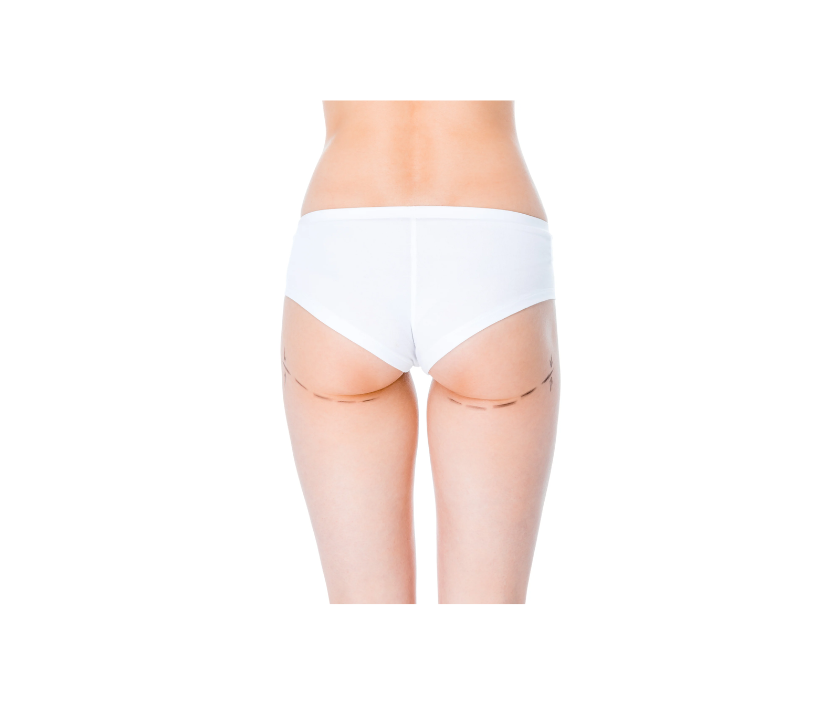
What is Hip Fat Transfer and Fillers?
Hip Fat Transfer and Fillers describes two different ways of adding volume to the outer hip, one using your own fat and one using an injectable material. Fat grafting is the mainstream option, since fat harvested by liposuction from another part of your body can be placed where volume is wanted. Injectable filler for the body is a separate proposition altogether and carries very different considerations, which the sections below set out honestly. Both aim at width and smoothness through the hip rather than at the buttock.
Why do women ask for more hip volume?
Common reasons include a narrow hip in relation to the waist, an outline that looks square in fitted clothing, or a hollow that catches the light. Some women notice the change after significant weight loss, when the hip loses padding faster than the rest of the body. Others simply prefer a rounder line. Whatever the reason, the request is examined against your own proportions rather than against a trend, because a hip that suits one frame looks wrong on another.
Where does the fat come from?
Fat comes from wherever you have a genuine surplus, most often the abdomen, the flank, the inner thigh or the area above the knee. Donor selection matters, therefore examination includes pinching several sites to judge thickness and quality. Harvesting is done gently with small cannulas and low suction pressure, since fat cells handled roughly are less likely to survive. Two useful things happen at once, because the donor area is slimmed while the hip is filled.
Does harvesting the fat reduce my weight?
No, and expecting that would be a mistake. Liposuction is contour work for someone already at a stable weight and it is not a treatment for obesity, so the scale barely responds even when a reasonable volume is removed. Furthermore a proportion of what comes out is fluid rather than fat. Weight should have been steady for six months before surgery, because later gain or loss alters both the donor site and the graft. Skin quality sets the ceiling on the donor result too, since suction beneath lax skin leaves looseness rather than smoothness, and excision is the honest answer where that applies.
How much of the transferred fat lasts?
Part of it lasts and part of it disappears, which is the central fact of every fat grafting operation. Transferred cells survive only if they establish a blood supply quickly, so grafts are laid down in fine layers rather than in one pocket. Reabsorption happens mostly within the first three months, after which volume becomes fairly steady. Surgeons therefore place slightly more than the target volume, expecting some loss. Nobody can predict an individual figure, and an honest surgeon says so instead of quoting a percentage.
Are fillers a sensible option for the hip?
Rarely, and they are not a routine offering here. Hyaluronic acid fillers were developed for the face, where a few millilitres achieve a visible change, whereas body contouring would need volumes many times larger. Cost rises accordingly and becomes difficult to justify. Risk also changes with volume, because large deposits are more prone to nodules, migration, infection and biofilm formation, and correcting a problem deep in the hip is far harder than correcting one in the cheek.
- Facial fillers are designed and studied for facial use, not for body volume.
- Large volume injection carries a higher risk of nodules, infection and irregularity.
- Any material injected into the body should be a recognised medical product used within its intended scope.
- Industrial silicone, mineral oil and similar substances offered cheaply cause severe, sometimes untreatable disfigurement.
- Where volume is genuinely wanted, autologous fat remains the more sensible route.
Anyone offering large volume body filler at a low price should be avoided entirely.
Who is a suitable candidate?
Good candidates are healthy, weight stable and have enough donor fat to work with. Very lean women often lack that surplus, so either the plan is staged or it is declined. Realistic aims help enormously, since the operation improves proportion instead of transforming a frame. Pregnancy plans, clotting history, diabetes control and smoking are all reviewed before a date is offered.
How is the procedure performed?
Planning starts with markings taken while standing, followed by general anaesthesia or sedation depending on the extent of harvesting. Tumescent fluid goes into the donor sites, fat is suctioned gently, then processed by decanting or centrifugation to remove blood, oil and fluid. Injection follows through blunt cannulas in many fine passes, kept within the subcutaneous layer above the muscle so that large deep vessels are avoided. Both hips are shaped alternately and compared repeatedly. Most cases run two to three hours, and discharge is usually the same day.
What is recovery like?
Two recoveries run in parallel, one for the donor areas and one for the grafted hips. Donor sites feel bruised and tight, so compression garments are worn there for about six weeks. Grafted areas are protected instead of compressed, and prolonged pressure on the treated hips is avoided in the early weeks. Return to office work takes roughly a week, while exercise waits four to six weeks. Swelling settles slowly across three months.
What results should I expect?
Expect a rounder, smoother hip line that suits your own build, visible above all in fitted clothing. Volume looks generous immediately after surgery because of swelling, then reduces as oedema resolves and part of the graft reabsorbs. Judgement is best left until at least three months. Fat that survives behaves like your natural tissue, therefore weight changes affect it. Results vary between individuals, and a second smaller graft is sometimes chosen later.
What are the risks?
Risks belong to three groups, namely the donor site, the graft and the anaesthetic. Donor problems include irregularity, dimpling, seroma, prolonged numbness and asymmetry. Graft problems include partial loss, palpable lumps, fat necrosis, oil cysts, infection and calcification that may show on later imaging. Rarely, fat entering a blood vessel causes serious harm, which is why placement stays superficial and cannulas are blunt. No surgery is risk free, and larger volumes always carry more risk than modest ones.
What is the price in India?
Rupee charges reflect the number of donor areas, the volume transferred, theatre and anaesthetic time, garments and follow up. Larger, staged plans naturally cost more than a single modest session. Estimates are given in clear written form after examination, so the components are visible rather than bundled. Aesthetic procedures are not reimbursed by insurance in India, and price alone should never drive the choice of surgeon.
Why choose Elegance Clinic?
Because Hip Fat Transfer and Fillers is discussed here in terms of what is safe as much as what is possible. Dr. Ashutosh Shah keeps grafts conservative, works in the subcutaneous plane, and declines requests for large volume body filler rather than improvising with materials outside their intended use. Related choices appear under hip augmentation, and women concerned specifically about the hollow at the outer hip will find the reassurance they need on our Hip Dips Correction page.
A private consultation in Surat will establish whether you have enough donor fat and what volume is sensible for your frame. Nothing is decided in a hurry, and a second visit before booking is welcome. Please use our contact page to arrange a time.
Note: This page is for general information and is not a substitute for a medical consultation. Every procedure carries risk, results vary between individuals, and no outcome can be promised. Dr. Ashutosh Shah will advise honestly whether a procedure is appropriate for you.
Ready to Talk, Privately?
Book a confidential consultation with Dr. Ashutosh Shah. There is no pressure, only clear and honest guidance.