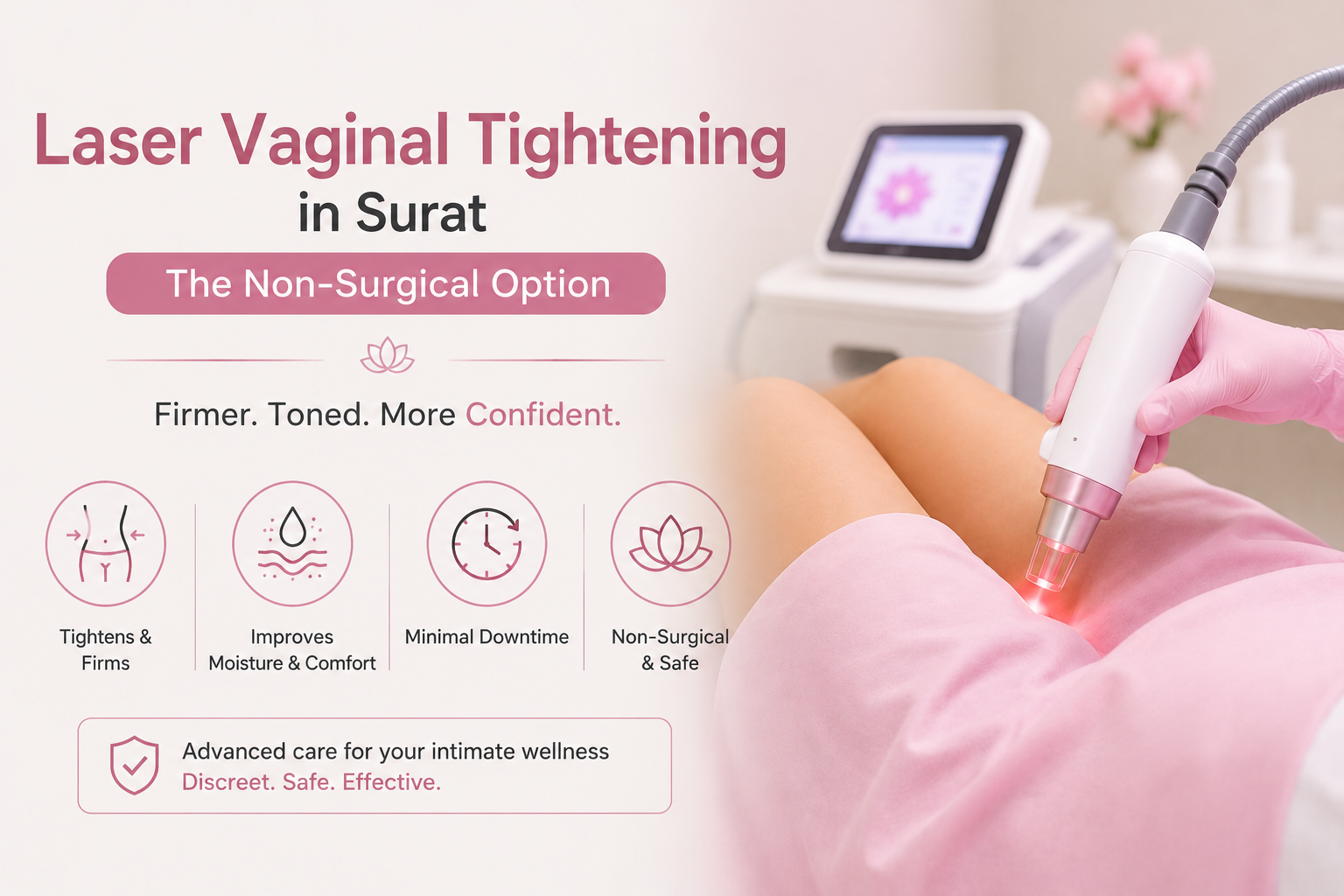
What is Fractional CO2 Laser Vaginal Rejuvenation?
Fractional CO2 Laser Vaginal Rejuvenation is a non surgical treatment that uses a carbon dioxide laser to warm the lining of the vagina in a controlled pattern. A slim probe is placed inside, and the beam is delivered at tiny separated points rather than across the whole surface. Because only a fraction of the tissue is touched at each pass, the untreated lining in between is meant to help healing. However, benefit is not certain, and some women notice no change at all. Therefore, this page explains the idea honestly rather than selling it. Our parent page on laser vaginal tightening sets out the wider picture.
How do micro columns of thermal effect work?
Micro columns are narrow channels of heat that the laser creates within the tissue, each one surrounded by lining that has not been treated. Heat at these points is thought to prompt the body to lay down fresh collagen as it repairs. Meanwhile, the untouched tissue between the columns acts as a reservoir of healthy cells, so the surface closes faster than it would after treating the whole field. In theory, the wall then feels slightly firmer and moister over the following months. However, theory and outcome are not the same thing. Studies so far are small, short and often funded by device makers, therefore confident claims are not appropriate.
Why do women consider a laser instead of surgery?
Most women consider a laser because it needs no cutting, no stitches and no anaesthesia beyond a numbing gel. Sessions are short, and normal routine usually continues the same day. By contrast, surgery involves theatre time, a recovery period and a longer commitment. Some women also want to avoid the idea of an operation entirely. However, avoiding surgery is not the same as achieving the same result. Where laxity is marked, an operation such as vaginoplasty does something a device cannot, and we will say so plainly.
What does a typical course of sessions involve?
A typical course is three sessions, spaced about four to six weeks apart, followed by a review. Each session itself takes roughly fifteen to twenty minutes once you are settled. Afterwards, some clinics suggest a single maintenance session at around twelve months, although no schedule is agreed among specialists. Importantly, a course is not a guarantee of change. Because responses vary so widely, we prefer to review honestly after the first two sessions instead of selling a fixed package in advance.
What actually happens during a session?
The session is done in a clinic room, awake, and it feels like gentle warmth rather than pain for most women. A usual visit runs like this:
- A short check that there is no infection or unexplained bleeding
- Numbing gel applied at the entrance if you wish
- A slim probe inserted and rotated in small steps
- Brief warmth and a vibrating sensation as each pass is delivered
- A few minutes of rest, after which you go home
Meanwhile, nothing is injected and no tissue is removed. Consequently, most women return to desk work the same afternoon.
What do regulators and specialist bodies say?
Regulators have not specifically approved energy based devices for treating vaginal laxity, dryness, sexual function or urinary incontinence. The US Food and Drug Administration has issued a safety communication cautioning against exactly these marketing claims, and it has noted reported harms including burns, scarring and lasting pain. Professional bodies including the American College of Obstetricians and Gynecologists have said the evidence does not yet support efficacy claims. Therefore, at Elegance Clinic these treatments are offered only after a proper gynaecological assessment, and only where a woman understands that the evidence is limited. Above all, you will never be told this is proven when it is not.
Who is this treatment not suitable for?
Several women should not have this treatment at all, and saying so early saves both time and money. It is unsuitable if you have:
- An active vaginal or pelvic infection, until that has been treated
- Unexplained vaginal bleeding that has not been investigated
- Current pregnancy, or a delivery within the last three months
- Prolapse or marked laxity that clearly needs surgical repair
- Undiagnosed pain, because a cause must be found first
- Previous pelvic radiotherapy, or an active skin condition of the vulva
Furthermore, women who expect a dramatic tightening will be disappointed, therefore expectations are discussed frankly before anything is booked.
Who might reasonably be considered?
Reasonable candidates have mild symptoms, realistic hopes and a normal examination. Typically these are women after childbirth or around menopause who notice slight dryness, mild slackness or discomfort with intimacy, and who have already discussed simpler measures. Moreover, a candidate should be free of the conditions listed above and should have completed her family, since pregnancy alters the tissue again. However, being suitable on paper still does not predict a response.
What is recovery like?
Recovery is short, and most women feel normal within a day. Mild warmth, a watery discharge or slight spotting can occur for two to three days. Intercourse and tampons are avoided for about a week, while swimming pools and hot baths wait a similar time. Meanwhile, ordinary work, driving and light exercise resume immediately. Should burning, heavy bleeding or worsening pain appear, contact the clinic rather than waiting.
What results should I expect?
Honestly, results vary a great deal, and not everyone responds. Some women report that dryness feels less troublesome and that intimacy is more comfortable after the second or third session. Others notice nothing measurable at all. Because collagen changes slowly, any difference tends to appear gradually over two to three months rather than immediately. Importantly, Fractional CO2 Laser Vaginal Rejuvenation cannot lift tissue, repair a torn muscle or replace hormones. Therefore, if the examination shows a structural problem, we will tell you honestly that a device is unlikely to help you.
What are the risks?
Real risks exist, and they are more than theoretical. Reported harms include burns, blistering, scarring, and pain that lasts well beyond the expected few days. Scar tissue inside the vagina can itself make intimacy harder, which is the opposite of the intention. Infection is uncommon but possible. Above all, the commonest disappointment is simply no benefit despite completing and paying for a full course. Consequently, settings, probe hygiene and the training of the person operating the device all matter, so ask about them.
What does it cost in India?
Cost in India is charged per session in rupees, so the total depends on how many sessions you have. Any package price should state clearly what happens if you stop after one session, because you may reasonably decide it is not working. Meanwhile, remember that maintenance may be suggested later, which changes the arithmetic over several years. You will be given a clear written estimate after examination. Never judge a quote by telephone alone, since the plan depends entirely on what the examination shows.
Why talk to Dr. Ashutosh Shah first?
Speaking to Dr. Ashutosh Shah first means your symptom is assessed before any device is discussed. Elegance Clinic in Surat offers surgical and non surgical options, therefore the advice you receive is not limited by whatever equipment sits in the room. Consultations are private and unhurried, with a female attendant present, and our approach to privacy and confidentiality is explained in advance. If you would like a straight opinion before spending anything, you are welcome to arrange a private consultation.
Note: This page is for general information and is not a substitute for a medical consultation. Non surgical intimate treatments are not specifically approved by regulators for these uses, evidence of benefit is limited, and results vary between individuals. Dr. Ashutosh Shah will advise honestly whether a treatment is appropriate for you.
Ready to Talk, Privately?
Book a confidential consultation with Dr. Ashutosh Shah. There is no pressure, only clear and honest guidance.