What is Focused Ultrasound Tightening?
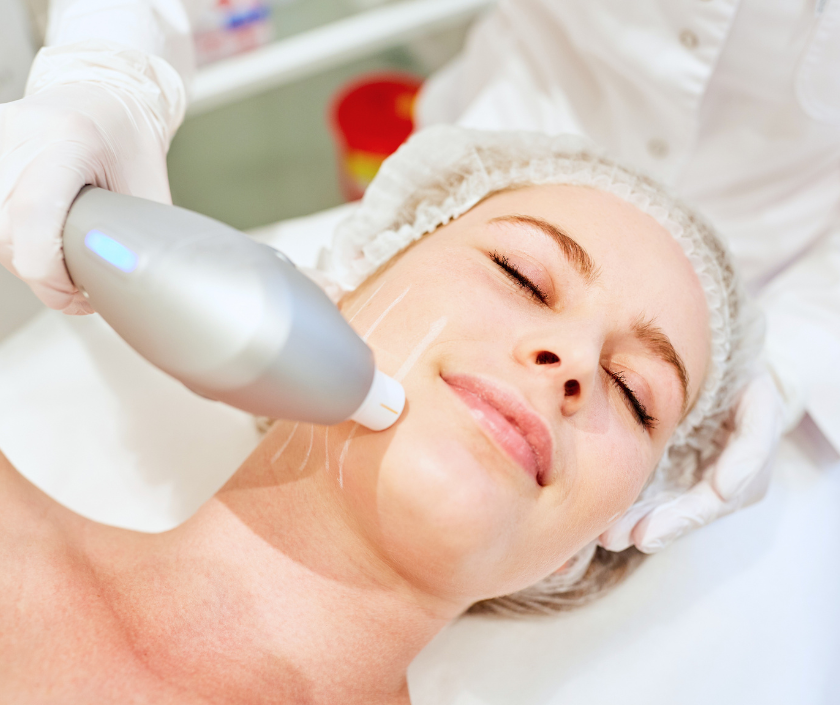
Focused Ultrasound Tightening is a non surgical treatment that concentrates ultrasound energy at a chosen depth below the surface. The surface itself is passed over and left intact, rather like sunlight gathered through a lens onto a single point. Energy builds only where the beams meet, and that spot is warmed enough to affect the tissue there. High intensity focused ultrasound, shortened to HIFU, is the technical name. Our overview of HIFU vaginal tightening sets out the wider picture.
How does it differ from laser and radiofrequency?
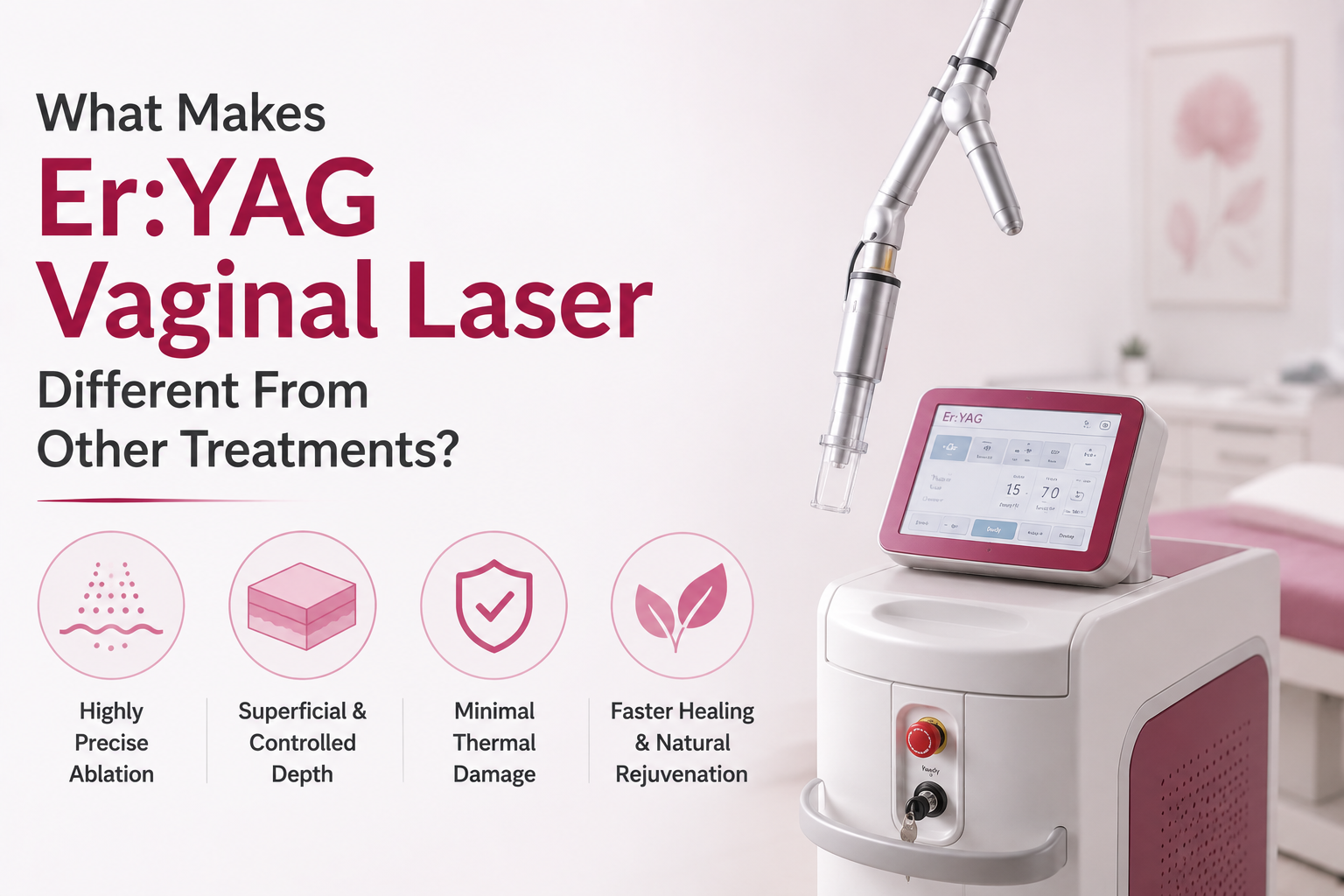
The difference lies in where the energy is deposited. Laser acts mainly at or just below the surface, radiofrequency spreads warmth through a volume of tissue, whereas focused ultrasound aims at one narrow layer at a fixed depth. Because of that focus, the lining above the target is meant to be spared. Below is a simple comparison of the three approaches.
| Method | Where energy lands | Surface lining |
|---|---|---|
| Fractional laser | At and just below the surface | Tiny treated zones |
| Radiofrequency | Spread through a volume | Usually left intact |
| Focused ultrasound | One narrow layer at a set depth | Passed over and left intact |
Why does depth control matter in delicate tissue?
Depth control matters because the vaginal wall is thin, and important structures sit close behind it. The bladder lies in front and the rectum lies behind, separated by only a few millimetres of tissue in places. Energy placed too deep could therefore reach where it was never meant to go. Cartridges are manufactured for specific depths for exactly this reason, and the operator has to choose correctly. After menopause the wall may be thinner still, so settings that suit one woman will not suit another.
What happens during a session?
A session takes about thirty minutes and is carried out in the clinic without anaesthesia in most cases. A probe is placed in the vaginal canal and rotated slowly, delivering energy in a planned pattern. Warmth and mild prickling are the usual sensations, and sharp pain is not expected. Meanwhile, the operator can pause or lower the energy at any moment. You dress and leave once it is finished, with no dressing needed.
Is it really a single session treatment?
Focused Ultrasound Tightening is usually promoted as a single session, which genuinely differs from laser and radiofrequency protocols. One visit, rather than three spaced visits, is the common pattern. However, a repeat after nine to twelve months is often suggested, so the saving may be smaller than it first appears. Fewer visits also means fewer chances to review progress along the way. Consequently, a review date is set here even when only one session is planned.
What do regulators say about these devices?
Approval by regulators for treating vaginal laxity, dryness, sexual function or urinary incontinence has not been granted to energy based devices, and that includes focused ultrasound platforms. The US Food and Drug Administration issued a safety communication about these very claims, noting reports of burns, scarring and pain that did not settle. ACOG and similar bodies have said the published evidence does not yet support efficacy claims. Therefore we present this treatment as an option with uncertain benefit rather than a solution to a problem. A full gynaecological assessment always comes first at Elegance Clinic.
Who might be considered for it?
Consideration follows a gynaecological examination, current cervical screening and the exclusion of infection or thinning of the lining. Women who are pregnant, who have an active infection, or who have unexplained bleeding are not treated. Marked laxity or prolapse is a different situation altogether, and surgery may serve far better. In that case vaginoplasty is discussed openly, including its recovery and its risks. Above all, nobody is treated who has not understood how limited the evidence is.
What is recovery like?
Recovery is minimal, since there is no wound and no cutting involved. Most women drive themselves home and return to work the same day. Mild warmth, a feeling of fullness or a light discharge can last a day or two. Intimacy is usually avoided for about five days, though your doctor will confirm the timing. Anything painful, prolonged or accompanied by fever should be reported rather than waited out.
What results should I expect?
Expect little to nothing in some cases, and modest change at best in others. Focused Ultrasound Tightening has not been shown to produce reliable improvement, so any promise of a specific outcome deserves suspicion. Where women do report a difference, it usually builds over two to three months as tissue responds. Effects, when present, are expected to fade rather than last indefinitely. Therefore repeat treatment is commonly suggested within a year.
How does the evidence compare with laser and RF?
Evidence for all three is limited, and direct comparisons between them are scarcer still. Most published work involves small numbers, short follow up and no proper control group. Focused ultrasound entered this field later than laser and radiofrequency, therefore it has even less behind it. Claims that one device beats another are usually marketing rather than science. Options are laid out side by side on our non surgical rejuvenation page so you can weigh them yourself.
What are the risks?
Risks include burns, blistering, pain that persists and injury to tissue deeper than intended. Infection can follow any procedure involving the vaginal canal. Because energy is focused rather than spread, an error in depth or settings concentrates the harm instead of diluting it. Additionally, no benefit at all is a common and often overlooked outcome. Below are the points covered before any woman agrees to treatment.
- Burns or blistering of the vaginal lining.
- Pain during intimacy that continues afterwards.
- Scar tissue that is difficult to treat later.
- Injury to structures behind the vaginal wall.
- Money spent with no noticeable change at all.
What does it cost in India?
Cost depends on the device, the cartridge used and the clinic setting, and fees are quoted in rupees. Cartridges are consumable items, therefore they form a real part of the price. A single session may look cheaper than a three session laser course, yet repeat treatment can close that gap. We give a clear written estimate after examination instead of a figure over the phone. Nothing is added later without being discussed with you first.
Why choose Elegance Clinic?
Elegance Clinic in Surat will explain what focused ultrasound can and cannot reasonably be expected to do. Dr. Ashutosh Shah examines first and recommends against treatment when he thinks it will not help. Depth settings, screening and consent are handled carefully, because shortcuts in this area are how harm happens. Women often tell us afterwards that the honesty was more useful than the treatment they came asking about.
If you want an honest opinion before spending anything, a private consultation with Dr. Ashutosh Shah in Surat is the place to start. Come with your questions written down, if that helps you remember them. There is no pressure to proceed at any stage.
Note: This page is for general information and is not a substitute for a medical consultation. Non surgical intimate treatments are not specifically approved by regulators for these uses, evidence of benefit is limited, and results vary between individuals. Dr. Ashutosh Shah will advise honestly whether a treatment is appropriate for you.
Ready to Talk, Privately?
Book a confidential consultation with Dr. Ashutosh Shah. There is no pressure, only clear and honest guidance.