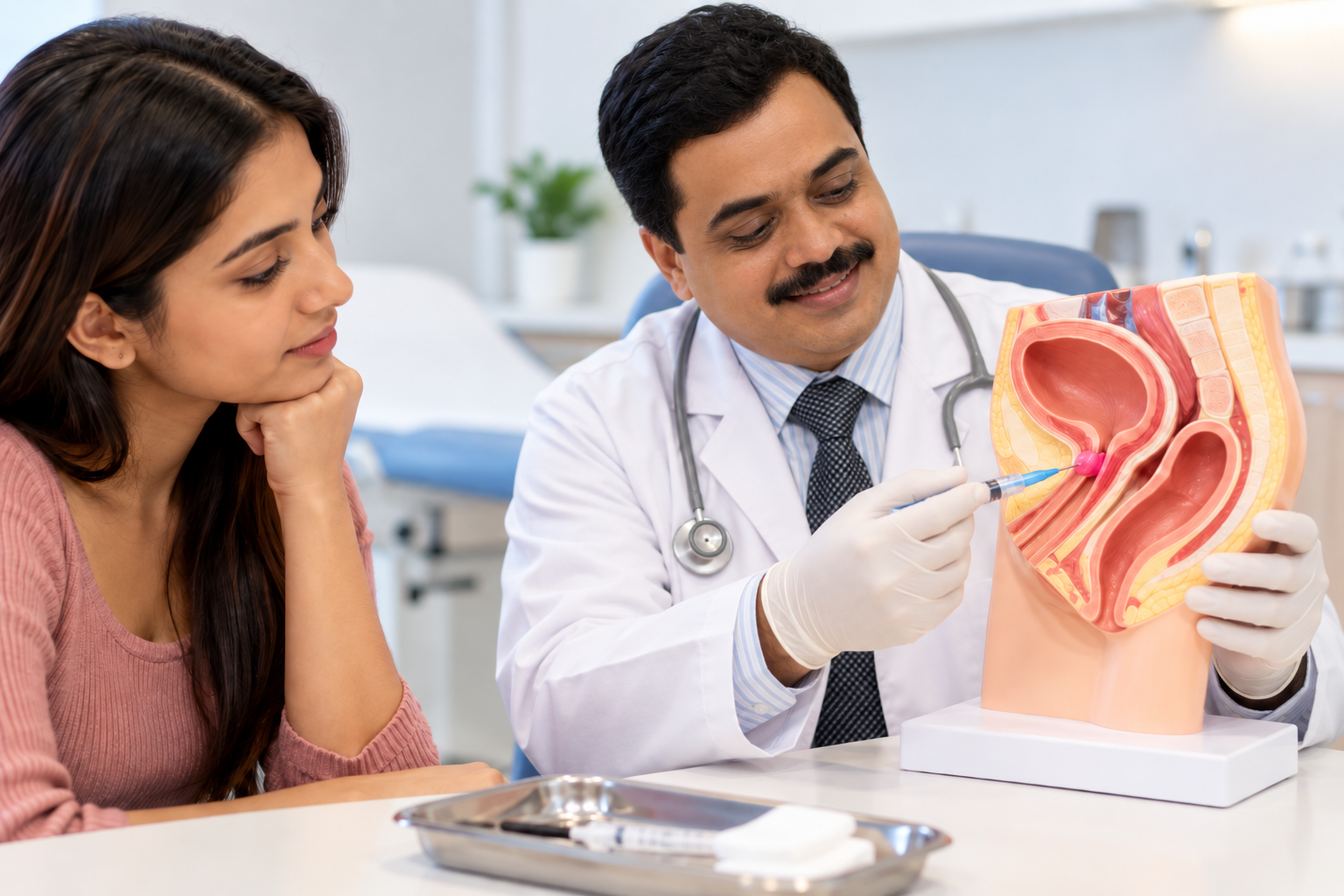

What is Perianal Region Brightening?
Perianal Region Brightening refers to assessing, and sometimes gently treating, uneven colour in the skin around the anus. Importantly, this area is naturally the darkest skin on the body in most people, therefore darkening on its own is seldom a problem. Symptoms are a different matter, because plenty of treatable conditions cause both irritation and colour change here. Our parent page on laser intimate whitening describes the wider approach taken across this group.
Will my privacy be protected if I come in about this?
Yes, completely, and that promise is taken seriously. Many women delay asking about this area for years because they feel embarrassed, meanwhile the symptom that worried them quietly gets worse. Consultations are held behind a closed door, examination is chaperoned, and notes are kept confidential. Nobody is asked to explain why appearance matters to them. Above all, this is an ordinary medical enquiry that doctors hear regularly, so there is nothing unusual about raising it. Our privacy and confidentiality page explains exactly how records and appointments are handled.
Is it normal for skin around the anus to be darker?
It is entirely normal, and it applies to the vast majority of people regardless of skin tone. Pigment cells work harder in genital skin, the perianal area, the bikini line and the inner thighs, which is ordinary human anatomy. Genetics set most of it, whereas hormones, warmth, sweat and constant friction from sitting and walking add the rest. Consequently the shade says nothing whatsoever about cleanliness. Scrubbing, bleaching or repeated washing will not change it, although they will certainly irritate the skin.
Which symptoms must be assessed medically first?
Any symptom beyond appearance must therefore be assessed before cosmetic treatment is even discussed. The list below should always prompt a proper examination rather than a beauty appointment.
- Bleeding, whether on the paper, in the pan or mixed with stool.
- Pain during or after passing stool, which frequently indicates a fissure.
- A lump, swelling or something that protrudes and then returns.
- Persistent itching, particularly at night, which may be threadworm.
- Discharge, moisture, soreness or a rash that keeps returning.
- Any change in bowel habit lasting more than a few weeks.
None of those should be treated with a lightening cream. Instead they need a diagnosis, since the underlying problem is usually straightforward to manage once identified.
Which conditions darken and irritate this skin?
Piles and fissures usually head the list, because both cause bleeding, straining and repeated irritation that leaves the skin thickened and darker. Threadworm produces intense night itching, especially in households with children, and scratching then marks the skin. Fungal infection thrives in a warm moist cleft, therefore tinea and candida are frequent culprits in India. Contact dermatitis develops from wet wipes, fragranced soaps and antiseptic washes used with good intentions. Additionally, lichen simplex builds from months of scratching, while lichen sclerosus needs proper gynaecological care. Acanthosis nigricans can extend into the folds here too, which raises the question of insulin resistance, PCOS or type 2 diabetes. Post inflammatory pigmentation then lingers after any of these have settled. More detail sits under conditions.
Which products are dangerous on perianal skin?
Over the counter lightening creams are dangerous anywhere, yet this region is among the worst places to apply them. Mercury contaminated products still circulate online in India, and mercury absorbed through skin can injure the kidneys and the nervous system. Potent steroid creams create the larger everyday problem, since they are used freely as lightening agents without any prescription. They thin already fragile skin, encourage splitting near the anal margin, and let fungal infection spread unnoticed underneath. Steroid modified fungal infection has become widespread across the country, and it is far harder to clear than ordinary tinea. Hydroquinone at high strength, used unsupervised, sometimes leaves the skin darker still. Every product should be shown to a doctor before it goes anywhere near this area.
What can I do at home?
Keeping the area clean, dry and undisturbed usually does more than any cream. Below are the measures that genuinely help.
- Washing with plain water and patting dry, rather than rubbing with tissue.
- Avoiding wet wipes, antiseptic lotions and fragranced soaps entirely.
- Treating constipation with fibre and fluids, so straining stops.
- Wearing loose cotton underwear and changing it after exercise.
- Resisting the urge to scratch, however strong that urge becomes.
Because scratching and moisture drive much of the darkening, these simple habits often lighten the area on their own within a few months.
What treatment is available once symptoms are settled?
Once symptoms have settled, treatment options are limited and deliberately conservative. Prescription topical care is usually tried first, since it is the gentlest choice. Low strength peels are used sparingly, whereas laser work here is approached with real caution because the skin is thin, moist and constantly folded. Meanwhile, correcting piles or a fissure often improves the colour more than any cosmetic session would. Above all, treating an area that is still sore or bleeding is never appropriate.
How is a session carried out?
Sessions are short, private and always carried out with a chaperone present, so dignity is protected. Positioning is arranged so that you stay covered as much as possible throughout. A test patch is always taken first, then reviewed several weeks later before anything further is planned. Energy settings stay low, while cooling is used continuously. You leave the same day, with written instructions and a direct number to call if anything worries you.
What results are realistic?
Realistic results are modest, gradual and partial, and they arrive over months rather than weeks. Perianal Region Brightening cannot and should not make this skin match the buttock or thigh, since a colour difference here is normal anatomy. Some women see a genuine evening of patchy areas, whereas others see little change at all. Because friction, moisture and sitting continue, colour tends to return, so maintenance is part of the plan rather than a disappointment.
What are the risks?
Risks are meaningful, therefore they deserve honest weight against a fairly small cosmetic gain. Burns, blistering and painful splitting can follow treatment near the anal margin, and healing here is slow. Darker patches sometimes appear instead of lighter ones, which is common in melanin rich Indian skin. Infection is a genuine concern, given how the area is exposed to stool and moisture. Additionally, scarring in this location can affect comfort, therefore many women are advised against treatment altogether.
What does it cost in India?
Charges are given in rupees and usually depend on what is actually needed, which is often medical rather than cosmetic. Treating piles, a fissure, threadworm or fungal infection is costed separately and usually comes first. Quoting a cosmetic price before examining you would be misleading, so none is published here. Instead a clear written estimate follows examination, with each part of the plan explained.
Why choose Elegance Clinic?
Dignity comes first at Elegance Clinic in Surat, so that shapes how the whole consultation runs. Dr. Ashutosh Shah listens without comment, examines carefully and looks for the treatable problem that many women have been quietly living with. Where the honest answer is that nothing cosmetic should be done, you will hear exactly that. Other subjects in this group are listed on the intimate skin and grooming page.
If this has been on your mind for a while, a private appointment with Dr. Ashutosh Shah in Surat is a straightforward place to start. Nothing will be treated on the day without your agreement.
Note: This page is for general information and is not a substitute for a medical consultation. Darkening of intimate skin is usually normal, and where it is not, the cause should be assessed before any cosmetic treatment. Results vary between individuals and no outcome can be promised.
Ready to Talk, Privately?
Book a confidential consultation with Dr. Ashutosh Shah. There is no pressure, only clear and honest guidance.