What is Labia Majora Brightening?
Labia Majora Brightening describes cautious treatment aimed at settling uneven colour on the outer lips, and it is never about changing who you are. Above all, this skin is naturally the darkest on the vulva, which is simply how most women are built. Because of that, the honest starting point is that nothing needs doing. However, if the shade has altered lately, or if one area now looks different from the rest, an examination is sensible. Our parent page on laser intimate whitening explains how this whole group is approached.
Is it normal for the labia majora to be darker?
Yes, entirely normal, and it is true for the great majority of women. Pigment cells are naturally busier in genital skin, on the inner thighs, along the bikini line and around the perianal area. Hormonal shifts at puberty, during pregnancy and with contraceptive use deepen the shade further. Meanwhile, warmth, moisture and daily rubbing add to it. Therefore darker outer lips are not dirt, not neglect, not an infection, and certainly not a sign of anything you have done wrong.
Why do so many women worry about this?
Most of the worry begins with a comparison that was never real. Images online are edited, lit and carefully chosen, whereas real bodies vary enormously in colour, size and shape. Consequently, many women arrive convinced that something is abnormal when their anatomy is perfectly ordinary. Partners, meanwhile, rarely notice what is being described. If this has troubled you privately for years, you are far from alone, and you are not being vain for asking. Even so, reassurance is often the only thing genuinely needed.
Why must treatment here be gentler than anywhere else?
Treatment must be gentler because the labia majora carry the thinnest, moistest and most delicate skin of all the areas women ask about. Sweat and clothing keep the surface covered, therefore heat and chemicals linger instead of dispersing. Additionally, the nerve supply is rich, so discomfort is greater than on a thigh or an arm. Healing also runs slower where skin stays warm and damp. For all those reasons, strengths used on the face are unsafe in this location, and low settings with wide gaps between sessions become the rule.
When does a change in colour need a medical opinion?
A change needs a medical opinion whenever it is new, uneven, itchy, sore, thickened or joined by white patches. Cosmetic treatment applied over an undiagnosed condition can make matters considerably worse. Below is what gets looked for first.
- Acanthosis nigricans, a soft velvety thickening in the folds, often linked to insulin resistance, PCOS, weight gain or type 2 diabetes.
- Fungal infection, particularly tinea cruris, which itches badly and leaves marks behind as it clears.
- Post inflammatory pigmentation left by waxing, shaving, friction or an earlier infection.
- Contact dermatitis caused by intimate washes, fragranced soaps, wipes and hair removal creams.
- Lichen simplex from long standing scratching, plus lichen sclerosus, which needs proper gynaecological care.
Because the underlying problem drives the colour, treating it frequently improves appearance without any cosmetic work at all. Further detail sits on our conditions page.
Which products can harm this skin?
Intimate lightening creams bought online or over the counter are the single biggest danger discussed in this clinic. Mercury still turns up in some imported products, and it accumulates in the body, harming kidneys and nerves. Strong steroid creams are handed out casually across India as lightening agents, yet they thin delicate skin, leave stretch marks and allow colour to rebound darker once stopped. Worse still, steroids feed hidden fungal infection, so steroid modified tinea has become a widespread problem in this country. Hydroquinone at high strength, used without supervision, sometimes leaves skin darker than it started. Please carry everything you have been applying to your appointment for review.
What can be done safely at home?
Very little is needed at home, and less is genuinely more. Plain water or a mild unscented cleanser is enough, because the vulva keeps itself clean. Cotton underwear that is not tight reduces rubbing, whereas shapewear and synthetic fabric trap heat against the skin. Meanwhile, gentle hair removal, or none at all, spares the area repeated injury. Avoid scrubs, bleaches, whitening soaps and kitchen remedies entirely, since each of them inflames the skin and deepens the colour it claims to lift.
What options might a doctor consider?
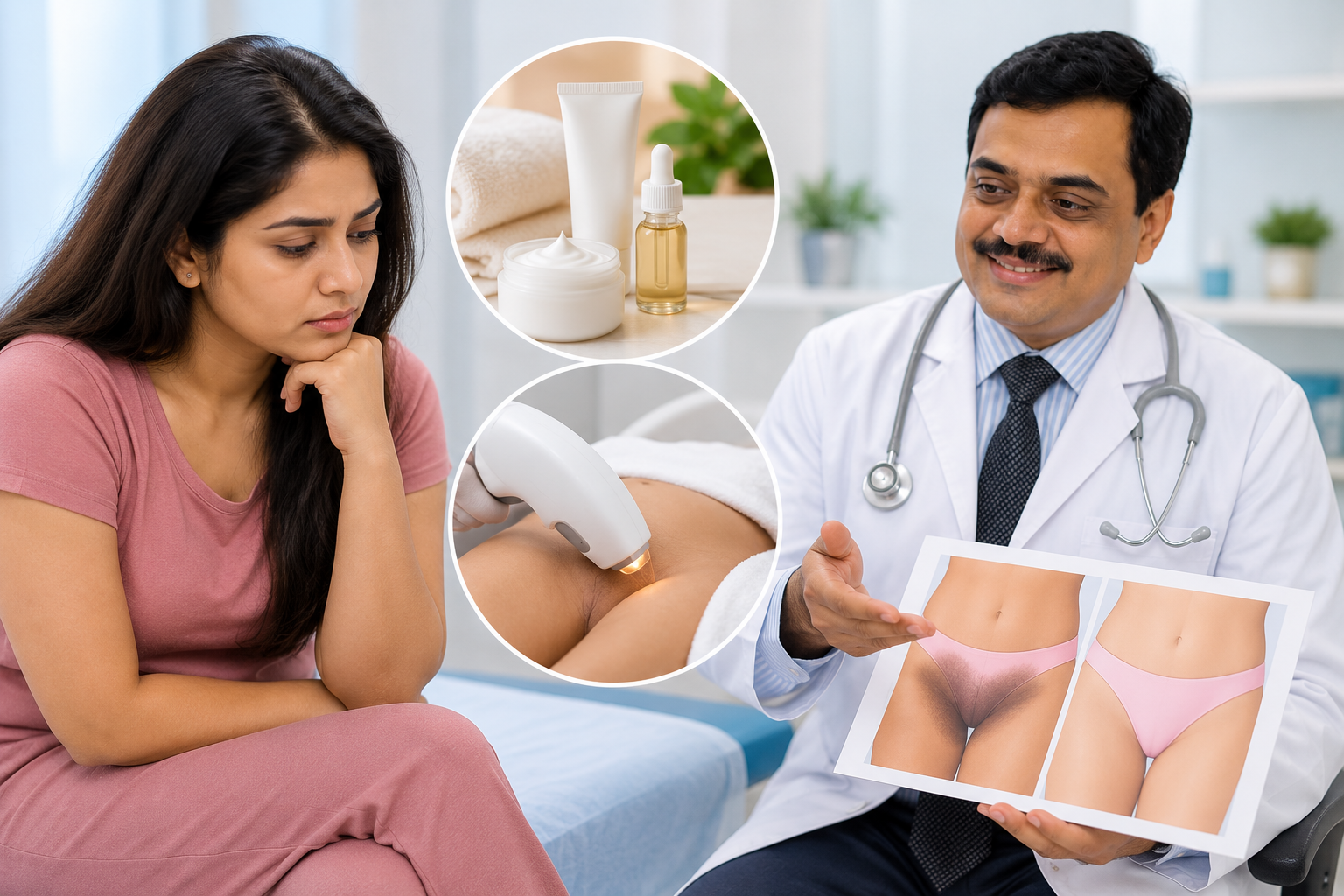
A doctor may consider prescription topical care first, then a very low strength peel, and only occasionally a conservative laser course. Choice depends on the cause, your skin type and how this area has behaved previously. Below is a straightforward comparison.
| Approach | Realistic aim | Why caution is needed |
|---|---|---|
| Treating the underlying cause | Settles the reason the colour changed | Takes time, but it is the safest route |
| Prescription topical care | Calms inflammation and slows pigment | Irritation is common on delicate skin |
| Very low strength peel | Softens surface unevenness slowly | Strength must stay well below facial levels |
| Conservative laser course | Works on surface pigment only | Burns and darker patches are real possibilities |
Where the true concern is bulk, sagging or discomfort rather than colour, skin treatment is the wrong answer, and labia majora reduction should be discussed instead.
How does a careful session proceed?
Careful sessions begin with a small test patch, reviewed several weeks later before anything wider is attempted. Numbing cream is applied when needed, since sensitivity here runs high. Energy or acid strength stays deliberately low, and cooling is used throughout. Sittings are spaced further apart than they would be on facial skin, because this area needs longer to settle. Written aftercare accompanies every visit, and you go home the same day.
What results can honestly be expected?
Expect a modest, gradual softening of uneven patches, and expect it to take months. Labia Majora Brightening does not produce a single uniform colour, nor should it, since the natural gradient across the vulva belongs there. Some women notice a worthwhile change, whereas others notice none. Because hormones, friction and heat carry on regardless, any improvement fades, so maintenance becomes part of the plan. Recurrence is therefore expected rather than a failure.
What are the risks?
Risks run higher here than on any other area covered in this section. Burns and blisters can follow settings meant for lighter skin, and scarring on the labia is difficult to correct afterwards. Paradoxical darkening also happens, which is disheartening after a full course. Additionally, prolonged soreness, dryness, splitting and infection are all recognised outcomes. Since the possible gain is small, declining treatment is a perfectly reasonable decision, and nobody here will push you.
What does it cost in India?
Fees are quoted in rupees and depend on the approach, the number of sittings and the aftercare involved. Topical treatment costs least, whereas a laser course costs considerably more. Publishing a figure without seeing the skin would be misleading, so no price appears on this page. Instead a clear written estimate follows examination, with the full course set out plainly. Nothing gets added later without discussion.
Why choose Elegance Clinic?
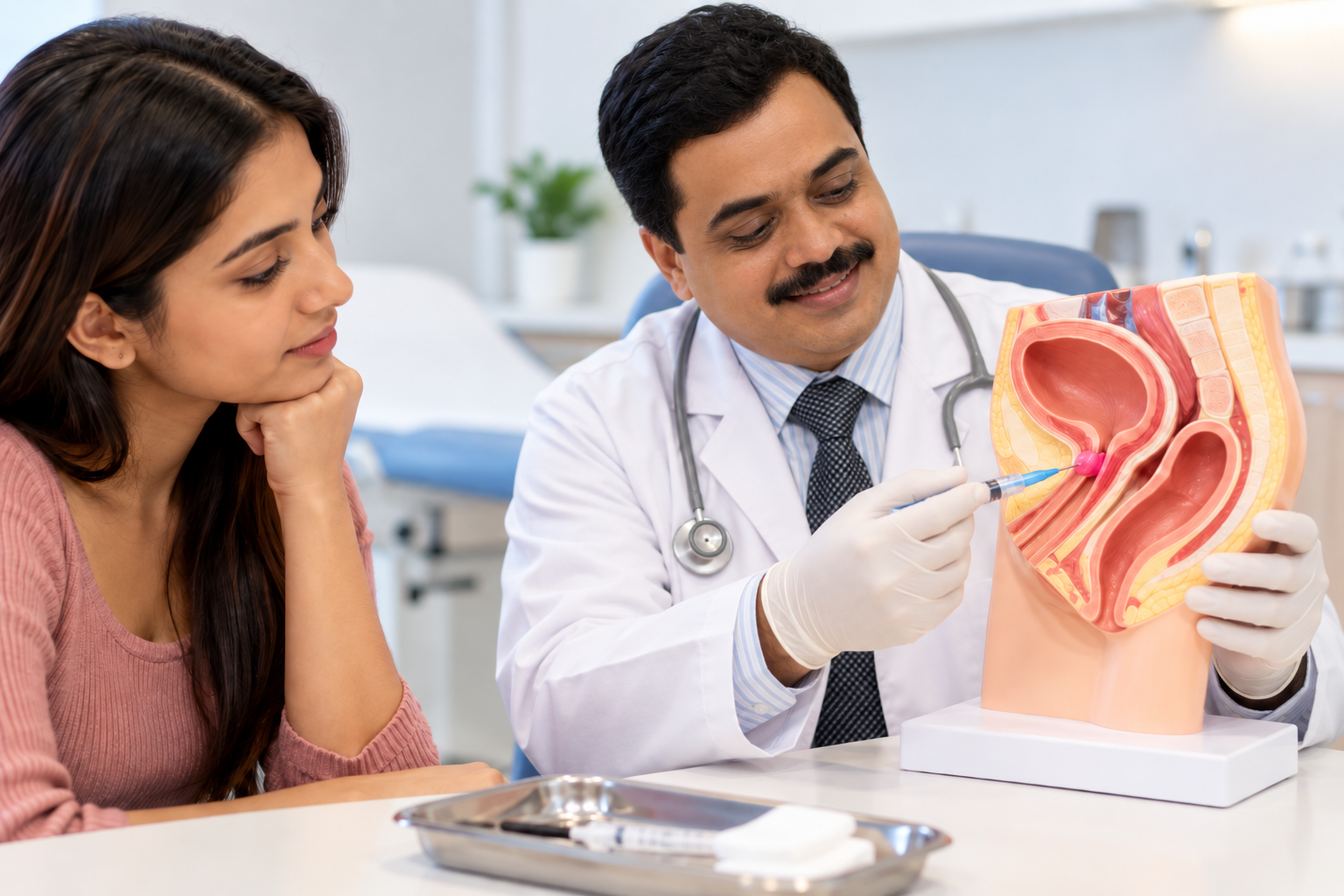
Women are told the truth here, even when that truth is that no treatment is warranted. Dr. Ashutosh Shah spends much of the consultation explaining normal anatomy, because most women attending with this concern have nothing wrong with them. Where a cause is found, it is treated properly first, and cosmetic work waits. Other topics in this group appear on the intimate skin and grooming page.
Should you wish to discuss it privately, Dr. Ashutosh Shah consults in Surat and will give an unhurried opinion. Nothing has to be decided on the day.
Note: This page is for general information and is not a substitute for a medical consultation. Darkening of intimate skin is usually normal, and where it is not, the cause should be assessed before any cosmetic treatment. Results vary between individuals and no outcome can be promised.
Ready to Talk, Privately?
Book a confidential consultation with Dr. Ashutosh Shah. There is no pressure, only clear and honest guidance.