What is Carbon Laser Treatment?
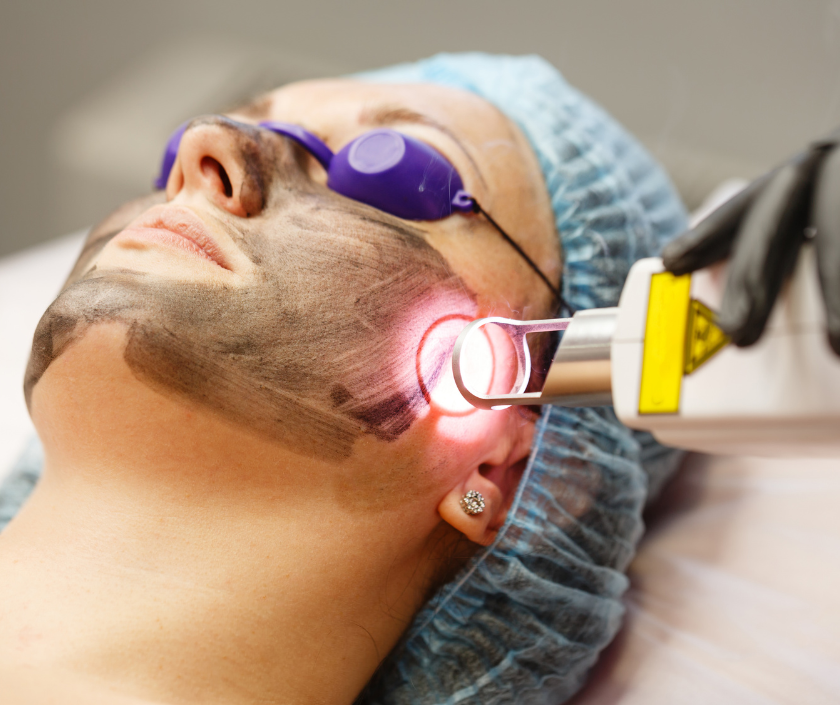
Carbon Laser Treatment is a technique in which a fine carbon suspension is painted onto the skin, dried, and then targeted with a laser. Because carbon particles absorb laser light strongly, the energy concentrates at the surface instead of travelling deep. Afterwards the carbon is lifted away with dead cells, oil and debris from the top layer. Marketed elsewhere as a carbon peel, it is essentially a surface treatment rather than a pigment treatment. Our parent page on laser intimate whitening sets this technique alongside the alternatives.
How does the carbon layer actually work?
The carbon layer works by giving the laser something to aim at other than your own pigment. Carbon sits in every pore and irregularity, therefore the light is absorbed evenly across the surface. Heat generated at those particles then causes mild exfoliation and a small amount of collagen stimulation. Meanwhile, the deeper melanin that gives intimate skin its natural colour is largely untouched. That is precisely why claims of dramatic colour change are not credible.
What does the evidence show for intimate areas?
Evidence for this technique on intimate skin specifically is limited, and that should be said plainly. Most published work looks at facial skin, acne and enlarged pores, whereas the genital area, groin and inner thighs have barely been studied in the same way. Consequently, anyone offering it here is extending a facial protocol into a region with thinner, moister and more sensitive skin. Some women do report smoother texture and a more even surface afterwards. However, reported experience is not the same as proven benefit, so expectations must be set low from the outset.
Is intimate skin supposed to be darker anyway?
Yes, and this point matters before any device is discussed. Skin of the genital area, bikini line, inner thighs and perianal region carries naturally more active pigment cells in nearly everyone. Genetics, hormones, warmth, sweat and friction usually deepen that shade further over the years. Therefore a darker tone in these areas is normal physiology, not dirt, not poor hygiene and not disease. Nobody has to change it, and the sensible aim of any treatment is evening out patchy areas rather than altering your natural colour.
When should the cause be assessed before treatment?
The cause should be assessed whenever darkening is recent, worsening, itchy, thickened or unlike anything you had before. Treating over an undiagnosed problem wastes money and often causes harm as well. Below are the causes looked for first.
- Acanthosis nigricans, velvety thickening in the folds, which may point to insulin resistance, PCOS, obesity or type 2 diabetes.
- Fungal infection such as tinea cruris, which itches and leaves marks as it settles.
- Post inflammatory pigmentation after shaving, waxing, friction or an old infection.
- Contact dermatitis from soaps, washes, wipes, fragrance and hair removal creams.
- Lichen simplex from constant scratching, and lichen sclerosus, which needs gynaecological care.
Because the cause frequently drives the colour, treating it often improves appearance on its own. More information sits under conditions.
Which creams should never be combined with it?
Unregulated lightening creams should never be used alongside this or any other treatment, because heat and irritated skin make matters worse. Mercury containing products remain in circulation online in India, and mercury is toxic, with kidney and nerve damage described after prolonged use. Potent steroids are misused as lightening creams on a large scale here, yet they thin the skin, cause stretch marks and produce rebound darkening once discontinued. Worse, they mask fungal infection while it spreads, and steroid modified fungal infection is now a widespread problem across the country. High strength hydroquinone used without supervision can darken skin paradoxically instead. Anything you are applying should be reviewed by a doctor before a laser is brought anywhere near it.
How is a session carried out?
Sessions start with cleaning and drying the area, then spreading a thin, even carbon layer over it. Drying usually takes a few minutes, after which the laser is passed across in overlapping strokes. Most women describe a warm, prickly sensation rather than sharp pain, although sensitivity varies considerably in intimate skin. The whole appointment usually runs about thirty minutes, and the area is cooled afterwards. You go home the same day, since there is no anaesthesia and no bed rest involved.
How many sessions will I need?
This is a course, not a single visit, and that should be clear before you commit. Four to six sessions spaced two to four weeks apart is the usual pattern, though numbers vary with the cause and the response. Progress is reviewed after three sessions, therefore money is not spent on a full course that is achieving nothing. Maintenance sessions are then suggested for many women. Anyone promising a visible change in one sitting is therefore overselling it.
What results are realistic?
Realistic results are usually limited to surface tone and texture, and they build slowly across a course. Carbon Laser Treatment can leave skin feeling smoother and looking slightly more even, whereas deeper pigment stays where it is. Some women are pleased with that modest change, while others feel it was not worth the sessions. Because friction, hair removal and sweat continue, any gain fades over months. Recurrence is expected rather than a sign of failure, and no outcome can be promised.
What are the risks on intimate skin?
Risks are higher here than on the face, since intimate skin is thin, moist and kept covered by clothing. Burns and blistering follow settings that suit a lighter skin type, and melanin rich Indian skin reacts readily to heat. Darker patches can therefore appear instead of lighter ones, which is the outcome nobody wants. Additionally, prolonged redness, dryness, irritation and infection are all recognised. Scarring is uncommon although possible, and on intimate skin it is difficult to correct.
Who should avoid it?
Anyone with active infection, an unexplained lump, bleeding or a rash should therefore avoid it until properly assessed. Pregnancy, poorly controlled diabetes, a history of keloid scarring and recent isotretinoin use are further reasons to wait. Women with a strong tendency to pigment after minor injury are usually advised against it, because the risk outweighs a small cosmetic gain. Meanwhile, anyone hoping to change their natural skin colour is looking for something no device provides, and honest counselling serves them better than a course of sessions.
What does it cost in India?
Fees are quoted in rupees and usually reflect the area covered, the device used and the number of sessions planned. Because a course is involved, the total matters more than the price of one sitting. Quoting anything before examination would be misleading, so nothing is published here. Instead a clear written estimate is provided after examination, with the full course and any maintenance set out in advance.
Why choose Elegance Clinic?
Elegance Clinic in Surat is willing to say when a treatment is unlikely to help, although that is unusual in this particular field. Dr. Ashutosh Shah assesses the cause, reviews what you have been applying and explains the limits of surface techniques before anything is booked. Where a medical problem is driving the colour, that always gets treated first instead. Other options are compared on the intimate skin and grooming page, so you can weigh them up calmly.
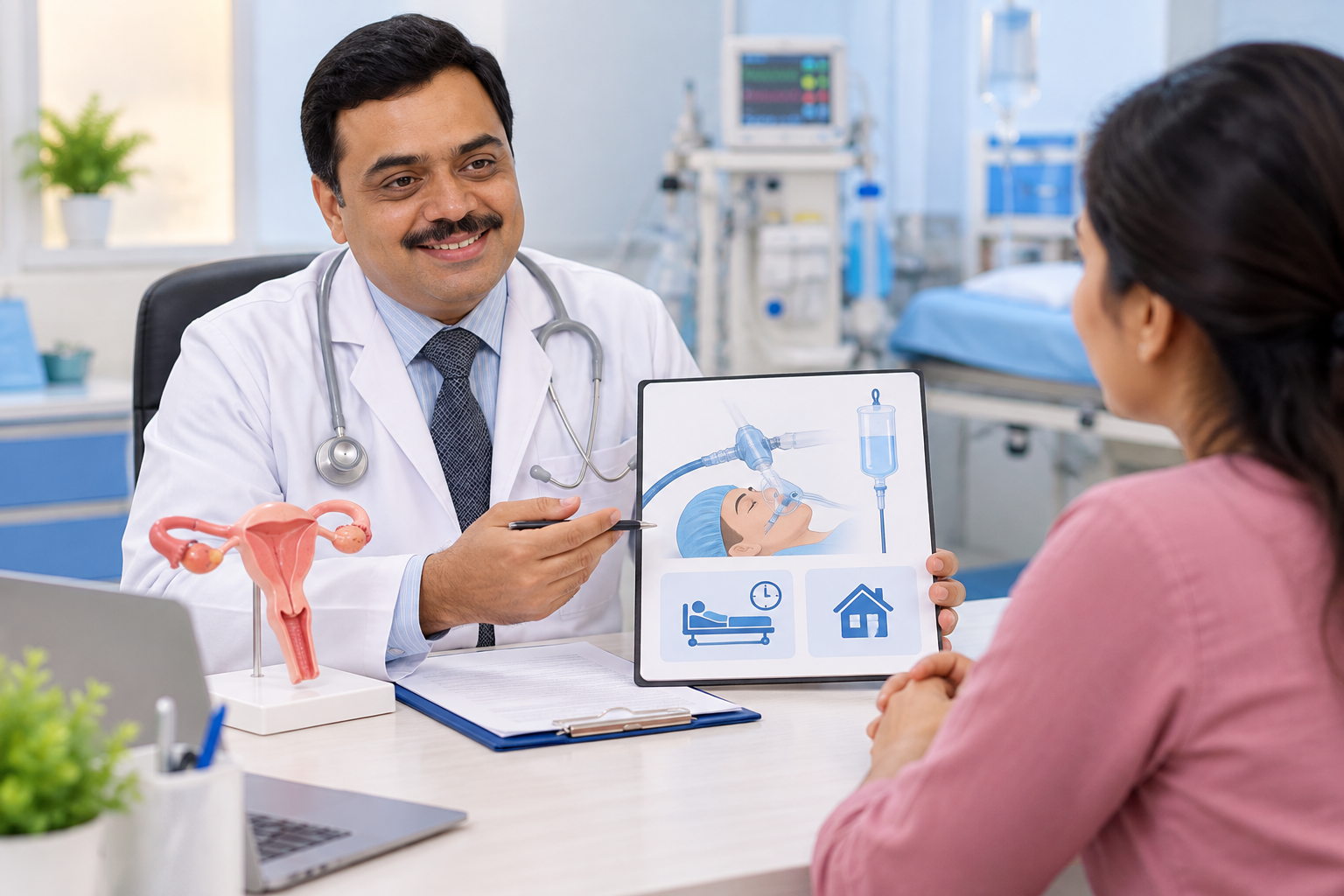
A private consultation with Dr. Ashutosh Shah in Surat will tell you whether this technique suits your skin or whether something else makes better sense. There is no pressure at all to start a course on the day.
Note: This page is for general information and is not a substitute for a medical consultation. Darkening of intimate skin is usually normal, and where it is not, the cause should be assessed before any cosmetic treatment. Results vary between individuals and no outcome can be promised.
Ready to Talk, Privately?
Book a confidential consultation with Dr. Ashutosh Shah. There is no pressure, only clear and honest guidance.