What is bikini and perigenital laser hair reduction?
It is a treatment that uses laser light to weaken hair follicles along the bikini line and around the genital area, so that regrowth becomes finer, slower and sparser. Light is absorbed by the pigment inside the hair, therefore heat travels down the shaft and damages the root. Importantly, this is reduction rather than removal. Hair usually becomes thinner and patchier over a course of sessions, however some hair remains. Because skin here is thin and sensitive, settings must be gentler than on a leg or an arm.
Why do women in India consider it?
Most women come because shaving and waxing in this area cause constant irritation, not because anything is medically wrong. Stubble returns within two days, waxing hurts, and both leave bumps, trapped hairs and dark marks behind. Meanwhile, the skin of the bikini line, inner thighs and perianal area is naturally darker than surrounding skin in most people, which is normal physiology driven by genetics, hormones, friction and sweat. That colour is not dirt, not a hygiene failure and not a disease, so nothing about it needs changing. Laser is chosen mainly to cut down the grooming cycle, therefore expectations should sit there.
Is laser safe for private part hair removal?
Laser is reasonably safe for private part hair removal when the device suits your skin tone, the settings are chosen properly and the person treating you is trained and supervised. Safety depends far more on assessment and technique than on the brand of machine, however that is rarely what advertising talks about. Mucosal surfaces, meaning the moist inner tissue, are never treated, because only hair bearing skin is suitable. Before a first session, a doctor should examine the area and rule out infection, inflamed follicles and skin disease. Above all, a patch test lowers the chance of an unpleasant surprise across a whole treatment.
Why are several sessions needed?
Several sessions are needed because hair grows in cycles, and only actively growing hairs answer the laser. At any given moment a large share of your follicles is resting, and those hairs are untouched by that session. Sessions are therefore spaced about four to six weeks apart here, so that resting follicles enter the growing phase and can be targeted next time. Plan for six to eight sessions before judging the outcome.
Will the hair stop growing back for good?
No, and any clinic that says otherwise is overstating what the technology does. Bikini and Perigenital Laser Hair Reduction aims at long term reduction in the amount, thickness and speed of regrowth, never at permanent removal. Follicles that were damaged but not destroyed can recover, and hormonal shifts can wake dormant follicles at any age. Maintenance sessions once or twice a year are therefore likely, and they form part of the plan rather than a sign of failure.
Does Indian skin need different settings?
Yes, melanin rich Indian skin, commonly Fitzpatrick types IV and V, needs longer wavelengths, longer pulse durations, lower fluence and effective cooling. Melanin in the skin competes with melanin in the hair for that light, therefore an unsuitable setting heats the skin instead of the follicle. Long pulsed Nd:YAG systems are generally kinder to deeper skin tones, while some diode devices are usable with careful parameters. Regulators clear these machines for hair reduction and not for permanent removal, which tells you something useful about realistic outcomes. Consequently, asking which device will be used, and why it suits your skin, is a fair question at consultation.
Can laser burn or darken the skin?
Yes, burns and post inflammatory darkening are genuine risks when settings are wrong or aftercare is ignored. Blistering, crusting and patches that are darker or paler than the surrounding skin can follow a session that was too aggressive, and in deeper skin tones such darkening may take months to settle. Recent sun exposure, tanning, waxing or plucking within four weeks, and certain medicines all raise that risk. Below are the practical points that reduce it.
- A patch test before the first full session, particularly on deeper skin tones.
- Shaving instead of waxing or threading between sessions, because the root must stay in place.
- No sun exposure or tanning on treated skin for two weeks either side of a session.
- Cooling afterwards, loose cotton clothing and a bland moisturiser.
- Telling the clinic about every medicine you take, including isotretinoin and some antibiotics.
Should darkening appear, please have it reviewed instead of treating it yourself. Intimate lightening products sold online and over the counter in India are a real hazard, because some contain mercury, which is toxic to the kidneys and nerves, while many contain potent steroids and others contain unsupervised high strength hydroquinone. Steroid creams thin the skin, worsen fungal infection and cause rebound darkening, and steroid modified fungal infection is now a widespread problem across the country. Bring whatever you are applying to your appointment and have it checked.
Could a hormonal problem be causing the hair growth?
Sometimes yes, and the question deserves asking before you commit to a course. Hair that is coarse, growing rapidly, or appearing in a male pattern over the face, chest or abdomen can point towards polycystic ovary syndrome or another hormonal cause. Irregular periods, weight gain, acne and velvety darkening in the folds of the neck or groin are further clues, and that darkening can signal insulin resistance. Treating the cause matters, because a laser alone keeps chasing hair the body keeps producing. Assessment, with blood tests where indicated, usually settles the question, and our conditions page covers the background.
Who is not suitable for treatment?
Anyone with an active infection, an open sore or an unexplained skin change in the area should be assessed and treated first. Pregnancy is a reason to postpone, and so is a recent course of isotretinoin. White, grey and very light hairs respond poorly, since little pigment exists for the light to target. Women with a strong tendency to keloid scarring, or with a recent tan, are usually asked to wait or to reconsider. If boils or inflamed follicles keep appearing, please read our page on ingrown hair and folliculitis first, because infection must settle before any laser.
What happens during a session and afterwards?
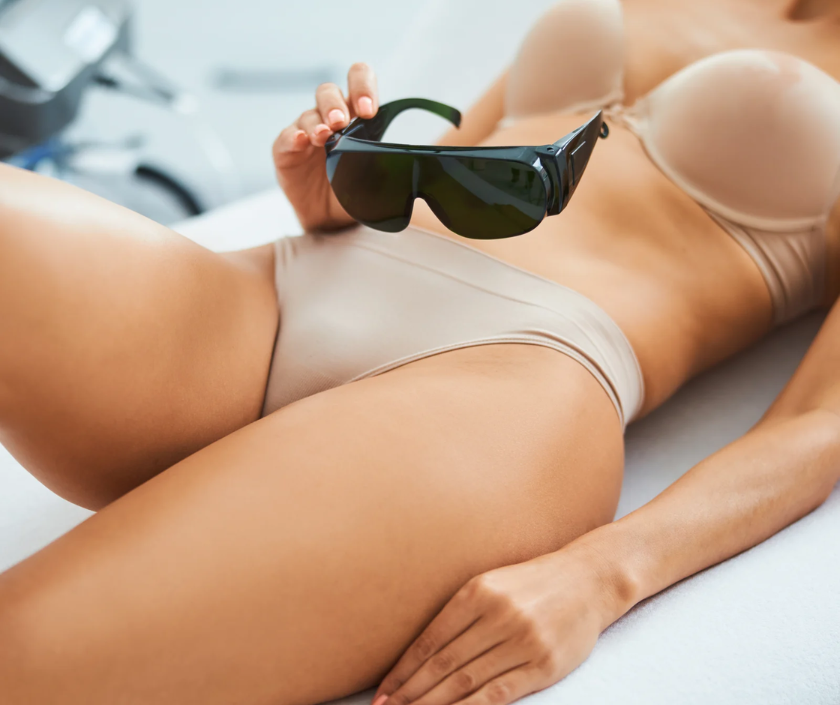
A session begins with shaving the area, protective eyewear for everyone present, and a check of settings on a small patch. Cooling gel or a chilled tip is used, and each pulse feels like a quick flick of a rubber band. Treatment of the bikini line and perigenital area normally takes fifteen to thirty minutes. Afterwards the skin looks pink and feels like mild sunburn for a day or so. Gym work, swimming, hot baths, intimacy and tight clothing are avoided for roughly two days, while treated hairs shed over the following fortnight.
How does laser compare with waxing, shaving and creams?
Laser costs more at the start yet reduces how often you must groom, whereas the older methods stay cheap and endless. Below is a general comparison, since individual response varies a great deal.
| Method | How long it lasts | Main drawback |
|---|---|---|
| Shaving | One to three days | Stubble, trapped hairs, razor rash |
| Waxing | Two to four weeks | Pain, inflamed follicles, dark marks |
| Hair removal cream | Three to seven days | Chemical burns and contact dermatitis on thin skin |
| Laser reduction | Months, with maintenance | Cost, several sessions, needs correct settings |
What does it cost in India?
Cost depends on the area covered, the device used, the number of sessions and the experience of the team, and fees are quoted in rupees. Packages that look unusually cheap often run low energy settings, which means more visits and less benefit. Quoting a figure before examining you would be guesswork, therefore we do not. Instead you receive a clear written estimate after examination, with the number of sessions set out plainly.
Why choose Elegance Clinic?
Elegance Clinic in Surat treats this as a medical procedure with a cosmetic purpose, so assessment comes before any device is switched on. Dr. Ashutosh Shah looks for hormonal causes, skin disease and infection first, and will say plainly when Bikini and Perigenital Laser Hair Reduction is unlikely to give you what you want. Hair reduction is well established in general terms, however evidence is limited on how one particular woman will respond, therefore we prefer careful estimates to bold claims. Our wider list of options sits on the laser hair reduction page.
A private consultation with Dr. Ashutosh Shah in Surat will tell you whether your hair and skin are likely to respond, and what a realistic plan looks like. Questions are welcome, and nobody will press you to book on the day.
Note: This page is for general information and is not a substitute for a medical consultation. Darkening of intimate skin is usually normal, and where it is not, the cause should be assessed before any cosmetic treatment. Results vary between individuals and no outcome can be promised.
Ready to Talk, Privately?
Book a confidential consultation with Dr. Ashutosh Shah. There is no pressure, only clear and honest guidance.