What is RF Chest Tightening?
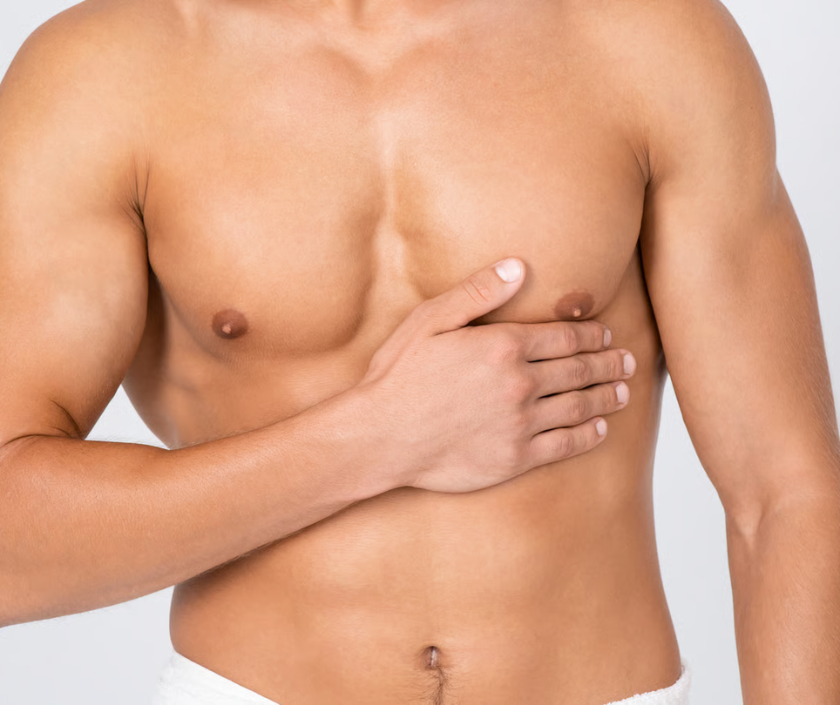
RF Chest Tightening is a non surgical treatment in which radiofrequency current heats the deeper layers of chest skin, with the aim of firming skin that has become mildly lax. Heat rather than cutting is the whole mechanism, so there is no wound, no stitching and no anaesthesia beyond a cooling gel. Men usually return to normal activity straight away. Nevertheless, this treatment addresses skin quality only, and it is honest to set out its limits before its benefits.
What will radiofrequency not do for the chest?
Three things sit outside what radiofrequency can achieve, and each deserves a blunt sentence. It will not remove fat, because heating skin does not reduce the fatty pad beneath it. Gland is likewise untouched, since glandular tissue is dense and only surgery takes it away. Skin that genuinely hangs, with a fold that sits over the chest wall when you stand, will not be lifted by any device and needs surgical excision. Consequently, a man sold a course of radiofrequency for any of those three problems has been sold the wrong treatment.
Is my chest problem fat, gland or skin?
Answering that question is the whole point of an examination, because the three feel quite different under the fingers. Pseudo gynecomastia is fat, soft and diffuse, and it moves and spreads when you lie down. True gynecomastia is glandular, and the giveaway is a firm rubbery disc centred under the nipple with a definite edge to it. Such a disc will not respond to warming, to cooling or to any other non surgical fat treatment, therefore men who feel one should read about gynecomastia and its surgical management. Loose skin, by contrast, wrinkles when pinched and stays creased for a moment afterwards. Our pseudo gynecomastia page explains the fatty pattern in more detail.
Which chest changes need checking before anything cosmetic?
A few findings must be assessed by a doctor first, since they can indicate disease rather than a change in shape. Men do develop breast cancer, uncommonly but genuinely, so a firm one sided lump is always investigated before cosmetic treatment is contemplated. Below are the changes that warrant prompt assessment.
- Any new lump, or a lump that is enlarging, especially if only one side is affected.
- Firmness that feels fixed to the skin above or the muscle below.
- Fluid or blood coming from a nipple, particularly from one side.
- A nipple that has recently retracted or turned inward.
- Skin that looks dimpled, puckered or pitted like orange peel.
- Ongoing pain confined to one side, or two sides that are rapidly becoming different.
Examination with ultrasound is the usual starting point, with mammography and a needle test added where needed. Nothing cosmetic should be planned until those results are clear.
How does radiofrequency work on the skin?
Radiofrequency passes a high frequency current through tissue, which resists the current and turns it into heat. Collagen fibres contract a little when warmed to a set range, and the body is thought to respond over subsequent weeks by laying down fresh collagen. Sensors report skin temperature continuously, because the target is steady warmth and never a burn. Whether that biological response translates into a firmer looking chest, however, remains uncertain and varies from man to man.
Who might benefit from it?
Men with mild laxity, reasonable skin thickness and a stable weight are the realistic candidates. Benefit is more likely when the chest is otherwise in good shape and only the skin surface has lost a little tone. Where gland is present, its cause is investigated before any treatment plan is drawn up. Puberty accounts for a large share of glandular enlargement in teenagers and often resolves without intervention. Drugs and medicines explain many adult cases, notably anabolic steroids, certain blood pressure tablets, some antipsychotics and cannabis. Disease of the liver, thyroid or kidneys can also produce it, and on rare occasions a testicular or adrenal tumour is responsible. Only after such causes are excluded or treated, and the chest has been stable for a period, is surgery considered.
What happens during a session?
You lie on a couch with the chest exposed and a conductive gel applied to the skin. The handpiece is then moved in slow overlapping passes across the marked area while the temperature climbs gradually. Most men describe the sensation as a deep warmth that becomes strong in places, at which point the operator eases off or lifts the handpiece. Sessions run roughly thirty to forty five minutes depending on the area covered. Afterwards the skin looks pink for an hour or two, and normal activity resumes at once.
How strong is the evidence behind these devices?
Evidence for radiofrequency on the male chest is thin, and regulators have not specifically approved these devices for reshaping or tightening it. Studies in this particular area are few, they involve small numbers, and outcomes are frequently judged by appearance rather than by measurement. Results therefore vary widely, and no responsible clinic can predict yours in advance. Marketing that promises a certain outcome should be treated as a warning rather than as reassurance. At Elegance Clinic the evidence is described as it stands, including where it is thin.
What results should I expect and how many sessions?
Expect subtle firming at best, noticeable to you in the mirror more often than to anyone else. Courses of four to six sessions, spaced one to two weeks apart, are typical, with any change appearing gradually over two to three months rather than immediately. Some men see nothing at all, and that possibility is discussed openly beforehand. RF Chest Tightening is best judged from standardised photographs at review, since memory flatters progress. Where the photographs show no difference, we advise stopping rather than selling another course.
What are the risks?
Redness, warmth and mild swelling for a few hours are the usual effects, and they settle without treatment. Burns and blistering are the main concern, particularly where energy is pushed too high or the handpiece pauses in one spot. Scarring and lasting changes in skin colour can follow a burn, and darker skin carries a somewhat greater risk of pigment change. Fat loss in the treated zone has occasionally been reported after aggressive heating, which can leave a hollow rather than a smoother line. Above all, the likeliest outcome is a course completed with very little to show for it.
What if the skin is genuinely hanging?
Hanging skin needs excision, and no amount of heating will change that. A useful test is to stand in front of a mirror and see whether a fold persists on its own, without pinching. Men who have lost a lot of weight often fall into this group, since skin that has been stretched for years rarely retracts fully. Surgery in that situation removes the excess and repositions the nipple where necessary, and it does leave scars that must be accepted as part of the trade. Options for the whole chest, surgical and otherwise, are set out across our breast and chest aesthetics section.
What will a course cost in India?
Fees in India depend on the device, on how many sessions the course contains and on where the clinic is located, and they are quoted in rupees. Packages usually work out lower per session than single visits, which is exactly why they are pushed hard elsewhere. Quoting a price before seeing a chest would be dishonest, so we decline to do it. You receive a clear written estimate after examination, covering the full course with nothing hidden. Given how uncertain the benefit is, paying session by session is often the wiser route.
Why choose Elegance Clinic?
Dr. Ashutosh Shah assesses the chest properly before recommending anything, and he will tell you when a treatment is unlikely to help you. Honesty about limits matters more here than in most areas, because the marketing around these devices is unusually loud. Men are welcome to ask for a plain explanation of what is fat, what is gland and what is skin in their own case. Appointments at our Surat centre are arranged discreetly, and you may reach us through the contact page.
Should you want an unhurried opinion, a private consultation with Dr. Ashutosh Shah can be arranged at a convenient time. Come with your questions written down if that helps. Deciding on the day is never expected of you.
Note: This page is for general information and is not a substitute for a medical consultation. Any new breast lump, nipple change or skin change should be assessed by a doctor before considering cosmetic treatment. Results vary between individuals and no outcome can be promised.
Ready to Talk, Privately?
Book a confidential consultation with Dr. Ashutosh Shah. There is no pressure, only clear and honest guidance.