
What is Post Pregnancy Breast Reshaping?
Post Pregnancy Breast Reshaping is a plan rather than a single operation, aimed at breasts changed by pregnancy and feeding. Depending on what has altered, it may involve a lift, a reduction, added volume, a smaller areola, or some combination agreed at consultation. Our parent page on breast lift surgery covers the lift itself in detail. Here the focus falls on a mother who has finished feeding and wants to know what can honestly be done.
What do pregnancy and breastfeeding actually change?
Pregnancy enlarges the milk producing tissue under hormonal drive, then feeding keeps it enlarged for months. Afterwards that glandular tissue shrinks back, however the skin envelope which stretched to hold it does not always shrink with it. Ligaments inside the breast are stretched as well, so internal support is reduced. Meanwhile the areola frequently widens and darkens, and it may never return to its earlier size. Weight gained and then lost during the same period adds a further layer of change. Consequently many women describe a breast that feels emptier, sits lower and looks longer than before.
Emptiness is felt most at the upper pole, the rounded area above the nipple, which loses tissue first when the gland shrinks. Fullness there gives a breast its line in clothes, therefore its loss is noticed quickly even when total size is unchanged. None of this signals illness, so treatment is entirely optional.
Which changes must be checked before anything cosmetic is planned?
Several findings need prompt medical assessment first, since each can be a sign of breast cancer. Get seen before booking any cosmetic procedure if you find a lump that is new or enlarging, or one that feels hard and does not move under the finger. Discharge from a nipple outside feeding counts too, especially when it is blood stained or comes from a single side. Watch also for a nipple that has recently pulled inward, for skin that dimples or puckers, and for a patch with the coarse texture of orange peel. Ongoing pain in one breast alone belongs on the list, as does a difference between left and right that is widening fast. Examination and imaging sort these out, occasionally with a needle sample. Surgery for appearance never comes before that answer.
When is the right time to think about surgery?
Timing matters more here than in almost any other breast operation. Wait until breastfeeding has completely finished, then allow a further three to six months for the glandular tissue to settle and the milk supply to switch off fully. Weight should be stable too, ideally for several months, because losing or gaining afterwards will change the result you paid for. Rushing produces a shape measured against a moving target. Patience, by contrast, lets the surgeon plan against the breast you are actually going to keep.
Will another pregnancy undo the result?
It can, and that needs saying clearly before any surgery. A later pregnancy enlarges the breast again, stretches the skin again, and may loosen a lift which had settled beautifully. Feeding afterwards applies the same forces a second time. For that reason most surgeons advise finishing your family first where this is practical. If another baby is likely, delaying is usually wiser than operating and then reoperating. Nobody can predict how much change a future pregnancy will bring, so the honest advice is to plan around it rather than hope.
Which options are used to reshape the breast?
Options come from a short list, matched to what has genuinely changed.
- A lift, or mastopexy, for loose skin and a low nipple, raising and tightening without changing volume.
- Reduction, where the breast has stayed heavy after feeding and size itself is the problem.
- Areola reduction through the border of the pigmented skin, where the areola has widened.
- Added volume, either fat taken from your own body or an implant, for emptiness at the upper pole.
- Lift and volume together, which is a longer operation and is sometimes staged.
What should I know before choosing an implant?
Anyone considering an implant deserves the whole picture rather than a sales version.
- Implants do not last a lifetime, and surgery to exchange or remove them is likely somewhere down the line.
- Scar tissue can tighten around the device, a problem called capsular contracture, which distorts shape and may be painful enough to need revision.
- An implant can rupture, and a silicone rupture may cause no symptoms at all, so follow up imaging is part of the arrangement.
- Rarely, a cancer of the immune system called BIA ALCL, breast implant associated anaplastic large cell lymphoma, is linked mainly with textured implant surfaces. It is uncommon, yet it is real and you deserve to hear about it.
- Some women report tiredness, joint aches and other body wide symptoms after implants, described as breast implant illness. These accounts deserve respect and discussion, while what is firmly proven stays limited.
- Physical maturity is required, so teenagers are not candidates.
One further point belongs with volume of any type. Both implants and fat transfer can make a mammogram harder to interpret, so tell the radiographer and radiologist exactly what was done, because additional or different views may be necessary. Fat transfer can leave small areas of calcification or oil cysts, and separating those from a cancer on imaging takes extra care.
Where do the scars go and how do they behave?
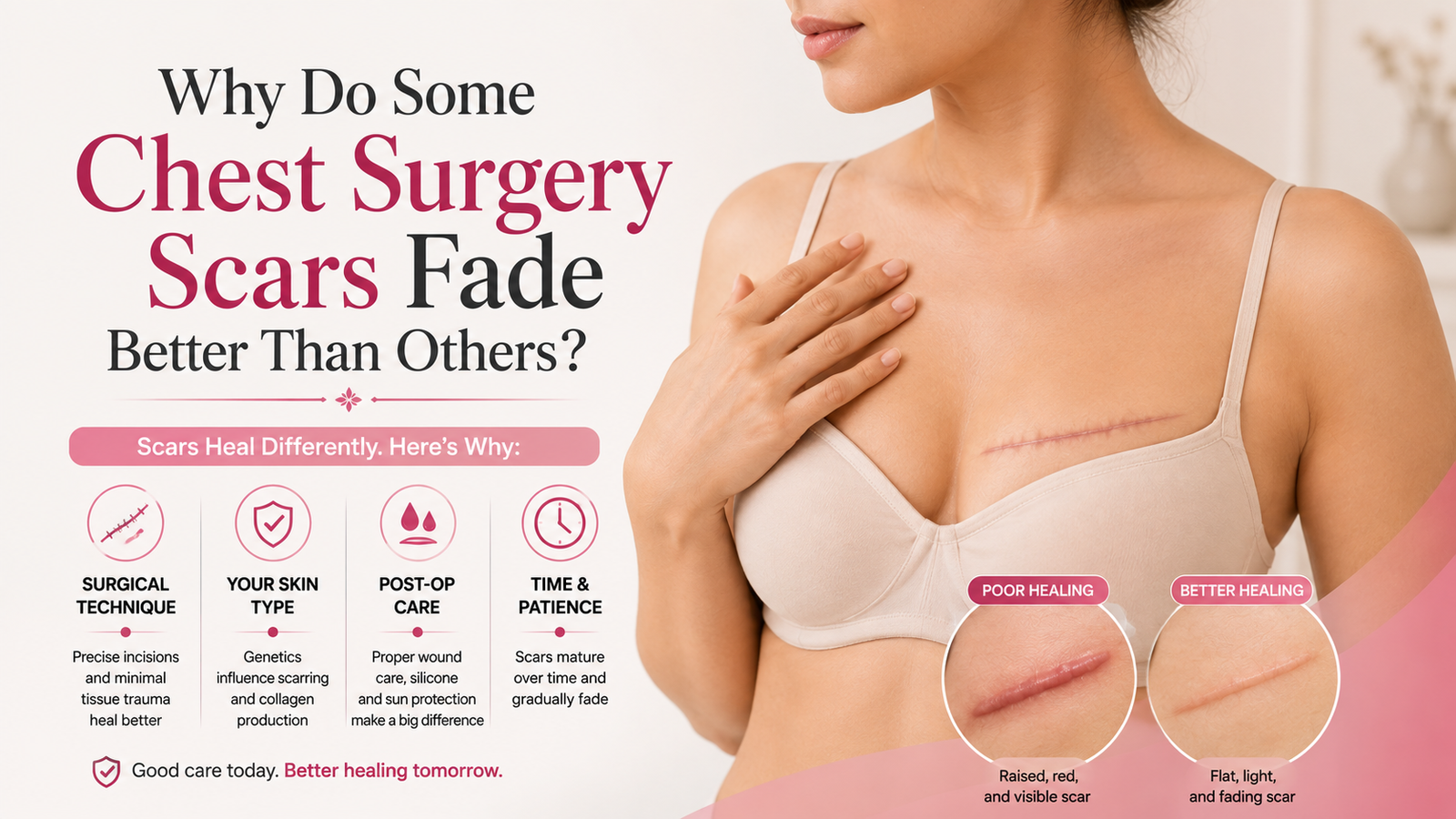
Scar position follows the technique, and reshaping always trades a scar for a better shape. An areola reduction leaves a fine circle at the edge of the pigmented skin, which usually settles into the colour change and hides well. A vertical lift adds a line running from the areola down to the crease beneath the breast. Heavier reshaping needs a third scar lying inside that crease, hidden by a bra. All look pink and firm for the first few months. Fading takes a year or longer, while darker or thicker skin can produce raised scars, so this possibility is discussed before you decide anything.
Can I breastfeed after reshaping?
Possibly, though it cannot be promised. Surgery near the areola risks dividing milk ducts, and any technique disturbing tissue directly under the nipple carries more risk to feeding than one that does not. Techniques differ, so the plan can lean towards protecting ducts when you say that future feeding matters to you. Raise it at the first appointment rather than the last. Even with the most careful method, a later pregnancy may or may not produce a full milk supply, and that uncertainty is part of the decision.
How long does recovery take at home?
Recovery is measured in weeks for daily life and in months for shape. Expect soreness, tightness and swelling at first, controlled with tablets and a supportive bra worn around the clock for roughly six weeks. Light household activity restarts within days, while desk work usually waits one to two weeks. Lifting a toddler is the hard part for young mothers, therefore arrange help for at least three weeks. Exercise involving the chest and arms resumes at about six weeks. Final shape is judged after six months, once swelling has gone and the tissues have relaxed.
What are the risks of reshaping?
Every option here carries risk, and pretending otherwise would be dishonest. Bleeding, infection, slow wound healing, altered or reduced nipple sensation and visible scarring head the list. Asymmetry in small degrees is common, partly because breasts were never identical to begin with. Wound problems are far more likely in smokers, so stopping well beforehand is not negotiable. Revision surgery is occasionally needed, either to adjust the shape or to deal with a complication.
What will the surgery cost in India?
Cost depends on which parts of the plan you actually need, since a simple areola reduction and a full lift with added volume sit far apart. Rupee figures vary with the city, the hospital, anaesthetic time and any device used. No price appears here, because quoting one before examining you would mislead. After consultation you receive a written estimate covering the surgery, the stay, garments and review visits.
Why choose Elegance Clinic?
Mothers are told the truth here about timing, including when the honest advice is to wait rather than operate. Dr. Ashutosh Shah examines, measures and explains the choices across the breast and chest aesthetics pillar, then sets out what each one can and cannot achieve. Discretion is standard, and our privacy and confidentiality practice is written for women who value it.
For an unhurried opinion on Post Pregnancy Breast Reshaping, you are welcome to book a private consultation with Dr. Ashutosh Shah in Surat.
Note: This page is for general information and is not a substitute for a medical consultation. Any new breast lump, nipple change or skin change should be assessed by a doctor before considering cosmetic treatment. Results vary between individuals and no outcome can be promised.
Ready to Talk, Privately?
Book a confidential consultation with Dr. Ashutosh Shah. There is no pressure, only clear and honest guidance.