What is Fat Grafting Breast Augmentation?
Fat Grafting Breast Augmentation uses your own fat to add volume to the breast, with no implant of any kind. Liposuction removes fat gently from an area such as the abdomen, flanks or thighs, and the fat is then processed before being injected into the breast in small threads. Because the tissue is your own, no manufactured device sits inside you and no exchange surgery for a device is ever required. However, living fat must find a blood supply to survive, therefore the limits described below are real and unavoidable.
How much bigger can I realistically become?
Gains are modest, therefore any clinic suggesting otherwise is overselling. Most women achieve roughly half a cup to one cup size from a single session, since only a limited volume of fat can be spread through the breast at one sitting without crowding it. Overfilling defeats itself, because fat packed too densely loses its blood supply and dies. Consequently the honest promise is a natural fullness and a softer contour, not a dramatic jump in size.
Why might I need more than one session?
Some of every graft is reabsorbed, which is normal biology rather than a failure of technique. Roughly a third to a half of the transferred fat may disappear over the first few months, while the portion that gains a blood supply tends to stay. Therefore a second session, planned some months later, is commonly needed where you want more volume. Each round is a fresh operation with fresh recovery, so time and cost multiply accordingly.
Do I have enough fat to donate?
Donor supply, above all, decides eligibility more often than anything else. A slim woman with little spare fat at the abdomen, flanks, thighs or arms may not have enough to harvest, while stretching a small harvest across both breasts rarely satisfies anyone. Body contouring at the donor area is a genuine bonus of this operation, meanwhile a very lean frame simply cannot provide the raw material. Stable weight matters as well, since grafted fat shrinks when you lose weight later.
Which breast symptoms need checking before any treatment?
Certain findings call for assessment straight away, because they can indicate breast cancer, and no cosmetic procedure should come first.
- a lump that is new to you, or one that is steadily enlarging
- hardness in a lump, or a lump that feels tethered rather than mobile
- discharge from a nipple, above all bloody discharge or discharge from one breast alone
- a nipple that has turned inward recently or become retracted
- puckered or dimpled skin over any part of the breast
- skin thickened into an orange peel pattern
- continuing pain limited to one side
- a fast growing difference in size or shape between the breasts
Examination and imaging come first, with a needle sample where the picture is unclear. Only after the breast is cleared does any discussion of appearance make sense.
How is the fat harvested and injected?
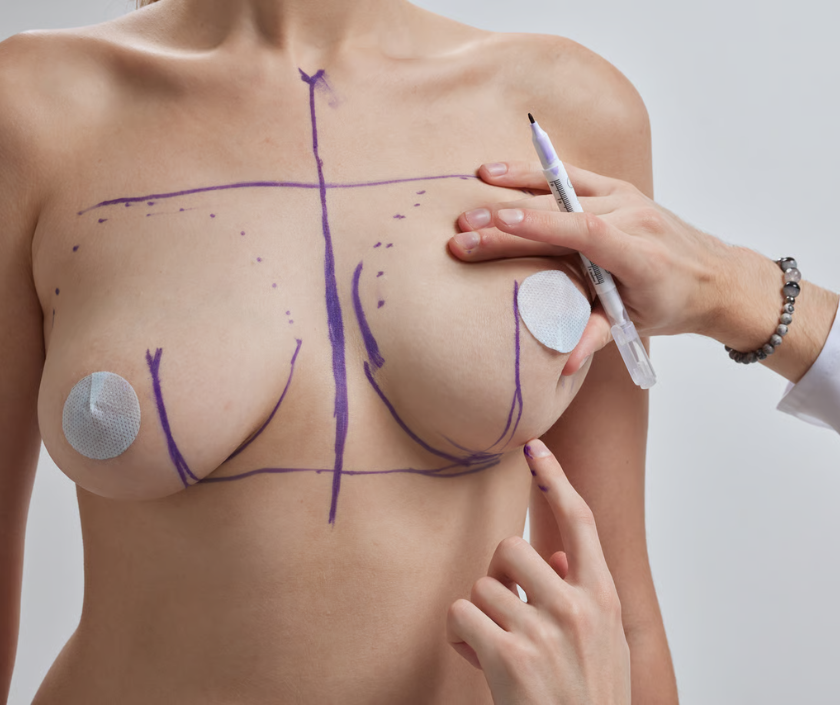
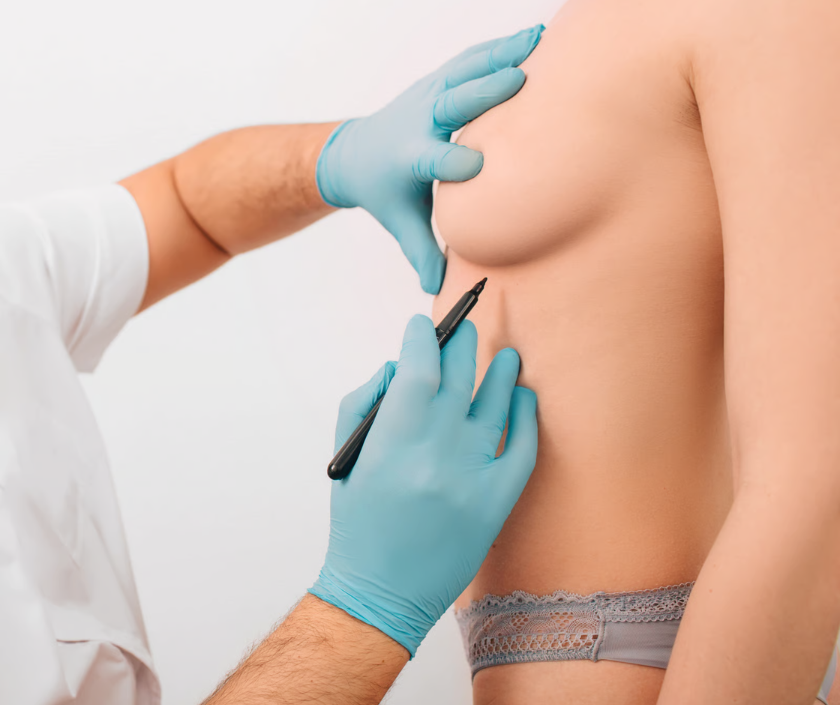
General anaesthesia is usual, since two areas are treated in the same sitting. Liposuction through tiny openings collects the fat with as little damage to the cells as possible. Processing then removes blood, fluid and oil so that concentrated fat remains. Injection follows through fine cannulas, laying many small threads at different depths and fanning them widely, because scattered parcels survive far better than one large pool. Nothing is injected under high pressure, and the skin openings are so small that stitches are seldom needed.
Why does this matter so much for breast cancer screening?
Grafted fat can produce calcifications, oil cysts and firm areas that look suspicious on a mammogram, so this point deserves your full attention. Radiologists can usually tell benign graft changes apart from cancer, yet they need to know what was done and when in order to do so. Always tell the radiographer and the radiologist that you have had fat transferred to the breast, at every future appointment. Extra or different views may then be taken, meanwhile ultrasound or MRI can be added and occasionally a needle sample is arranged to settle doubt. Routine screening for your age carries on exactly as recommended, because grafting changes the reading of an image rather than the need for one.
Will fat grafting affect breastfeeding?
Many women feed normally afterwards, however no promise can be made that feeding will be unaffected. Injections pass through breast tissue and near the ducts, so some risk exists, and it differs with the technique and the volume used. Sensation in the nipple may also change. Consequently, tell us at consultation if a pregnancy is planned, so the timing and the plan can take your family into account.
What can go wrong?
Complications are usually local, yet they are not trivial. Fat necrosis leaves firm lumps where graft has died, while oil cysts can form and sometimes need draining. Infection, bruising, prolonged swelling, irregular contour and asymmetry are all possible in the breast, meanwhile the donor area can end up dimpled, numb or uneven. Rarely, liposuction carries risks of fluid shifts or clots. Above all, any lump appearing later is investigated rather than assumed to be old graft.
Who is a good candidate, and who is not?
Suitable women have adequate donor fat, a stable weight, healthy breasts and modest expectations, since the technique rewards patience. Those seeking a large increase in one operation are better served by a different plan, since this technique cannot deliver it. Untreated breast symptoms, active infection, heavy smoking and unrealistic hopes all rule the procedure out for now. Physical maturity is expected as well, therefore this is not an operation for teenagers.
What is recovery like?
Two areas are healing at once, therefore plan for that. Breast soreness is usually mild, whereas the liposuction sites feel bruised, tight and tender for two to three weeks. Compression garments are worn over the donor areas, while firm pressure, sleeping face down and tight bras over the breasts are avoided early because young grafts are fragile. Desk work often resumes within a week, meanwhile exercise waits four to six weeks.
How does this compare with having an implant?
Implants give more volume in one step and a more predictable size, yet they bring device related problems that grafting avoids entirely. Such devices are not lifetime devices, therefore exchange or removal is likely at some stage. Capsular contracture can tighten and distort the breast, rupture can occur and may be silent with a gel filling, and BIA ALCL, breast implant associated anaplastic large cell lymphoma, is a rare immune system cancer linked mainly with textured surfaces. Breast implant illness is the term used for body wide symptoms some women report after implants, acknowledged honestly here. By contrast, grafting trades all of that for a smaller and less predictable gain.
What does it cost in India, and why choose Elegance Clinic?
Fees in rupees depend on the donor areas treated, theatre and anaesthesia time, and also on whether a second session becomes advisable later. No price can be quoted honestly before examination, therefore a clear written estimate follows your consultation. Dr. Ashutosh Shah will say plainly whether your donor fat and your goals actually fit this method.
A private appointment in Surat gives you time to ask everything without hurry, since nothing here should be rushed. Comparing this route against breast augmentation with a device is part of that conversation, and our full range of breast and chest treatments is open for you to read. Whenever you feel ready, please contact us to arrange a suitable time.
Note: This page is for general information and is not a substitute for a medical consultation. Any new breast lump, nipple change or skin change should be assessed by a doctor before considering cosmetic treatment. Results vary between individuals and no outcome can be promised.
Ready to Talk, Privately?
Book a confidential consultation with Dr. Ashutosh Shah. There is no pressure, only clear and honest guidance.