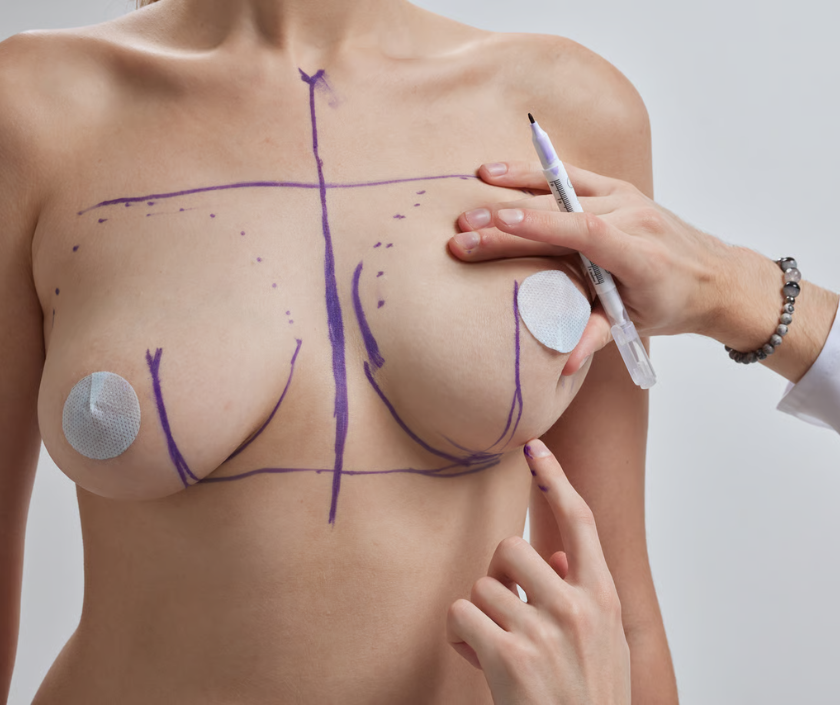
What is breast skin pigmentation treatment?
Breast Skin Pigmentation Treatment means finding out why the colour of the skin on or around the breast has changed and, where there is a treatable cause, addressing it. It is not an attempt to alter a woman's natural colouring, and it should never be sold as one. Most of the useful work is medical rather than cosmetic, because friction, inflammation and infection are common causes and they respond to treatment of the cause. Meanwhile, the areola in a healthy woman needs no treatment at all.
Is darker skin on the breast and areola normal?
Yes, completely. The areola and the skin immediately around it contain more pigment than the skin of the chest, and that difference is normal anatomy present in everyone. How dark it is varies widely between women, depending on genetics, hormones and natural skin tone, and every one of those variations is healthy. Darker areolar skin is not dirt, not poor hygiene, not a disease and not a sign that anything has gone wrong. Nobody needs to change it, and nothing about a lighter shade is better, cleaner or more youthful.
Does pregnancy change the colour?
Pregnancy commonly darkens the areola and the nipple, and this is an expected hormonal change rather than a problem. Many women also notice a darker line down the abdomen and darker skin in other folds at the same time. Colour usually lightens somewhat after delivery and after breastfeeding ends, though it often does not return exactly to what it was before. Importantly, no treatment is needed for this, and treating during pregnancy or breastfeeding is generally avoided anyway.
When does a colour or texture change need urgent medical assessment?
A recent change affecting one side needs prompt medical assessment, and this is the most important paragraph on the page. Where the nipple or areola on one side develops a change in colour or texture, especially with scaling, crusting, itching, thickening, ulceration or discharge, please see a doctor without delay, because this pattern can indicate Paget disease of the breast, an uncommon condition associated with underlying breast cancer. It is often mistaken for eczema and treated with creams for months, which delays diagnosis. Any nipple rash that persists beyond a couple of weeks, or that affects one side only, should be examined rather than treated blindly.
The following also need assessment before any cosmetic treatment is considered, since they can be signs of breast cancer.
- A new lump, an enlarging lump, or one that feels hard or fixed
- Nipple discharge, particularly if bloody or from one side only
- A nipple that has newly turned inward or become retracted
- Dimpling or puckering of the skin, or an orange peel texture
- Persistent pain confined to one side
- A quickly changing difference between the two breasts
Doctors assess these with examination and imaging such as ultrasound or mammography. Most turn out to be harmless, yet cosmetic treatment is never the first step.
What causes darkening around the breast and under the bra line?
Everyday mechanical and inflammatory causes account for most of it, and several are easy to correct.
- Friction and rubbing from a bra that is too tight, an underwire that digs, or straps that cut in
- Sweat and occlusion under the breast fold, especially in the Surat summer
- Post inflammatory pigmentation left behind by acne, folliculitis, heat rash or a healed rash
- Fungal infection in the fold, which itches, scales and leaves marks
- Contact dermatitis from detergents, perfumed soaps, deodorants or hair removal creams
- Acanthosis nigricans, a velvety darkening in folds and around the neck, which can signal insulin resistance, type 2 diabetes, obesity or polycystic ovary syndrome
Treating the cause often improves the colour on its own, which is why assessment comes before any cosmetic plan. Acanthosis nigricans in particular calls for blood tests and medical management, since the right answer there is metabolic rather than cosmetic.
Which creams are genuinely dangerous?
Unregulated lightening products sold online and over the counter cause real harm, and this warning is not exaggerated. Mercury containing creams are toxic and can damage the kidneys and nerves, yet they are still sold in unmarked jars. Potent topical steroids are widely misused as lightening creams, and they thin the skin, cause stretch marks, worsen fungal infection and produce rebound darkening once stopped, so steroid modified fungal infection has become a widespread problem across India. High strength hydroquinone used without supervision can cause paradoxical darkening that is difficult to reverse. Please bring whatever you are applying to your appointment so it can be reviewed honestly.
What is the realistic goal of treatment?
The realistic goal is an evener tone and a treated cause, not a change to your natural colouring. Where friction, infection or inflammation is responsible, removing the trigger and treating the condition does most of the work. Results are gradual and partial, and they need maintenance, because the same rubbing and sweating return the moment habits do. Recurrence is normal rather than a failure of treatment.
What options exist, and what is avoided?
| Approach | Suited to | Caution |
|---|---|---|
| Friction control and bra refitting | Strap and band line darkening | Slow, but the most durable measure |
| Antifungal or medical treatment | Infection or dermatitis | Diagnosis needed first |
| Prescribed topical agents | Post inflammatory marks | Supervision essential, irritation possible |
| Very superficial peels | Uneven tone on the chest | Not used on the areola |
| Metabolic assessment | Velvety fold darkening | Blood tests and medical care |
Aggressive lasers and peels are not used on the nipple or areola, because that skin is delicate and the risk of a burn, a scar or worse pigmentation outweighs any cosmetic aim. Related options are compared on our breast skin treatments page.
Who is a suitable candidate?
Suitable candidates have a clear, treatable cause and reasonable expectations. Breast Skin Pigmentation Treatment fits a woman with post inflammatory marks after a healed rash, or with darkening along bra lines that improves once the bra fits properly. By contrast, it is not offered during pregnancy or breastfeeding, not offered where a nipple change has not been assessed, and not offered to anyone seeking a change to their natural skin tone.
How is treatment carried out?
Care begins with a consultation and examination rather than a machine. Photographs are taken in standard lighting so genuine change can be judged later, the cause is identified, and medical treatment starts where one is needed. Only afterwards, and only if it adds something, is a gentle topical or a very superficial in clinic measure introduced, always after a patch test. Sessions are brief, done on a day care basis, and a female attendant is present throughout.
What is recovery like, and what are the possible problems?
Recovery from the gentle measures used here is usually a day or two of mild dryness or pinkness. No treatment is risk free, however, and pigmented skin can respond unpredictably. Irritation, further darkening, patchy lightening, burns and infection are the main concerns, and the risk of worsening pigmentation is exactly why strong treatments are avoided in this area. Sun exposure and continued friction undo progress quickly, therefore aftercare carries as much weight as the treatment itself.
What is the cost in India?
Costs are quoted in rupees and depend mostly on what the assessment finds, since the bill for a fungal infection differs completely from the bill for a course of topicals. Blood tests are added where a metabolic cause is suspected. Long prepaid packages are best avoided in this area, because the plan changes as the cause becomes clear. Written costing is shared once the examination is complete.
Why choose Elegance Clinic?
Elegance Clinic in Surat starts from the position that your natural colouring is not a defect. Dr. Ashutosh Shah examines the breast, checks any nipple change properly rather than prescribing a cream for it, reviews whatever you have been applying, and treats the cause where one exists. Wider information sits across the breast and chest aesthetics section, and consultations are private and unhurried.
If a colour change has worried you, or if a nipple rash has not settled, a private consultation with Dr. Ashutosh Shah in Surat can be arranged discreetly and soon. Bring your creams and any previous reports along. Ways to reach the clinic are on our contact page.
Note: This page is for general information and is not a substitute for a medical consultation. Any new breast lump, nipple change or skin change should be assessed by a doctor before considering cosmetic treatment. Results vary between individuals and no outcome can be promised.
Ready to Talk, Privately?
Book a confidential consultation with Dr. Ashutosh Shah. There is no pressure, only clear and honest guidance.