What is Breast Contour Correction?
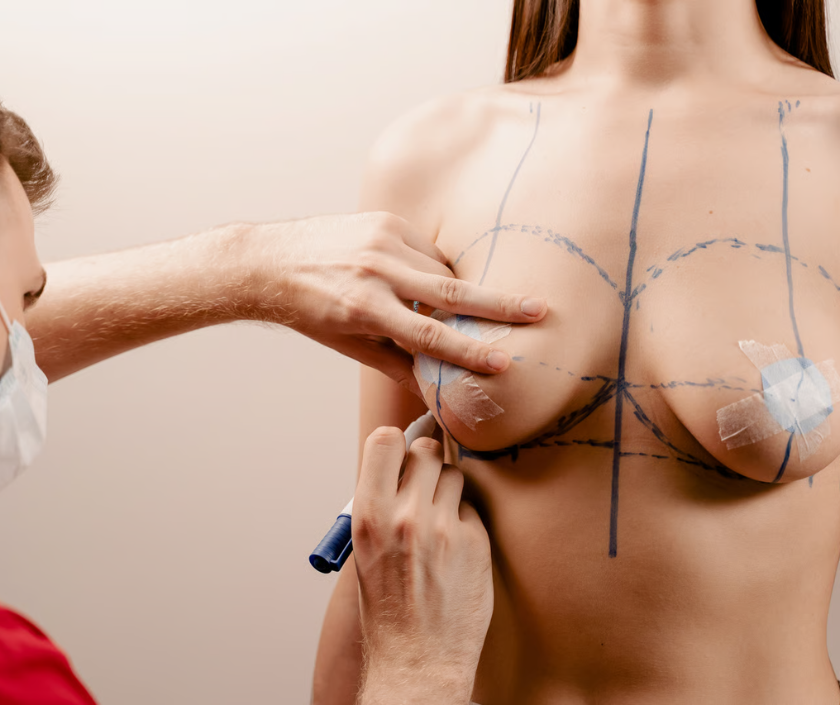
Breast Contour Correction is precision work that evens out small dips, ridges and irregularities in the shape of a breast rather than changing its size. Fat is taken from elsewhere on your body, then placed in tiny amounts exactly where the surface falls away. Because the volumes involved are small, the aim is a smoother line instead of a bigger breast. Surgeons describe it as refinement, since the underlying breast is left largely as it is. Meanwhile our breast fat grafting page explains the technique in more depth.
Why do women ask for this kind of correction?
Most women come because one particular spot bothers them, not because they dislike the whole breast. Common complaints often include a dent left after a lump was removed, a visible step where an implant edge meets thin tissue, fine rippling that shows through the skin, and a hollow at the top of the breast that makes clothes sit oddly. Importantly, the problem is usually something they can point to with one finger. Therefore the plan is drawn around that area alone, which keeps the surgery small.
Which contour problems can grafted fat improve?
Grafted fat usually suits shallow, localised problems where soft tissue is simply missing. Suitable examples include the following, although each one still needs examination before any plan is made.
- A dent or divot left behind after a benign lump or a biopsy healed unevenly.
- Visible step at the upper or inner border of an implant, where thin tissue shows the edge.
- Fine rippling or wrinkling that can be seen or felt through the skin.
- Hollowing at the top of the breast after breastfeeding or after weight loss.
- Small differences between the two sides that do not justify a full reshaping operation.
By contrast, a genuinely sagging breast or a nipple sitting too low will not be corrected by adding fat. Lifting surgery answers those problems far better, therefore we say so plainly rather than offer a smaller operation that cannot deliver. Details sit on our breast lift surgery page.
Which breast changes need checking before any cosmetic treatment?
Some breast symptoms need prompt medical assessment first, since cosmetic surgery is never the right starting point. Report the following without waiting:
- A new lump, a lump that is growing, or one that feels hard or fixed.
- Nipple discharge, above all when it is bloodstained or comes from one side.
- Newly inverted or retracted nipple.
- Dimpling, puckering or an orange peel texture in the skin.
- Persistent pain on one side, or a difference between the sides that is changing quickly.
These can also be signs of breast cancer. Assessment uses examination and imaging, sometimes with a needle test, therefore cosmetic surgery is never the first step. Checking usually brings reassurance, however the checking must come first.
Who is a good candidate?
A good candidate usually has a small, clearly defined contour problem, enough spare fat to harvest and realistic expectations. Stable weight matters, because grafted fat behaves like the area it came from and shrinks when you lose weight later. Non smokers heal better, so stopping well before surgery is asked for. Meanwhile, anyone with an unexplained breast symptom is investigated for that first, whatever the cosmetic wish. Above all, a woman who wants a dramatic size change is better served by a different conversation.
How is the procedure done?
The operation usually begins with gentle liposuction from a donor area such as the abdomen, thighs or flanks. Fat is then processed to remove fluid and oil. Using a fine blunt cannula, the surgeon lays that fat in many small threads through tiny entry points, building the surface up in layers rather than one lump. Because each pass adds only a little, the correction is built slowly and judged as it goes. Anaesthesia is often sedation with local anaesthetic, although a general anaesthetic suits larger work, and many small corrections are done as day care.
Why is more than one session often needed?
Not all transferred fat survives, so touch up sessions are common and should be planned for from the start. Some grafted cells fail to pick up a blood supply and are quietly reabsorbed over the first few months, which means the shape you see at two weeks is not the shape you keep. Surgeons therefore fill a little generously, then reassess once the tissue has settled. Two sessions are frequent for a moderate defect, although a shallow dent sometimes settles nicely after one. Honest planning therefore prevents disappointment later.
What is recovery like?
Most women return to desk work within a few days, since the incisions are tiny. Bruising and swelling affect the donor area more than the breast, and a compression garment is usually worn over the harvest site. Lifting, gym work and running then pause for a few weeks. Pressure on the treated area is discouraged early, because squeezing freshly grafted fat reduces how much of it survives.
What results should I expect?
Expect a softer, smoother contour rather than a transformed breast. Swelling usually settles over three to six months, once the surviving fat has stabilised. Once settled, that fat behaves like your own tissue, so it moves and ages with you and it responds to weight change. Results vary between individuals, and a very thin skin envelope limits how much can be hidden. Photographs taken beforehand also help both of us judge the change fairly.
What are the risks?
No surgery is risk free, and this is minor surgery rather than trivial surgery. Bruising, swelling, temporary numbness and some asymmetry are often seen. Less often, firm areas of fat necrosis form where grafted cells did not survive, and these can be felt as small lumps. Infection, contour irregularity and an uneven donor site are possible too. Breast surgery can also affect the ability to breastfeed, and the risk differs by technique, particularly where work sits close to the areola or the ducts, therefore tell us if you are planning a family so the plan can allow for it.
Will fat grafting affect my mammogram?
Yes, it can make a mammogram harder to read, and this genuinely matters. Grafted fat may produce calcifications and oil cysts that appear on imaging and must be told apart from cancer, which sometimes means extra views, an ultrasound or a needle sample. Always tell the radiographer and the radiologist exactly what has been done to your breast and when, because a reader who knows the history interprets the pictures far better than one who does not. Keep your operation details with your medical records too. Routine screening should continue as your doctor advises, therefore none of this is a reason to skip a mammogram.
What if the problem sits at the edge of an implant?
Fat can be layered over a visible implant edge to soften it, however the implant itself deserves an honest conversation. Implants are not lifetime devices, they do not last forever, and further surgery to exchange or remove them is likely at some point in a woman's life. Capsular contracture, where scar tissue tightens around the implant and changes its shape or causes pain, may then need revision surgery. Rupture can happen and may be silent with silicone, so follow up imaging is advised. BIA ALCL, or breast implant associated anaplastic large cell lymphoma, is a rare cancer of the immune system linked mainly with textured surface implants, so it is named here rather than hidden. Breast implant illness, the term used for a range of systemic symptoms some women report after implants, is discussed openly, neither dismissed nor overstated. Teenagers should not have implants, since a woman needs to be physically mature first.
What does it cost in India?
Cost in rupees usually depends on the donor site, the volume needed, the anaesthesia used, theatre time and whether a second session is likely. Small single area work sits well below a full augmentation, although a second session changes the total. A clear written estimate for Breast Contour Correction is given after examination, with surgeon, theatre, anaesthesia and review visits itemised. Most insurance policies in India exclude cosmetic work, therefore plan for this as a personal expense.
If one small dip or ridge has bothered you for years, then a private consultation at Elegance Clinic in Surat is worth the time. Dr. Ashutosh Shah will examine you properly, say honestly when the answer is no, and give you time to decide. Confidentiality is respected throughout, and you can reach us through our contact page or read the wider section on breast and chest aesthetics.
Note: This page is for general information and is not a substitute for a medical consultation. Any new breast lump, nipple change or skin change should be assessed by a doctor before considering cosmetic treatment. Results vary between individuals and no outcome can be promised.
Ready to Talk, Privately?
Book a confidential consultation with Dr. Ashutosh Shah. There is no pressure, only clear and honest guidance.