
What is Masculinization Body Contouring?
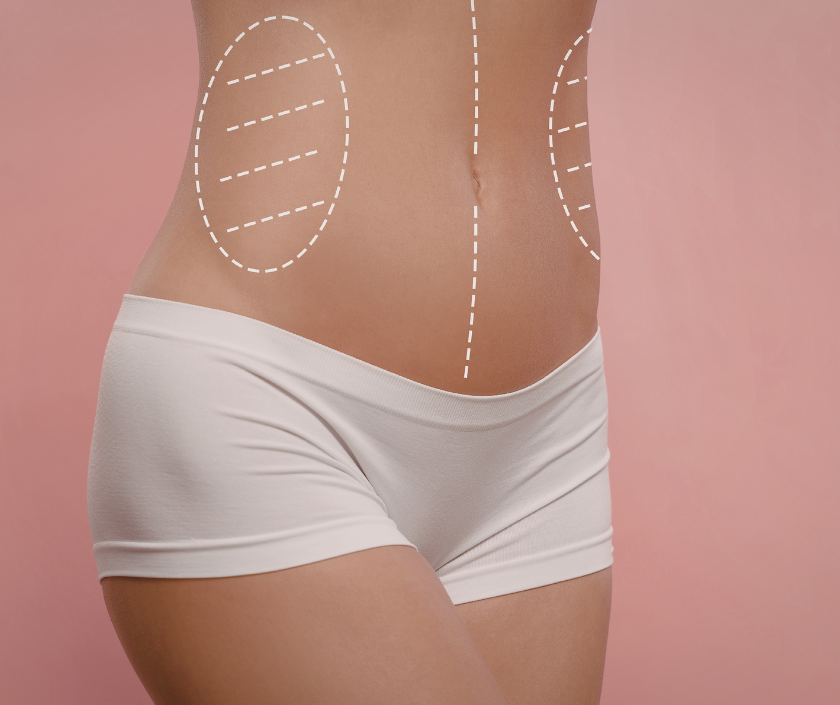
Masculinization Body Contouring uses selective fat removal, and occasionally small volume grafting, to shift the silhouette towards a squarer, flatter shape. Fullness at the hip, outer thigh and lower flank is reduced, while the line from the chest down to the waist is kept straighter rather than curved. Cisgender men who carry weight in a lower body pattern choose it, and so do transgender men who want their outline to match how they live. Underneath the label the technique is ordinary liposculpture applied with a different aesthetic target.
Which features make a torso read as masculine, and which areas are treated?
A torso reads as masculine mainly through width at the top and comparatively little narrowing at the waist. Where a curvier outline depends on a small waist above a full hip, a squarer one depends on the opposite, so treatment concentrates on the lower half of that relationship. Areas commonly addressed include the outer hip, the upper outer thigh, the buttock crease region and the lower flank. Meanwhile fat above the waist is usually left alone or reduced only lightly, since taking too much there exaggerates the very curve being avoided.
- Outer hip, to flatten the widest point of the lower body.
- Upper outer thigh, so the line falls straighter from hip to knee.
- Lower flank, keeping the waist less defined rather than more.
- Front of the abdomen, where definition is wanted along the midline.
- Occasional small grafting to the upper flank or chest border for width.
Can surgery narrow my hips?
Surgery narrows the soft tissue over the hip, not the hip itself. Pelvic width, the angle of the thigh bones and the width of the shoulders are skeletal, therefore they stay exactly as they are. Someone with a wide pelvis will see a flatter, less rounded outline yet the same bony width beneath it. Being told this early saves a great deal of frustration, and any surgeon who claims to reshape the pelvis for appearance should be avoided.
Is this a weight loss operation?
Not in any sense. Liposuction is contour work for a body already at a stable weight and it is not a treatment for obesity, so the scale barely moves and none of the health benefits of genuine weight loss follow. Six months of steady weight is expected before surgery is planned. Skin quality sets the ceiling on the outcome as well, because loose skin will not tighten over a flatter contour and may hang more obviously once volume beneath it is gone. Excision, with its scar, is the honest option when laxity is significant.
Does testosterone therapy change fat distribution?
It does, gradually, which makes timing part of the plan. Testosterone therapy tends to move fat away from the hip and thigh towards the abdomen across months and years, so a body treated very early in therapy may continue changing afterwards. Allowing that shift to settle usually produces a steadier result. Any decision about pausing or continuing hormones around an operation is made together with your prescribing doctor and the surgical team rather than independently. Please bring current prescriptions and recent blood results to the consultation.
How does this relate to gender affirming surgery?
Contouring is one element within a much broader area of care. Some transgender men have contouring alone, others combine it with chest surgery, and many have neither, since these are personal decisions rather than obligations. Recognised standards of care exist, and assessment, informed consent and occasionally documentation form part of the process, though the specifics differ by surgeon, hospital and country. What applies to you will be explained plainly by our team. Broader information is available through our gender affirming surgery section.
Who is a suitable candidate?
Good candidates are healthy, weight stable and comfortable with an outcome shaped by their own skeleton. Pinchable fat over the hip or thigh is needed, since suction has nothing to work with otherwise. Anyone still early in hormone therapy is usually advised to wait. Diabetes control, smoking cessation and a review of blood thinning medicines all come before scheduling.
How is the surgery carried out?
Planning begins with markings drawn standing, followed by general anaesthesia or sedation according to the extent of the work. Tumescent fluid is infiltrated, then fat is removed through fine cannulas in overlapping passes so the surface stays even. Deliberate under treatment of the waist keeps the outline square instead of curved, which is a judgement made during surgery rather than beforehand. Where a little width is wanted higher up, processed fat can be grafted into the subcutaneous layer. Sittings usually last two to three hours as day care.
What is recovery like?
Most people are walking the same evening and back at a desk within a week. Compression garments are worn for around six weeks, and gym training resumes after four to six weeks. Bruising fades inside a fortnight, whereas deeper swelling settles across three months. Numb patches over treated skin are common early, though sensation usually returns. Heavy manual work needs longer, so plan leave accordingly.
What results are realistic?
Expect a flatter, straighter outline through the hip and thigh, seen most clearly in trousers and fitted clothing. Bone structure decides the remainder, therefore two people having identical surgery finish with different outlines. Judgement is best delayed until three months, once swelling has resolved. Fat cells removed do not return, however remaining cells enlarge with weight gain and blur the definition. Results vary between individuals and no specific outcome can be promised.
What are the risks?
No surgery is risk free, and this is no exception. Common problems include bruising, swelling, seroma, numbness, contour irregularity, dimpling and asymmetry. Infection, bleeding and anaesthetic complications occur less frequently. Clots in the leg or lung are uncommon, so early walking and preventive measures form part of routine care. Over aggressive removal leaves hollows that are difficult to correct, which is why conservative technique matters more than dramatic marketing photographs.
What will this cost in India?
Charges in rupees reflect the number of areas treated, theatre and anaesthetic time, garments and follow up visits. Treating hip and outer thigh together costs more than either alone, although combining them in one sitting is cheaper than two. A clear written estimate is provided after examination. Aesthetic contouring is not covered by insurance in India, and price should never be the main reason for choosing a surgeon.
Why choose Elegance Clinic?
Because respect and accuracy come as standard rather than as an extra. Dr. Ashutosh Shah discusses Masculinization Body Contouring in terms of what your frame allows, coordinates timing with your prescribing doctor where hormone therapy is involved, and declines requests that soft tissue surgery cannot deliver. Planning sits alongside related work under feminisation liposculpture, where the opposite aesthetic goal is described on our Full Body Feminine Contouring page.
To discuss what a squarer outline would take in your case, a private consultation in Surat is the sensible next step. Bring any hormone prescriptions and a note of your weight history. Appointments can be booked through our contact page.
Note: This page is for general information and is not a substitute for a medical consultation. Every procedure carries risk, results vary between individuals, and no outcome can be promised. Dr. Ashutosh Shah will advise honestly whether a procedure is appropriate for you.
Ready to Talk, Privately?
Book a confidential consultation with Dr. Ashutosh Shah. There is no pressure, only clear and honest guidance.