
Mons Pubis Reduction Risks: Is It Safe? Side Effects & Complications
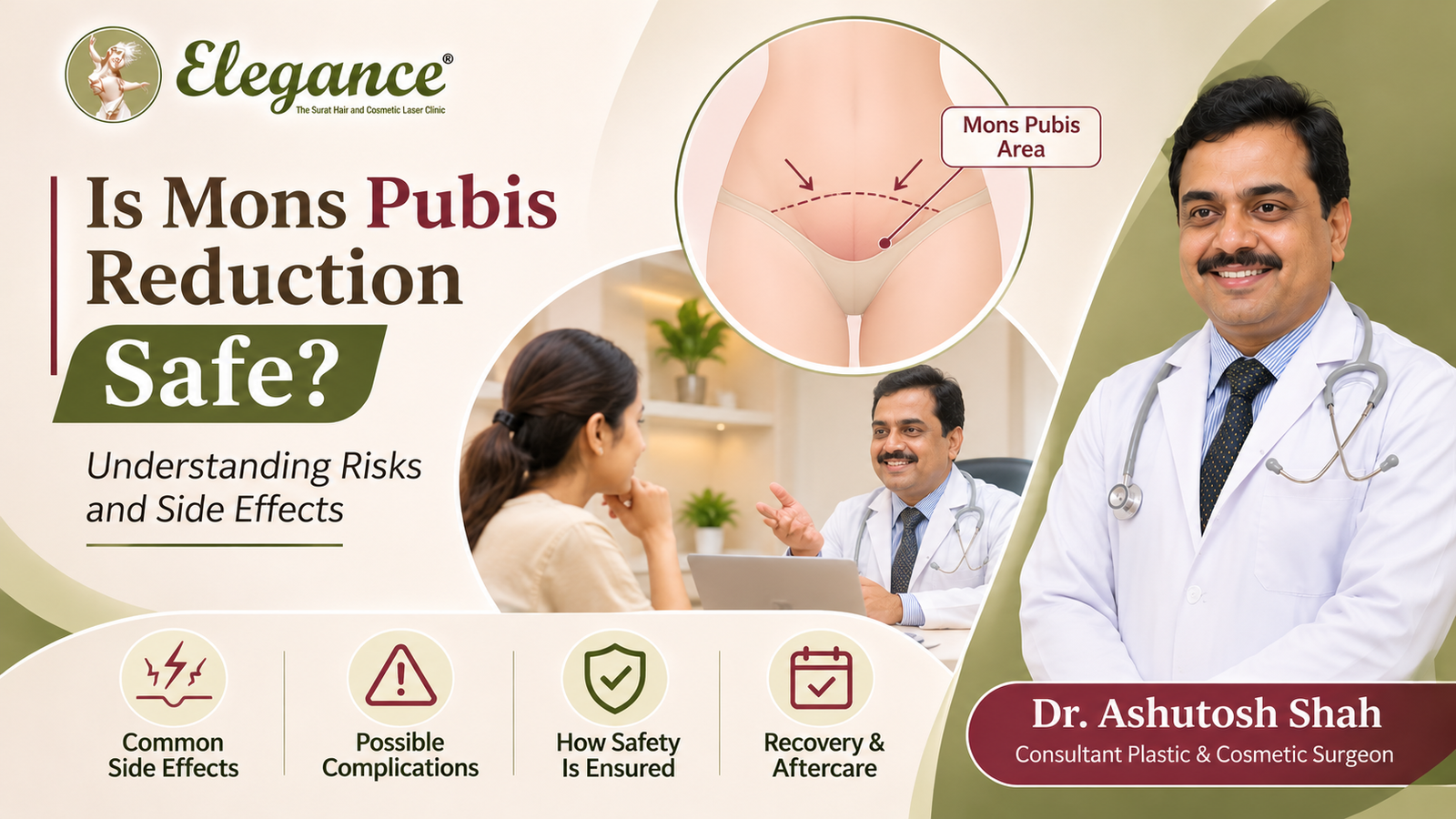
Is mons pubis reduction safe? Understand the possible side effects, surgical complications, recovery considerations and safety precautions before considering surgery. Explore what patients should discuss with their surgeon at Elegance Clinic before making an informed decision.
Considering mons pubis reduction but worried about its safety? Understanding the possible risks is an important part of making an informed decision. Although the procedure can address excess fatty tissue or loose skin, it is still surgery and carries potential complications.
The mons pubis is the soft, fatty area located above the pubic bone. Its appearance can change because of genetics, pregnancy, ageing, or significant weight fluctuations. Some people experience discomfort from excess tissue, while others consider treatment for personal aesthetic reasons.
Mons pubis reduction, also known as monsplasty, may involve liposuction, surgical removal of excess skin or a combination of techniques. The appropriate approach depends on an individual's anatomy and medical assessment.
This guide explains common side effects, possible complications, safety precautions, and warning signs to understand before considering surgery.
Is Mons Pubis Reduction Safe?
Mons pubis reduction can be performed safely in appropriately selected patients by a qualified surgeon in a properly equipped surgical facility. However, no surgical procedure is completely risk-free.
The safety of treatment depends on several factors:
-
The patient's general health and medical history.
-
The amount of fatty tissue or excess skin.
-
The surgical technique selected.
-
The surgeon's qualifications and experience.
-
The anaesthesia and surgical facility.
-
Postoperative care and individual healing.
For example, liposuction and skin-removal surgery involve different surgical considerations. A patient with good skin elasticity may require a different approach from someone with significant loose skin.
The surgeon should explain the expected benefits, limitations and possible complications before obtaining informed consent.
What Are the Common Mons Pubis Reduction Side Effects?
Some reactions are expected during the initial healing period. Their severity and duration vary depending on the extent of surgery.
1. Swelling and Bruising
Swelling and bruising are common after surgical tissue removal. The treated area may appear fuller initially because of postoperative inflammation.
These changes generally improve gradually as healing progresses. Follow the surgeon's instructions regarding compression garments and activity restrictions.
2. Pain and Discomfort
Mild to moderate soreness, tenderness or tightness may occur around the treated area.
Your surgeon may prescribe medication to manage discomfort. Do not take additional medication without checking whether it is appropriate after surgery.
3. Temporary Changes in Sensation
Some patients experience temporary numbness, tingling or altered sensitivity around the treated area.
These sensations may improve as the tissues heal. Persistent or worsening changes should be discussed with the surgeon.
4. Scarring
Surgical skin removal involves incisions, which leave scars. Their appearance depends on incision placement, skin characteristics and individual healing.
Following wound-care instructions can support proper healing, although scars cannot always be prevented.
5. Temporary Tightness
The treated area may feel firm or tight during early recovery. This can occur as swelling develops and the tissues begin healing.
Report unusual or worsening symptoms during follow-up appointments.
What Are the Possible Mons Pubis Reduction Complications?
Understanding mons pubis reduction complications is important before agreeing to surgery. Although some complications are uncommon, patients should know what to look for.
Bleeding or haematoma: Blood may collect beneath the skin, sometimes requiring additional medical treatment.
Seroma: Fluid may accumulate under the skin after surgery. Some cases require drainage.
Infection: The surgical wound may become infected, requiring medical assessment and treatment.
Delayed wound healing: Incisions may take longer to heal because of individual health factors or wound complications.
Asymmetry: The treated area may heal unevenly or have an unexpected contour.
Changes in skin sensation: Altered sensation may persist in some patients.
Unfavourable scarring: Some scars may become raised, thickened or more noticeable.
Anaesthesia-related complications: Reactions to anaesthesia are possible and depend on individual health and the anaesthesia used.
Not every patient experiences these complications. Your surgeon should discuss the risks relevant to your proposed procedure.
Risk Table: Side Effects, Duration and What to Do
| Side Effect or Complication | How Common? | How Long? | What to Do |
|---|---|---|---|
| Swelling | Common | May continue for several weeks | Follow postoperative instructions. |
| Bruising | Common | Usually improves gradually | Avoid pressure on the treated area. |
| Pain and discomfort | Common | More noticeable during early recovery | Take prescribed medication as directed. |
| Temporary numbness | Possible | Varies between patients | Discuss persistent changes with your surgeon. |
| Scarring | Expected with skin-removal surgery | Scar maturation takes time | Follow wound-care instructions. |
| Seroma | Possible | Depends on the collection | Contact your surgeon for assessment. |
| Haematoma | Uncommon | Requires medical assessment | Seek prompt medical attention. |
| Infection | Uncommon | Depends on severity and treatment | Contact your medical team. |
| Delayed wound healing | Possible | Varies | Attend scheduled wound reviews. |
| Asymmetry | Possible | May persist after healing | Discuss concerns during follow-up. |
This table provides general information, not statistical complication rates. Actual risks depend on the procedure and individual circumstances.
How Can You Reduce Mons Pubis Reduction Risks?
Proper preparation and postoperative care can help reduce avoidable complications.
1. Choose a Qualified Surgeon
Check the surgeon's recognised qualifications, relevant surgical training and experience with the proposed procedure.
Ask who will perform the surgery and where it will take place.
2. Complete the Recommended Medical Assessment
Your surgeon may recommend blood investigations and other medical assessments depending on your health history.
Discuss diabetes, blood pressure, allergies, previous operations and any medications you take.
3. Follow Preoperative Instructions
Your medical team may advise you to stop certain medications, avoid smoking and follow specific food and drink restrictions before anaesthesia.
Never discontinue prescribed medication without medical guidance.
4. Follow Postoperative Care Instructions
Keep the surgical area clean according to your doctor's instructions. Avoid strenuous exercise, heavy lifting and other restricted activities until cleared.
Attend all scheduled follow-up appointments.
5. Maintain Realistic Expectations
Surgery cannot guarantee perfect symmetry or a particular appearance. Discuss realistic outcomes, scar placement and possible limitations before deciding.
Is Mons Pubis Reduction in Bharuch Worth Considering?
People researching mons pubis reduction in bharuch should understand that choosing surgery requires more than comparing treatment costs or expected appearance.
A consultation helps establish whether the concern involves excess fat, loose skin or another condition. The surgeon can then explain suitable options, possible risks and recovery requirements.
Before proceeding, discuss:
-
Whether you are medically suitable for surgery.
-
Which surgical technique is appropriate.
-
The expected incision and scar location.
-
Anaesthesia and facility arrangements.
-
Possible complications and their management.
-
Recovery restrictions and follow-up requirements.
A personal medical assessment is essential before making a treatment decision.
Which Warning Signs After Surgery Need Medical Attention?
Certain symptoms should not be dismissed as normal postoperative discomfort.
Contact your surgical team promptly if you experience:
-
Increasing or severe pain.
-
Rapidly increasing swelling.
-
Significant redness or warmth around the incision.
-
Pus or unusual wound discharge.
-
Fever or chills.
-
Wound separation or persistent bleeding.
-
A sudden change in skin colour around the treated area.
Seek emergency medical attention if you experience chest pain, breathing difficulty or other severe symptoms.
Do not attempt to treat suspected complications using home remedies.
Making an Informed Decision About Mons Pubis Reduction
Mons pubis reduction may help address selected concerns involving excess fatty tissue or loose skin. However, understanding the potential benefits and complications is essential before choosing surgery.
Proper patient assessment, appropriate surgical planning and postoperative monitoring all contribute to safer care.
At Elegance Clinic, Dr. Ashutosh Shah can assess your concerns and explain the available surgical options.
If you are considering treatment, arrange a consultation to discuss your medical history, suitability, expected recovery and possible risks before proceeding.
Have a Private Question?
Every concern deserves an honest answer. Book a confidential consultation with Dr. Ashutosh Shah at Elegance Clinic, Surat, for guidance made just for you.

About the Author
Dr. Ashutosh Shah is a cosmetic gynecologist and plastic surgeon with over 22 years of experience. At Elegance Clinic in Surat, he is known for safe, honest and completely confidential intimate and aesthetic care.
Is mons pubis reduction safe?
Mons pubis reduction can be performed safely in appropriately selected patients by a qualified surgeon. However, potential risks include infection, bleeding, scarring and changes in sensation.
What are the common side effects of mons pubis reduction?
Common side effects include swelling, bruising, soreness, temporary tightness and changes in skin sensation.
What can go wrong with mons pubis reduction?
Possible complications include infection, bleeding, haematoma, seroma, delayed wound healing and asymmetry.
How can surgical risks be reduced?
Proper medical assessment, qualified surgical care, following preoperative instructions and attending follow-up appointments can help reduce avoidable risks.
Who should not have this procedure?
People with uncontrolled medical conditions, active infections or certain health problems affecting wound healing may need further assessment before considering surgery.
What should I do if swelling increases suddenly?
Contact your surgeon promptly, particularly if swelling is accompanied by severe pain, redness or fever.